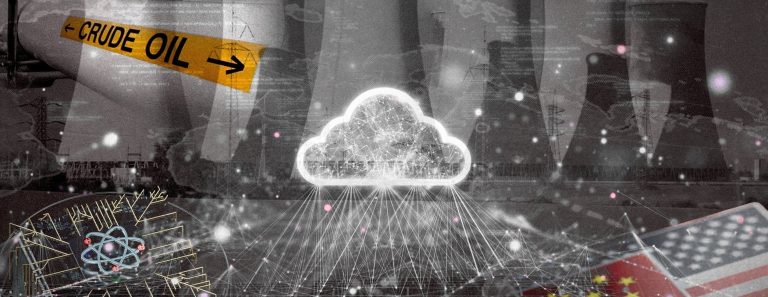
For over a century, military planners equated strategic dominance with physical geography. Capturing oilfields, controlling naval chokepoints, and securing pipeline routes defined the architecture of conflict. That logic is rapidly expanding. Today, a different kind of infrastructure is quietly reshaping how nations project influence and defend their interests. Hyperscale data centers, once dismissed as anonymous commercial warehouses, now function as critical pillars of state power. As artificial intelligence embeds itself into intelligence operations, financial networks, and military logistics, the facilities housing this computational power are becoming primary targets in an emerging technological arms race.
The shift carries profound implications for energy markets. The International Energy Agency has repeatedly warned that global electricity demand from AI and data centers will surge dramatically over the next decade. This demand places computational capacity alongside oil in the hierarchy of strategic resources. In the last century, controlling oil meant controlling industry. Today, whoever controls processing power commands the digital economy and modern warfare capabilities.
From Oil Wells to Server Farms
States in the Persian Gulf are acutely aware of this transition. Rather than remaining passive hosts to foreign technology, Saudi Arabia, the UAE, and Qatar are actively building domestic AI ecosystems. The United Arab Emirates recently established a dedicated AI authority to integrate algorithms into public administration and economic planning. Saudi Arabia has launched massive sovereign funds to attract hardware manufacturers and cloud providers. The region offers three crucial advantages: abundant energy to run power hungry servers, deep pockets to fund mega-projects, and a geographic location bridging Europe, Asia, and Africa through vital fiber networks.
This pivot has not gone unnoticed in Washington or Beijing. The United States views its technological edge as inseparable from national security, tightening export controls on advanced semiconductors to maintain leverage. Meanwhile, China expands its Digital Silk Road by laying undersea cables and deploying telecom infrastructure across the Global South. The resulting friction places Gulf capitals in a delicate balancing act. They want American cloud services and Chinese hardware partnerships simultaneously. Deciding which cybersecurity standards to adopt and which semiconductor supply chains to join now carries immense geopolitical weight.
The New Logic of Conflict
The military implications of this digital build-out are staggering. If data centers process the vast majority of government communications, financial flows, and military targeting data, then neutralizing them becomes a logical objective in any future confrontation. The objective would not necessarily involve physical destruction. A sophisticated adversary might instead seek strategic paralysis by severing connectivity or disrupting cooling systems. Recent regional conflicts have already demonstrated how deeply modern societies rely on uninterrupted digital infrastructure. As AI integrates into command and control systems, protecting these physical assets becomes as crucial as guarding airbases.
This reality creates a sobering dilemma for regional leaders. The same capitals striving to become global technology hubs must now prepare to defend these facilities from cyber and kinetic threats. Building a hyperscale campus is relatively straightforward. Ensuring its resilience during a geopolitical shock is vastly more complicated. Future competition will demand investments in physical security, grid resilience, and diversified supply lines. The economics of AI can no longer be separated from the harsh realities of regional security.
The Gulf states are no longer content with exporting energy alone. They are positioning themselves as producers of computational capacity. How they manage this transition will determine whether the region remains a passive consumer of foreign technology or emerges as an architect of the next global digital order.
Original analysis inspired by Kamran Yeganegi from The Cradle. Additional research and verification conducted through multiple sources.