Tag: Saudi Arabia

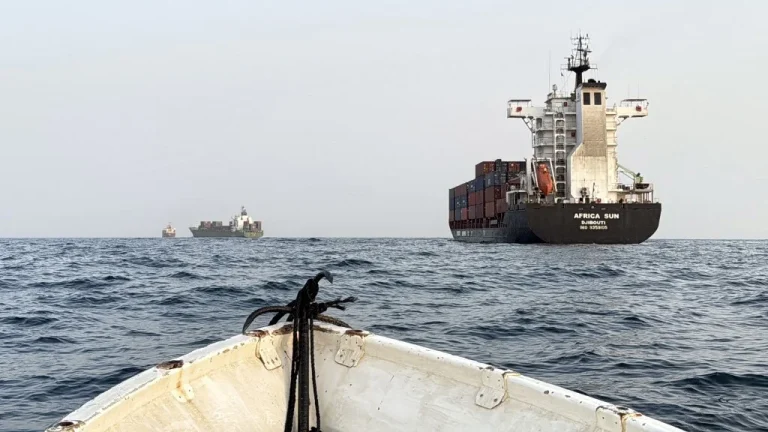
Military speedboat approaching a large container ship at dusk.

Iran’s Hormuz Gambit Demands Fresh Energy Strategy

The ongoing blockade of the Strait of Hormuz has exposed critical vulnerabilities in global energy security, driving U.S. gasoline prices past $4.40. As military standoffs continue, experts urge a shift toward diversified supply routes, including Saudi Arabia’s East-West pipeline, and a renewed focus on domestic resilience and long-term energy innovation.

Read More »
Men in traditional Emirati clothing walking in front of a large ADNOC logo.

UAE Leaves OPEC: Fractures in Gulf Oil Power

In a historic move, the United Arab Emirates has announced its withdrawal from OPEC. Driven by frustrations over production quotas and escalating bilateral tensions with Saudi Arabia, Abu Dhabi is prioritizing strategic autonomy and ADNOC’s expansion plans, potentially reshaping the future of global oil market coordination.

Read More »
Panoramic view of a Middle Eastern city skyline with smoke rising from buildings under construction.

Gulf States Reassess Security After Iran Ceasefire

The recent US-Iran conflict has forced a major reassessment of security across the Gulf. Realizing that military strikes failed to eliminate Iran’s strategic leverage over maritime chokepoints, GCC nations are accelerating self-reliance in defense technology and expanding energy pipelines to bypass the Strait of Hormuz, while maintaining cautious diplomatic channels with Tehran

Read More »
Large plumes of dark gray smoke rising behind urban apartment buildings under an overcast sky.

Who Wins and Loses From the Iran Energy Shock

The Iran energy shock of 2026 has fundamentally rewritten the rules of global petropolitics. As Brent crude prices surged, the traditional “oil winner” manual was discarded; for the first time, major producers in the Gulf found themselves economically paralyzed by their own geographic leverage.

Read More »

Multipolar Realignment: How Regional Powers Are Reshaping Global Authority

The 2026 global landscape marks a shift from Western-led multilateralism toward a multipolar order defined by middle-power “strategic autonomy” and Global South demands for structural reform. As traditional alliances strain and trade barriers rise, nations are adopting pragmatic, power-aware alignments to navigate a fragmented system where institutional authority is increasingly contested.

Read More »
Two men in formal attire standing in a modern hall, looking at a large architectural model of a city.

The Changing Dynamics of Middle Eastern Alliances: A Battle Between Abrahamic and Islamic Coalitions

In early 2026, the Middle East has moved beyond the simple “Sunni vs. Shia” binary. Instead, the region is now fractured into two competing ideological and strategic blocs: the Abrahamic Coalition—focused on secular-leaning economic integration and high-tech defense—and the Islamic Coalition, which prioritizes sovereign statehood, Islamic solidarity, and a more cautious distance from Israel.

Read More »
Leaders of the Gulf Cooperation Council (GCC) at a summit, symbolizing the growing economic and political competition between Saudi Arabia and the UAE.

Saudi-UAE Regional Competition: Economic Hub Rivalry and Political Divergence Risk Gulf Stability

The competition between Riyadh and Abu Dhabi has shifted from healthy rivalry to a high-stakes struggle for regional gravity. As Saudi Arabia lures 675 global headquarters with tax incentives, it directly challenges the UAE’s hub model. This economic friction, mirrored in political clashes over Sudan and Yemen, threatens to destabilize Gulf integration and overall regional security.

Read More »
The flag of Iraq and the United Nations flag standing side-by-side in front of a wall with a large, faded UN emblem.

Regional Mediation and Civilizational Cooperation: Revising Huntington’s Framework

The conclusion of the UN Assistance Mission for Iraq’s 22-year mandate signifies a critical moment in Middle Eastern political dynamics. It encourages a reevaluation of how regional actors might resolve ongoing conflicts through mediation and cooperation instead of confrontation, highlighting the potential for regional diplomatic leadership to offer new conflict resolution frameworks beyond conventional great power intervention.

Read More »
United Nations Secretary-General António Guterres shaking hands with Iraqi Prime Minister Mohammed Shia' al-Sudani in front of UN and Iraqi flags

Regional Powers Position Mediation Capacity as Alternative to Civilizational Conflict Paradigm

UN Secretary-General António Guterres’s visits to Saudi Arabia, Oman, and Iraq mark a potential shift from external crisis management to regional diplomatic leadership, particularly highlighted by the formal closure of UNAMI after 22 years. This development challenges Samuel Huntington’s “clash of civilizations” framework by illustrating how culturally connected states can effectively mediate conflicts that hinder international institutions.

Read More »