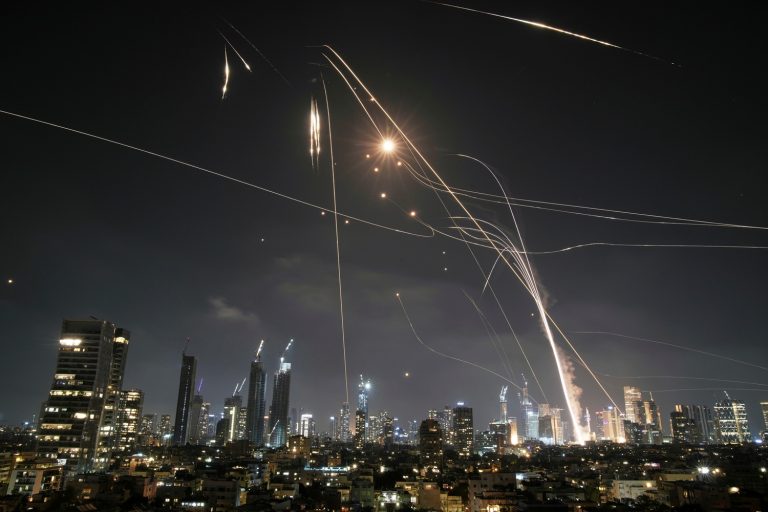
The war against Iran was never simply about neutralizing one regime. It was the military engine of a far larger strategic project — the reshaping of the Middle East around a normalization architecture that placed Israel at its center. That project is now in serious trouble, and the man most responsible for its collapse is the same man who was supposed to guarantee its success. Trump’s decision to negotiate a ceasefire framework over Netanyahu’s explicit objections did not just end a war. It severed the political bond that Israeli strategy had been built around for years.
The Abraham Accords were always about more than diplomatic normalization. Washington and Jerusalem designed them to build a pro-American Arab coalition willing to contain Iran without requiring direct U.S. military involvement. Saudi Arabia’s refusal to sign without a Palestinian state on the horizon blocked the plan’s completion. The Iran war was, in part, an attempt to force the issue — to break Tehran’s regional influence so decisively that Riyadh would have no strategic reason to hold back. Iran did not break. It adapted, survived, and extracted a ceasefire framework that left its missile program, its proxy networks, and its nuclear enrichment capability intact. The strategic logic that justified the war has now been publicly disproven, and the bill has arrived.
What Iran Actually Kept
The MoU signed electronically on June 18 requires Iran to gradually reopen the Strait of Hormuz over 30 days while the United States ends its naval blockade of Iranian ports. What it does not require is any restriction on Iran’s ballistic missile arsenal, any dismantlement of proxy relationships with Hezbollah, Hamas, or the Houthis, or any immediate cap on uranium enrichment. Tehran retains its nuclear knowhow, its regional alliances, and the Hormuz lever — now proven effective — which it can pull again if Washington violates its side of the bargain or if Israel launches another significant strike.
Iran’s non-state allies have also emerged from the conflict structurally intact and politically strengthened. The war demonstrated that Hezbollah, the Houthis, and Iraqi militias could coordinate strikes on Israel and Gulf infrastructure simultaneously — a level of operational coherence that surprised the Pentagon and alarmed Gulf capitals. In Beirut’s southern suburbs, posters of both the late Supreme Leader and his successor appeared at the entrance to Hezbollah’s heartland this week bearing a simple message. The bond between Tehran and its regional partners has been tested under fire and held.
The Gulf’s New Strategic Anxiety
For Gulf states, the war has produced a reckoning that their investment in U.S. security guarantees could not prevent. Iran closed the Strait of Hormuz, struck energy infrastructure across the peninsula, and forced the UAE to quietly engage IRGC officials through back channels — a meeting Abu Dhabi denied hosting, though the denial was widely disbelieved. The episode exposed the fundamental vulnerability at the core of Gulf economic models: enormous wealth built on hydrocarbons that now flows at Tehran’s discretion.
The Gulf Cooperation Council’s collective defense architecture proved inadequate. U.S. bases drew fire rather than deterred it. Kuwait and Saudi Arabia closed their airspace to U.S. military aircraft within 24 hours of Washington’s failure to respond to an attack on UAE infrastructure. The search for alternative security partners — already underway before the war — has since accelerated, with France, the United Kingdom, Ukraine, and South Korea all signing new defense agreements with Gulf states during or immediately after the conflict. Qatar and Oman, which helped mediate the ceasefire, navigated the crisis most effectively. Bahrain and Kuwait face it with additional fragility, given their large Shia populations and the renewed regional prestige of a Shia-led Iran.
Israel’s Diminishing Hand
Israel exits the conflict in the most exposed position of any participant. Its seven-front strategy produced none of the decisive outcomes it promised. Hezbollah remains operational in Lebanon, where Israeli forces continue to occupy southern territory in direct violation of the MoU’s ceasefire provisions. Hamas retains organizational coherence in Gaza. Iran’s nuclear program has survived two rounds of joint strikes and will likely require a third if it is to be meaningfully degraded — a prospect that grows less realistic with every passing month and every new centrifuge installed in a hardened underground facility.
Trump has made his frustration explicit. At the G7 summit in France this week, he told reporters that without the United States there would be no Israel — and that he was unhappy about Israeli strikes in Beirut launched hours before the MoU was announced. The Wall Street Journal reported that Trump is now fact-checking Netanyahu’s account of their phone conversations, a breach of trust that has no recent precedent in the relationship. The legislative push to entrench Israel deeper into U.S. defense and intelligence systems — through the NDAA and Intelligence Authorization Act — reads less like a sign of strength than a race against a closing window, an attempt to lock in structural commitments before the political tide shifts further.
The project that began with the Abraham Accords and escalated through Gaza and Iran has now reached a point where continued expansion depends entirely on Israeli military capacity alone. That capacity has limits. Lebanon will eventually require a withdrawal. Gaza cannot be indefinitely governed by force against a population that has demonstrated it will not leave. The regional architecture Netanyahu spent a decade constructing assumed permanent American political support as its load-bearing wall. Trump removed it — and the building is showing cracks on every floor.
Original analysis inspired by David Hearst from Middle East Eye. Additional research and verification conducted through multiple sources.
By ThinkTanksMonitor