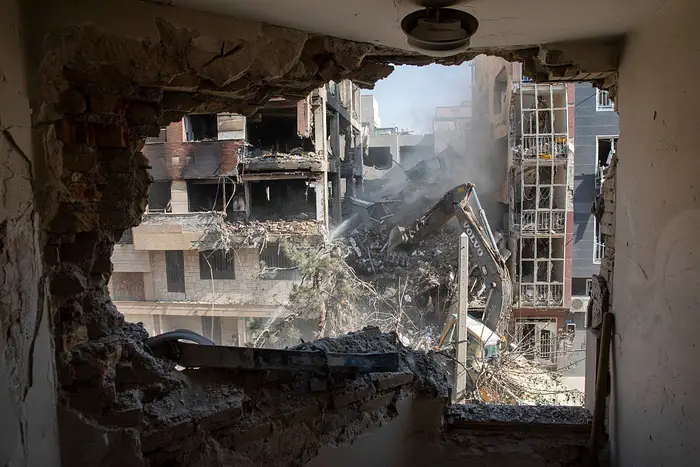
Washington has lost wars before. It has absorbed the costs of prolonged conflicts that ended without the outcomes they promised, buried the dead, and eventually moved on. What makes the Iran war different is not the casualty count — fewer than 20 U.S. soldiers died in the entire campaign — but the scale of what was gambled and the permanence of what was lost. By the narrow metric of American lives, the conflict barely registers. By the broader measure of strategic position, it represents a self-inflicted wound that will constrain every administration that follows.
The comparison to Vietnam is instructive precisely because it reveals how much worse this outcome is. The United States fought in Southeast Asia for over a decade, lost nearly 60,000 soldiers, killed millions of Vietnamese civilians, and ultimately achieved nothing of lasting strategic value — yet recovered. The Cold War ended in Washington’s favor. Vietnam itself eventually became a partner rather than an adversary. The domino theory that justified the intervention proved false. American power absorbed the defeat and continued functioning as the organizer of global order for another three decades.
No such recovery path is visible after the Iran war. The Gulf is not Indochina. The global economy is wired into Gulf hydrocarbons, helium, fertilizer, and aluminum in ways that have no parallel in Southeast Asia’s economic role during the 1970s. The Strait of Hormuz handles roughly 20 percent of global oil and LNG shipments — a chokepoint whose closure in 2026 sent energy prices above $100 per barrel, disrupted shipping insurance markets, and threatened supply chains across three continents. Vietnam never held that kind of leverage over the world economy. Iran has demonstrated it does, and that lesson will not be forgotten in Tehran — or in Beijing, Moscow, and Pyongyang.
What the Arsenal Revealed
The speed and technical precision of Operation Epic Fury initially looked like a vindication of U.S. military dominance. Over 10,000 sorties, 130,000 targets struck, 85 percent of Iran’s missile production infrastructure destroyed. Those figures were real. What they obscured was the cost of achieving them. The United States expended more than 850 Tomahawk cruise missiles in a few weeks — a weapon produced at a rate of roughly 90 to 100 per year. It burned through nearly half its prewar inventories of THAAD and Patriot interceptors. Replenishing those stocks will take years, and China has been watching every expenditure report.
The 1991 Gulf War produced a different kind of lasting image: the ease with which the U.S.-led coalition dismembered Iraq’s military stunned the world into a decade of assumptions about American military supremacy. This war produced different images — particularly the civilian casualties from what officials acknowledged was a database error — and a different set of strategic conclusions. Iran, a country with an economy roughly 1.5 percent the size of the United States, demonstrated that asymmetric tactics could penetrate the most expensive air defense architecture ever deployed, disrupt the global economy, and survive the full application of American airpower without regime collapse.
The Problem That Outlasts the Ceasefire
On nuclear weapons, the war has made the coming decade more dangerous rather than less. Iran’s nuclear program has now survived two rounds of joint Israeli-U.S. strikes, the second far more intensive than the first. The new leadership in Tehran — drawn from the IRGC’s most hardened elements — watched the regime endure sustained bombardment and drew the obvious conclusion: survival required resistance, not accommodation. A third military campaign would face the same structural problem as the first two. Destroying declared facilities does not eliminate the knowledge, the personnel, or the institutional will to rebuild. Meanwhile, the ceasefire framework’s 60-day clock for nuclear negotiations begins from a position where Iran has every incentive to stall and Washington has depleted much of the pressure it could apply.
The strategic damage to freedom of navigation compounds the nuclear problem. For over two centuries, ensuring open sea lanes has been a foundational principle of American foreign policy — from Thomas Jefferson’s dispatch of the Navy to the Mediterranean to stop tribute payments, through Cold War operations to keep the Strait of Hormuz open during the Iran-Iraq War. Tehran demonstrated in 2026 that it could close the strait and hold it closed long enough to extract economic concessions — and that Washington, facing the prospect of further naval losses, would seek a diplomatic exit rather than force the issue. That precedent now sits in the strategic calculus of every state that controls a maritime chokepoint.
The Allies Already Recalculating
Perhaps the most consequential long-term damage is not material but relational. Gulf states that hosted U.S. bases saw those facilities draw Iranian strikes rather than deter them. Kuwait and Saudi Arabia closed their airspace to U.S. military aircraft within 24 hours of Washington’s failure to respond to an Iranian attack on UAE energy infrastructure. France and the United Kingdom deployed forces independently and signed their own defense agreements with Gulf states during the conflict. Ukraine reached long-term drone defense partnerships with Saudi Arabia, Qatar, and the UAE. The diversification of security partners was not a rounding error — it was a structural shift, accelerated by direct experience of American hesitation at a critical moment.
In Asia, defense planners in Tokyo, Seoul, and Taipei studied the conflict with specific attention to two data points: how quickly U.S. munitions were depleted, and how slowly they can be replenished. The conclusion was direct — an Indo-Pacific contingency involving China would demand more from the U.S. arsenal than it currently holds. That gap is real, it is known in Beijing, and it exists precisely because the Iran war consumed materiel that was being positioned for a different theater.
After Vietnam, the United States could turn its back on Southeast Asia and concentrate elsewhere. The Gulf offers no such exit. Continuing U.S. commitments to Israel, the unresolved nuclear question, the economic architecture built around Gulf energy and logistics — none of these dissolve because a ceasefire framework has been signed. The United States will confront these consequences while carrying a depleted arsenal, reduced credibility with allies, and a domestic public that the polling consistently shows wants no further military engagement in the region. Future historians will ask the same question already being asked about Vietnam: why? Unlike Vietnam, however, the answer will have to account for consequences that extend far beyond American borders — and far beyond the decade in which the choice was made.
By ThinkTanksMonitor Editorial