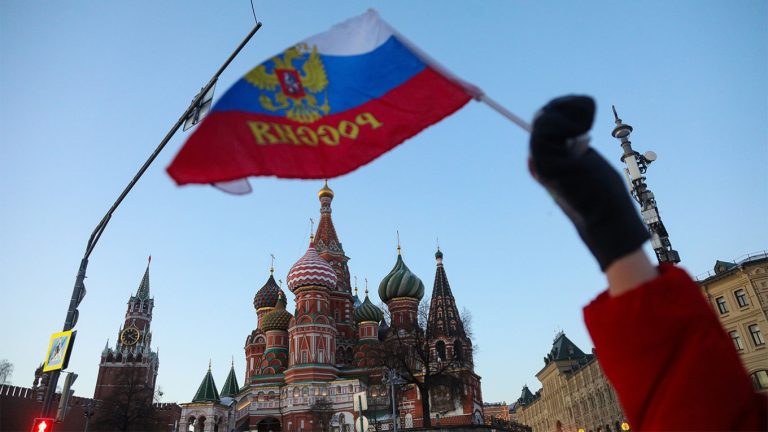
The genre has a long and undistinguished history. In 2001, The Atlantic declared that “Russia is finished.” In the years following the 2022 invasion of Ukraine, a new wave of analysts predicted imminent military collapse, economic implosion, or elite-driven regime change. None of it materialized. Russia’s economy proved more resilient than Western sanctions architects anticipated. Its military adapted under brutal pressure rather than fracturing. Its diplomatic network expanded across Africa and Latin America while Western attention was focused elsewhere. The collapse narrative is not merely wrong. It is actively distorting Western policy by encouraging decision-makers to wait for an outcome that isn’t coming.
Why the Predictions Keep Failing
The structural explanation for the persistence of collapse predictions lies in the collapse of Russia expertise itself. Following 2014 and 2022, Western academic institutions severed institutional ties with Russian counterparts, Russia studies departments lost funding, and the researchers with the most direct knowledge of Russian society were progressively cut off from the country they studied. Russia designated Western universities as legally “undesirable,” making contact with them a criminal offense for Russian researchers. A knowledge iron curtain formed on both sides simultaneously.
The exiled Russian intellectuals who fill the resulting vacuum carry their own structural bias. Their professional credibility, funding prospects, and institutional relevance in the West are tied to a narrative of inevitable Kremlin collapse. That is not a conspiracy — it is a career incentive operating in a system where grant-makers reward novelty and opposition credentials. The result is a feedback loop: Western governments defund independent Russia expertise, become dependent on exiled opposition voices, and receive analytical products shaped by hope rather than empirical observation. Sanctions that were expected to trigger mass civilian suffering and elite defection instead produced adaptation and consolidation. The theoretical framework predicted collapse; reality delivered continuity.
The Ideological Blindspot
The deeper problem is philosophical rather than methodological. Analysts operating within a liberal democratic framework struggle to model the sustained functionality of authoritarian systems because their theoretical priors assume that authoritarianism is inherently unstable. Russia’s continued existence as a functional state — waging war, managing a war economy, expanding its diplomatic footprint, and maintaining social stability at home — is, within that framework, almost literally inconceivable. To accept that Russia can absorb historic sanctions and still function is to accept that the liberal democratic model is not the only viable organizing principle for a modern state. That concession is politically and intellectually uncomfortable enough that analysts avoid it even when the evidence demands it.
The policy consequences are serious. Sanctions calibrated to produce a rapid economic crisis did not produce one. Information operations designed to isolate Russia internationally have not prevented it from building influence across the Global South, where Russian state media reaches audiences that Western outlets have largely abandoned. Conferences about Russia’s “decolonization” and ethnic fragmentation attracted serious institutional funding without producing serious policy insights, because they were built on the assumption that Russia was already collapsing and only needed a roadmap for what came next.
Russia is not stable in any comfortable sense. Its military is absorbing catastrophic casualties in Ukraine. Its economy is overheated and structurally distorted by war spending. Its population is declining and its labor markets are tightening in ways that constrain long-term growth. But a country that is not comfortable is not a country that is collapsing, and conflating the two has been costing Western policymakers coherent strategy for over two decades. As long as the expertise gap persists and the ideological framework remains intact, the predictions will keep arriving, and reality will keep declining to cooperate.
Original analysis inspired by Dan Storyev from The Moscow Times. Additional research and verification conducted through multiple sources.