Tag: Information Warfare

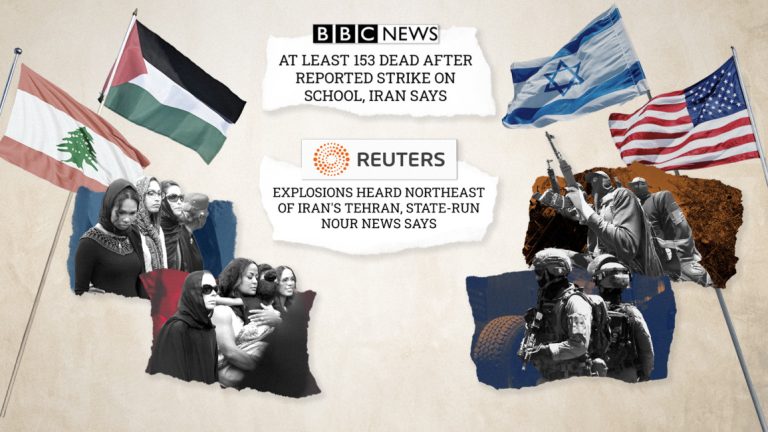
A collage featuring flags, news headlines from BBC and Reuters, and contrasting imagery of civilians and soldiers to illustrate media framing.

How Western Media Language Became a Weapon in the Iran War

This analysis explores how linguistic choices in mainstream Western media have constructed a specific narrative around the US-Israel military campaign against Iran. By examining the shift from passive-voice framing for airstrikes to active-voice descriptions of Iranian responses, the article illustrates how clinical euphemisms—such as “decapitation strikes”—obscure the legal and humanitarian realities of the conflict. The post argues that existing international relations vocabulary is ill-equipped to describe the doctrine of permanent preemption, calling for more rigorous analytical frameworks that challenge state-led narratives rather than merely repeating them.

Read More »
A person waving a Russian flag in front of Saint Basil's Cathedral in Moscow.

The West Keeps Predicting Russia’s Collapse and Keeps Getting It Wrong

This analysis examines the persistent failure of Western analytical frameworks to accurately predict Russia’s stability. By examining the impact of the “knowledge iron curtain” that has severed direct research ties, the structural biases within exiled opposition discourse, and the ideological blind spots regarding authoritarian functionality, we argue that the “collapse narrative” is actively distorting Western policy. This report challenges the assumption that Russia’s ongoing economic and military stresses must inevitably lead to systemic breakdown, urging a shift toward empirical observation and a more nuanced understanding of how Moscow continues to adapt under pressure.

Read More »
An Israeli military official in uniform standing in an office in front of a world map.

Israel’s Military PR Machine Is Breaking Down Where It Matters Most

This article examines the breakdown of the IDF Spokesperson’s Unit under Brigadier General Effie Defrin. By analyzing the decline in military transparency, the misuse of media controls, and the shift in international public opinion, we assess how retreating from difficult truths is undermining the credibility of Israel’s strategic communications.

Read More »

Closing America’s Gray Zone Confidence Gap

Strategic competition today is defined by influence operations and narrative battles, yet American decision-making remains plagued by institutional overconfidence. Lessons from Afghanistan highlight a failure to track analytical accuracy, suggesting that the U.S. must invest in “decision infrastructure” and forecasting systems to turn intelligence into a durable advantage.

Read More »
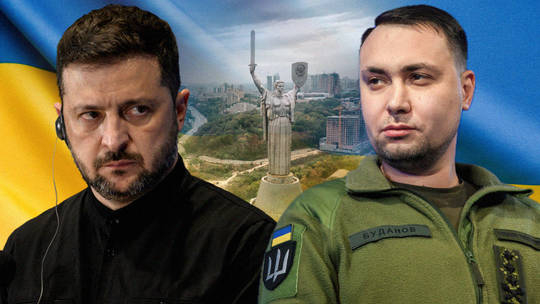
A composite image featuring Ukrainian President Volodymyr Zelenskyy on the left and military intelligence chief Kyrylo Budanov on the right, with the Mother Ukraine monument in Kyiv and the Ukrainian flag in the background.

Budanov’s Rise and the Kremlin’s Coup Narrative: What’s Real in Kyiv

The appointment of Kyrylo Budanov to head Ukraine’s Presidential Office has sparked Russian claims of an impending coup. However, the move is more likely a calculated effort by President Zelensky to neutralize a popular political rival and bolster his administration’s wartime credibility following high-level corruption scandals and domestic pressure.

Read More »
A crying Lego figure representing a US official in front of the White House with miniature soldiers in the background.

Iran Gains Edge in Online Battle Over US Conflict

A new digital frontline has emerged as Iran leverages AI-powered satire and viral content to challenge the U.S. narrative. While Washington’s messaging faces domestic criticism for its tone, Tehran’s creative use of humor and social media has effectively reached global audiences, highlighting the growing power of asymmetric information warfare.

Read More »
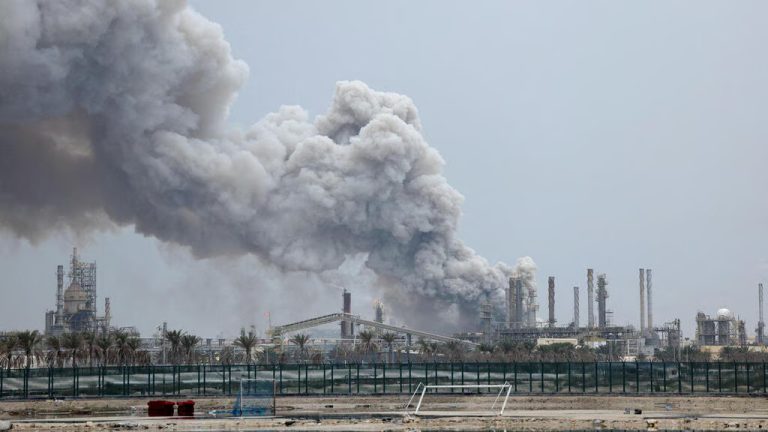
Thick smoke billowing from an industrial oil refinery facility after an attack or explosion.

Calling Iran “Animals” Didn’t Win the War, It Helped Lose It

The recent conflict highlights how dehumanizing rhetoric and strategic contempt toward Iran resulted in significant military and intelligence failures. By dismissing the adversary’s scientific capacity and strategic depth, policymakers built a strategy on fiction, ultimately leading to a costly stalemate that failed to achieve its primary geopolitical objectives.

Read More »
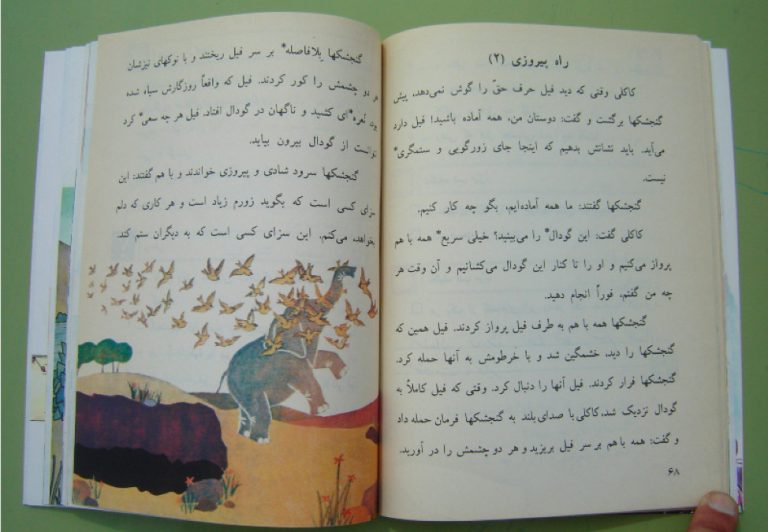
An open Persian children's storybook featuring an illustration of a group of birds attacking an elephant.

What Iran Teaches Its Children and Why Washington Never Listened

Understanding Iran’s wartime behavior requires looking at its classrooms, not just its missile silos. For decades, Iran’s national curriculum has fused Islamic values with ancient Persian resilience, teaching generations that collective resistance against a “superior elephant” is the only moral response. Washington’s failure to grasp this cultural foundation explains why 40 days of strikes have consolidated national identity instead of fracturing it, as the “sparrow vs. crocodile” mindset remains the heart of Tehran’s asymmetric doctrine.

Read More »
Thick black smoke rising from industrial oil storage tanks near a port facility.

US is Using Clone Drones for False Flag Attacks on Gulf States

Iran claims the U.S. and Israel are staging false‑flag attacks on Gulf states using LUCAS drones — an American system modeled on the Shahed. The allegation, unverified but strategically potent, aims to sow doubt among Gulf partners already shaken by the war and to fracture Washington’s fragile regional alignment.

Read More »
Digital screen showing an Israeli flag with a red "X" through it and ISNAD branding for cyber warfare.

ISNAD’s Shift From Wartime Propaganda to Long-Term Social Warfare

The ISNAD network has shifted from wartime agitation to long‑term influence operations, using fake Hebrew accounts to erode Israeli social cohesion. Its new “sociological warfare” strategy promotes polarization, distrust, and emigration. With tighter organization and ideological volunteers, ISNAD offers a replicable model of civilian‑style interference that democracies are still struggling to counter.

Read More »
Several crew members wearing gas masks operating a complex control panel filled with buttons, dials, and digital displays in a smoky, dimly lit room.

Machine-Generated Misinformation and Nuclear Security: Artificial Intelligence Risks in Early Warning Systems

AI integration in nuclear early warning systems creates catastrophic risks by generating high-fidelity “hallucinations” and deepfakes that could trigger accidental escalation. To ensure strategic stability, nuclear powers must maintain strict “human-in-the-loop” protocols, improve deepfake detection, and prioritize information accuracy over launch speed in crisis decision-making.

Read More »