There is a quiet but deepening tension running through European security debates in 2026. As the EU accelerates its push for strategic autonomy — complete with new spending commitments, defense white papers, and procurement initiatives — it is simultaneously sidelining the one non-EU ally whose military contribution Europe cannot currently replace. Turkey is NATO’s second-largest standing military force, a proven manufacturer of battlefield-relevant weapons, and the only alliance member with a land border with both Russia-aligned territory and Iran. Any credible defense architecture for Europe that treats Ankara as an afterthought is not strategic autonomy — it is strategic fiction.
The raw numbers make this difficult to dispute. Turkey has European NATO’s largest land force, with close to 400,000 ground troops — double that when reserves are included — and over 2,000 main battle tanks, close to half of all those in European NATO. Turkey now produces 80 percent of its military supplies domestically. Defense exports reached $10 billion in 2025, an increase of 48% compared to the previous year. These are not legacy figures from a previous era of Western patronage. They reflect a defense industrial base that has been systematically built up over the past decade, producing capabilities Europe’s own manufacturers cannot yet supply at scale.
What Turkey Brings That Europe Lacks
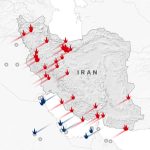
Turkey’s role in the defense industrial domain is emerging as a producer of capabilities NATO actually needs at scale — drones, munitions, and sensors — with two major conflicts ongoing in close proximity: the Russia-Ukraine war and Operation Epic Fury in Iran. Drone warfare has become the defining technology of both those conflicts, and Turkey has world-beating capabilities in this domain, where Europe’s defense-industrial complex is seriously lacking — as demonstrated when Bayraktar drones proved lethally effective in the early battle for Kyiv, helping hold back columns of Russian tanks.
The geographic argument is equally compelling. Turkey and Iran share a roughly 332-mile-long border, which shows just how critical Turkey’s role is — not only for NATO, but also for the European Union. Countries on NATO’s eastern flank — including Poland, Romania, the Baltic states, and Nordic allies — increasingly recognize Turkey’s value as Europe seeks to bolster deterrence against Russia while managing instability to its south. The Kürecik radar installation in central Turkey, meanwhile, provides ballistic missile early warning coverage significantly deeper than Romania-based alternatives — a critical asset in an environment where Iranian ballistic missiles have already struck alliance territory during the Iran war.
Turkey will assume command of NATO’s Allied Reaction Force from 2028 to 2030 — a further indication that NATO’s own command structure already integrates Turkey as a core contributor, not a peripheral member. Ukraine’s President Zelensky has made the point explicitly, warning that European defense would face serious vulnerabilities without contributions from Turkey, Ukraine, the UK, and Norway — none of them EU members. That observation from a wartime leader carries more operational weight than any political communiqué.
Europe’s Spending Surge Is Real — But Incomplete
European defense spending has undeniably accelerated. In 2025, all NATO allies met or exceeded the 2% GDP target — compared to only three in 2014 — while European allies and Canada achieved a 20% increase in defense spending compared to 2024. Germany alone committed to funding projected to reach €117.2 billion in 2026 and €162 billion by 2029, equivalent to 3.2% of GDP. Under NATO’s new 3.5% benchmark for 2035, European defense spending could reach approximately €800 billion by the end of the decade.
But spending figures obscure a more uncomfortable reality about capability. Even as spending and modernization progress, European NATO forces continue to operate a highly fragmented set of platforms, with fragmentation levels more than four times higher than in the United States. In a security environment dominated by hybrid threats, Europe’s central challenge lies less in meeting a numerical benchmark than in aligning military and civilian instruments toward resilience and adaptability — and without such alignment, higher defense spending risks increasing inputs while failing to strengthen security.
The capability shortfalls are most acute in exactly the domains where Turkey is strongest. Europe lacks sufficient AWACS platforms, aerial refueling tankers, deep-strike systems, and — critically — scalable drone production. Turkey has the ability to produce tanks, infantry fighting vehicles, and munitions — including 155mm artillery shells — at scale. Italy is set to become the first European NATO member to operate the Bayraktar TB3 drone platform, under a 50-50 joint venture between Baykar and Leonardo with production in northern Italy. That arrangement points toward the kind of industrial partnership Europe needs — but it also underscores how dependent European capability-building already is on Turkish technology.
The Institutional Friction That Could Cost Europe Dearly
Turkey’s Defense Minister warned that shutting Ankara out of EU defense initiatives would cause more damage than the US pulling troops from the continent. That warning should be taken seriously, because the exclusion mechanisms are real. Greece and Cyprus can block Turkey from key EU programs including PESCO — the EU’s main tool for deeper structured defense cooperation among its members. In Western Europe, especially France and Germany, political and cultural concerns about letting Turkey in persist.
Countries across the EU maintain vastly different positions on Turkey’s role in an emergent European defense framework, with reactions ranging from positive engagement to skepticism and mistrust — while the EU faces the challenge of bringing Turkey closer without undermining its core values, unity, and long-term security, especially in the Eastern Mediterranean. Those are real tensions, not manufactured objections. Turkey’s “Blue Homeland” maritime doctrine generates friction with Greece and Cyprus. Its purchase of the Russian S-400 system in 2019 led directly to its exclusion from the F-35 program. The legacy of CAATSA sanctions and F-35 exclusion remains a constraint, though 2025 and 2026 have seen renewed negotiations with the United States regarding a potential return or alternative high-end acquisitions.
But framing these bilateral disputes as reasons to exclude Turkey from European defense planning altogether is strategically illiterate. Turkey’s participation in the European Sky Shield Initiative, the Eurofighter deal, and several bilateral agreements between Turkish and European military companies mark significant steps toward integration into a European defense system, with Turkey also participating in meetings of the “coalition of the willing” and the EU’s Common Security and Defense Policy framework.
The Cost of Getting This Wrong
The adoption of NATO’s new 5% defense spending target reflects shifting US strategic priorities and places heavy demands on European allies — yet it may serve more as a signal of political resolve than a substitute for strategic prioritisation. The real question is not whether Europe can reach a GDP percentage benchmark, but whether it can generate combat-deployable deterrence on a timeline that matches the threat. Danish intelligence points to a potential Russian large-scale campaign within approximately five years under adverse conditions. With Europe struggling to put together a reassurance force for Ukraine of perhaps 20,000 to 30,000 troops, only Turkey has the ability to scale up to something effective, at least in the short term.
Turkey has become one of the few NATO allies capable of contributing across multiple operational domains with meaningful scale — a fact that no amount of ideological preference for EU-only defense architectures can wish away. The grammar of military power does not recognize institutional preferences. Defense architectures built on the assumption that Turkey can be marginalized will find, at the moment of need, that the math simply does not work.
Original analysis inspired by Can Kasapoglu from Anadolu Agency. Additional research and verification conducted through multiple sources.