Tag: Recep Tayyip Erdogan

Sumud Flotilla boats docking at a pier.

Sumud Flotilla Tests Limits of Gaza Blockade

This report examines the escalating confrontation between civilian aid missions and the Gaza blockade, highlighted by the recent interception of the Global Sumud Flotilla. By analyzing the intersection of maritime law, humanitarian necessity, and international diplomatic response, the article explores how these high-seas encounters are reshaping global discourse on accountability and the ethics of enforcing territorial restrictions amidst a deepening humanitarian crisis.

Read More »

Sunni Quartet Builds Security Ties in Middle East

Driven by doubts over Western security guarantees and the fallout from the U.S.-Iran war, a new strategic alignment is taking shape between Turkey, Egypt, Saudi Arabia, and Pakistan. This “Sunni-Muslim accord” combines a population of 500 million with significant military industrial potential, aiming to establish a localized security platform that reduces dependence on outside powers and provides a “nuclear umbrella” via Pakistan’s deterrent capabilities.

Read More »
Soldiers in military uniforms carrying a large European Union flag in front of the European Parliament building with various national flags in the background.

Europe Can’t Defend Itself Without Turkey

Europe’s pursuit of strategic autonomy faces a harsh reality: its defense architecture is mathematically incomplete without Turkey. From drone supremacy to providing NATO’s deepest missile warning via Kürecik, Ankara offers the scale and industrial speed that the EU currently lacks. As Turkey prepares to command NATO’s Allied Reaction Force in 2028, Brussels must bridge political friction with strategic necessity to ensure a credible defense against regional threats.

Read More »
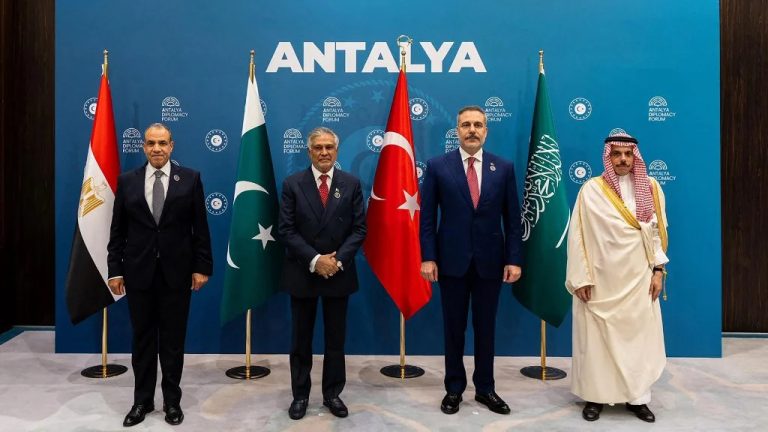
Foreign Ministers of Egypt, Saudi Arabia, Pakistan, and Türkiye standing together in front of a joint summit banner.

Türkiye’s Neutrality Tests Regional Balance After Iran Ceasefire

Türkiye has successfully navigated the recent Middle East conflict by maintaining a policy of “strategic flexibility.” While avoiding direct entanglement, Ankara has leveraged the disruption of traditional routes to boost its role as a key energy transit hub via the Kirkuk-Ceyhan pipeline, while positioning itself as a pragmatic mediator alongside the STEP quartet.

Read More »
JD Vance shaking hands with Shehbaz Sharif during an official diplomatic meeting.

The STEP Quartet: How Four Muslim Nations Are Reshaping the Middle East

The emergence of the STEP quartet—Saudi Arabia, Turkey, Egypt, and Pakistan—marks a historic shift in Middle Eastern diplomacy. By brokering the Islamabad ceasefire, these four nations have positioned themselves as the primary mediators between Washington and Tehran, signaling a new regional order focused on strategic autonomy and collective security.

Read More »
Recep Tayyip Erdoğan shaking hands with Hassan Sheikh Mohamud in front of a historical mural.

Turkey in Somalia: Partner, Protector or Something Else?

What began as a 2011 famine relief mission has evolved into Turkey’s most ambitious geopolitical project. With its largest overseas military base, a newly deployed F-16 wing, and the “SOMTURK” joint venture controlling maritime resources, Ankara has become Somalia’s indispensable security guarantor. However, as the UAE, China, and Israel (via its recognition of Somaliland) jostle for influence, questions of Somali sovereignty and the lopsided terms of hydrocarbon deals are beginning to spark domestic and regional friction.

Read More »
Turkish Foreign Minister Hakan Fidan speaking at the Stratcom Summit '26 podium.

Turkey Warns Iran War Risks Regional Catastrophe

Foreign Minister Hakan Fidan has warned that the Iran war is a “systemic rupture” driving the Middle East toward a regional catastrophe. Speaking at the STRATCOM 2026 summit before emergency talks in Islamabad, Fidan blamed Israeli escalation for the crisis and highlighted Turkey’s unique vulnerability to rising energy deficits, missile spillover, and potential Kurdish mobilization along its borders.

Read More »
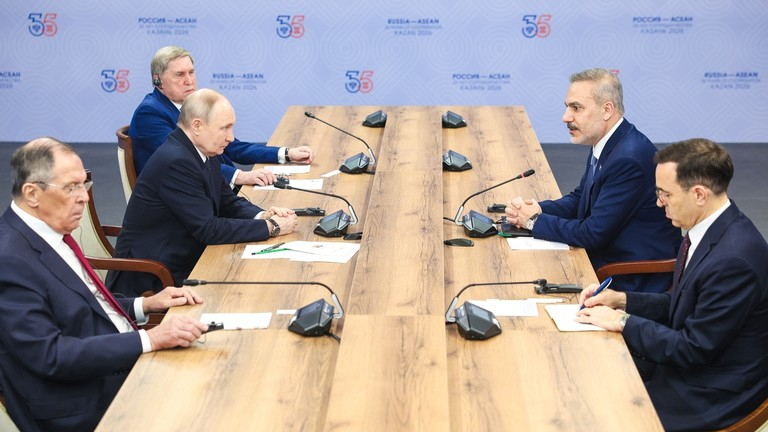
Hakan Fidan sitting at a diplomatic conference table with a Turkish flag in the foreground.

Turkey’s Push to End the Iran War Is Really About Self-Preservation

Turkey’s diplomatic push to end the war is driven by urgent self-preservation, fearing a Kurdish autonomous zone in Iran and a catastrophic refugee wave. With soaring energy costs widening its deficit and a shared 350-mile border, Ankara is positioning itself as a mediator to prevent regional collapse and domestic instability.

Read More »
Illustration of Arash the Archer firing missiles instead of arrows in a modern geopolitical art style.

Iran Won’t Break. But It Might Implode From Within.

Iran’s deep cultural cohesion and the IRGC’s tightening grip mean the regime won’t collapse under foreign pressure, but the war is accelerating internal tensions that could push the country toward an eventual implosion driven from within rather than imposed from outside.

Read More »
President Ilham Aliyev of Azerbaijan standing with an Iranian cleric and an official during a press meeting.

Azerbaijan Chose Diplomacy Over War — and Washington’s Hawks Are Furious

## **Micro‑Brief (50 words)**
Azerbaijan defused a crisis that Washington’s hawks hoped would open a northern front against Iran. After drone strikes on Nakhchivan, Baku briefly mobilized but quickly reversed course, reopening borders and sending aid. Pipeline vulnerability, Turkey’s restraint, and Iran’s large Azeri population made escalation untenable — exposing the limits of anti‑Iran coalition fantasies.

If you’re keeping this as part of your serialized war‑briefs, I can align tone and cadence across all entries.

Read More »
Kurdish YPG and SDF fighters with a wooden Trojan horse metaphor and smoke rising in the background.

Rojava’s End: How Washington Discarded Its Kurdish Allies

Rojava collapsed after Damascus seized most DAANES territory, ending a decade‑long Kurdish experiment dependent on U.S. protection. Washington shifted support to Syria’s new government, transferring thousands of ISIS detainees. As Kurdish forces are absorbed into the state, attention turns to Iran’s Kurdish movements — the next potential pressure point in regional geopolitics.

Read More »
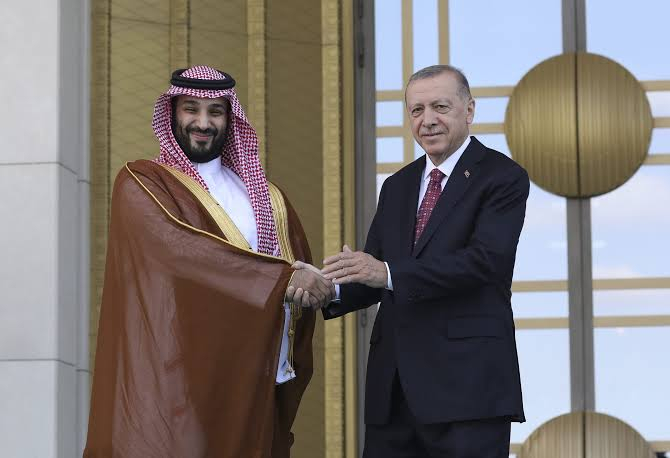
Turkish President Recep Tayyip Erdoğan and Saudi Crown Prince Mohammed bin Salman walking together during an official ceremony.

Turkey’s Sunni Coalition Push Reshapes Middle East Power

Turkey is building a new Sunni‑majority alignment through rapid diplomacy with Saudi Arabia, Egypt, and Jordan. Arms deals, industrial cooperation, and coordinated statements on Gaza signal Ankara’s expanding influence. But rival ambitions, Gulf hedging, and Israel’s resistance to Turkish involvement in Gaza could limit how far this emerging coalition can solidify.

Read More »