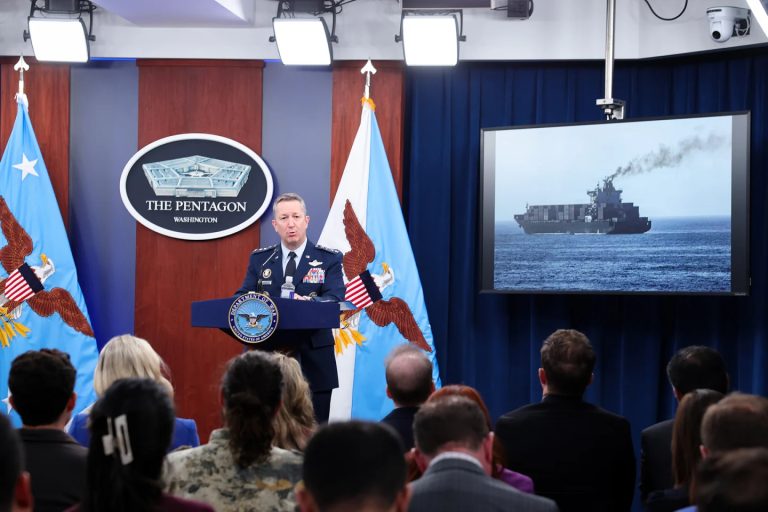
President Donald Trump has extended the US-Iran ceasefire indefinitely, citing divisions within Tehran’s leadership as a reason for the pause. The decision comes as talks remain stalled and the Strait of Hormuz stays largely closed to normal traffic. With both sides claiming they hold the upper hand, the extension buys time but also highlights the limits of Washington’s leverage in a conflict that continues to ripple through global energy markets and regional alliances.
The first round of direct negotiations in Islamabad produced little progress. Iranian officials rejected US demands on uranium stockpiles and enrichment limits, while the Trump administration refused to lift its blockade on Iranian ports. Tehran has signaled it will not return to the table without concessions, leaving the fragile truce vulnerable to renewed friction. US forces maintain pressure through selective enforcement, but Iran retains enough missile and drone capacity to threaten shipping and energy infrastructure if provoked.
Stalemate Tests Patience on Both Sides
Iran’s internal dynamics add another layer of complexity. The regime has shown resilience despite significant losses, with the Islamic Revolutionary Guard Corps (IRGC) maintaining influence even after high-level casualties. Reports suggest a coalition-style decision-making process has emerged in the absence of a single dominant figure. This setup may slow concessions but also prevents collapse, allowing Tehran to play for time while rebuilding capabilities.
For the United States, the extension reflects a desire to avoid immediate escalation while keeping options open. The deployment of multiple aircraft carrier strike groups demonstrates continued commitment, yet sustaining such a presence strains resources at a time when priorities in the Indo-Pacific and elsewhere compete for attention. Domestic pressure is mounting too, with rising energy costs fueling public skepticism about prolonged involvement.
The Strait of Hormuz remains the central flashpoint. Iran has used its geographic position to impose selective controls, extracting tolls where possible and signaling readiness to disrupt flows again if demands are ignored. Gulf states, already hit by earlier attacks, are accelerating plans for bypass pipelines and diversified routes. These long-term adaptations may reduce future vulnerabilities, but they cannot immediately offset current disruptions that keep oil prices elevated.
Gulf Partners Weigh Their Options
Regional reactions vary. Some Gulf capitals have quietly urged Washington against premature de-escalation, fearing a resurgent Iran with retained leverage over shipping lanes. Others appear more inclined toward hedging, balancing ties with the United States while exploring discreet channels to Tehran. The conflict has exposed the limits of relying solely on American security guarantees, prompting renewed investment in independent defense capabilities across the region.
The coming weeks will test whether this extended pause leads to genuine progress or simply prolongs an expensive stalemate. Both sides appear willing to endure short-term pain in hopes of gaining long-term advantage. For Washington, the challenge lies in calibrating pressure without overcommitting resources or alienating partners already wary of open-ended engagements. For Iran, the goal remains preserving core capabilities while forcing the international community to absorb some of the economic costs.
A breakthrough would require bridging wide gaps on nuclear issues, missile programs, and regional proxies. Without creative interim steps, the risk of renewed fighting remains high. The extended ceasefire may have paused direct hostilities, but the underlying contest of wills continues, with global energy security and regional stability hanging in the balance.
Original analysis inspired by Michael Froman, Steven Cook, and Ray Takeyh from Council on Foreign Relations. Additional research and verification conducted through multiple sources.