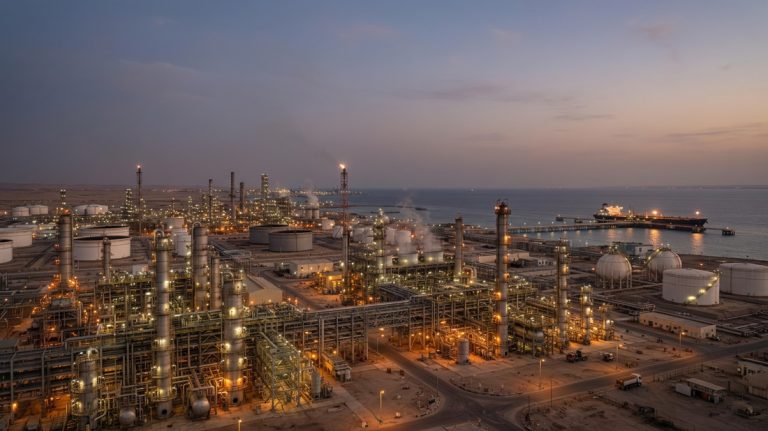
Regional escalation across the Arabian Peninsula has entered a volatile phase following reported drone and missile strikes against major Saudi energy infrastructure in Rabigh. As fighting intensifies alongside the broader confrontation involving Iran, Yemen Ansarallah movement has demonstrated an ability to project force well beyond its northern strongholds. The targeted Petro Rabigh complex, a massive integrated refining and petrochemical hub jointly developed by Saudi Aramco and Sumitomo Chemical, sits roughly 165 kilometers north of Jeddah along the Red Sea coast. Although Riyadh has not officially confirmed damage to the facility, the claim underscores how vulnerable coastal export hubs remain amid shifting regional alliances.
Strategic Chokepoints and Energy Vulnerability
Saudi Arabia western coastline hosts vital export terminals that serve as strategic alternatives when Persian Gulf shipping lanes face disruption. Facilities in Yanbu and Jazan handle substantial crude oil and refined product volumes that bypass the Strait of Hormuz via the East West Pipeline. Energy data from the United States Energy Information Administration shows shifting flows through Middle Eastern chokepoints whenever security risks spike near Bab el Mandeb. By targeting coastal refineries, Ansarallah signals that overland pipeline diversions cannot insulate Gulf producers from regional conflict.
Financial disclosures from Saudi Aramco highlight massive investments in downstream refining assets like Petro Rabigh, where Aramco recently acquired an additional 22.5 percent voting stake from Sumitomo. Protecting these high value industrial complexes requires continuous air defense coverage across vast desert and maritime perimeters. Yet repeated strikes on pipelines, refineries, and airports demonstrate that conventional military superiority has struggled to eliminate asymmetric drone and missile capabilities.
Territorial Gains and Diplomatic Deadlock
On the ground in Yemen, hostilities resumed sharply in July 2026 after months of fragile calm, allowing Ansarallah forces to seize new territory from internationally recognized government units. Coalition airstrikes have sought to degrade missile launch sites and telecommunications hubs, including recent raids in Hodeidah. However, strategic assessments indicate protracted attrition because divisions within the anti Ansarallah camp prevent unified military or political action.
Meanwhile, global energy markets already strained by supply disruptions in the Gulf absorb rising risks across the Red Sea corridor. Until regional powers establish a comprehensive political settlement that addresses Yemen internal governance alongside broader Gulf security, maritime commerce and Saudi industrial hubs will remain exposed to recurring asymmetric pressure.
Original analysis inspired by The New Arab Staff from The New Arab. Additional research and verification conducted through multiple sources.