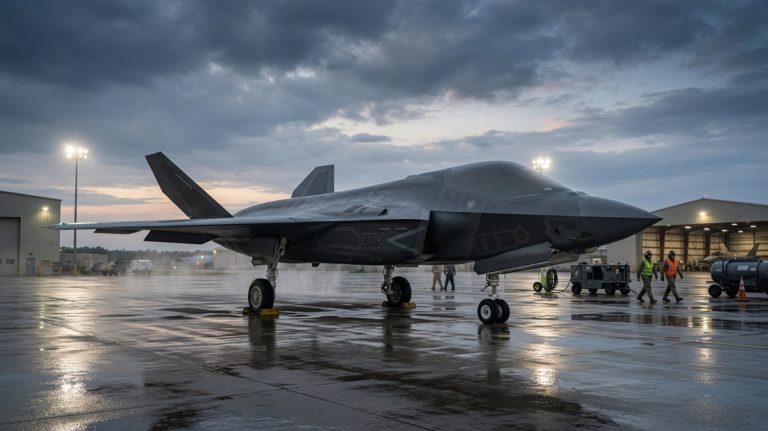
Unmanned aviation is crossing a decisive threshold from supporting manned fighter jets to conducting independent air combat missions. On November 19, Turkish defense manufacturer Baykar delivered the first three Kizilelma unmanned combat aircraft to Turkey’s security forces ahead of any operational European rival. Powered by artificial intelligence and integrated sensors, the jet signals a structural shift in how militaries calculate risk, mass, and escalation in modern skies.
For decades, defense planners debated whether robotic aircraft could ever match human pilot instincts in fast moving aerial engagements. Earlier American experiments under DARPA’s Air Combat Evolution program proved that algorithms could defeat veteran pilots in simulated dogfights and fly experimental jets in real combat maneuvers. European aerospace firms followed with autonomous trials on Swedish Gripen fighters in 2025, demonstrating that sensor fusion and machine speed decision cycles are reshaping air warfare architecture.
Sensor Integration Powers Independent Missions
Unlike expendable loyal wingman drones built merely to carry extra missiles for manned jets, Kizilelma operates with its own integrated sensor suite developed by ASELSAN. Its nose houses an active electronically scanned array radar for long range missile guidance, paired with infrared search and electro optical targeting systems that detect aircraft from over one hundred kilometers away without emitting radar signals. Recent upgrades also added a three hundred sixty degree electronic warfare shield that automatically deploys countermeasures against incoming radar threats.
Weapons trials over the past year proved that these sensors form a complete autonomous kill chain. In late 2025, Kizilelma executed what engineers called the first beyond visual range air to air strike by an unmanned fighter using a Gokdogan missile. Subsequent tests verified precision munitions releases from internal bays designed to preserve stealth, alongside demonstrations of smart fleet swarming between paired jets.
Geopolitics and NATO Industrial Reach
Beyond technical performance, unmanned fighters alter political risk calculations for governments wary of captured pilots. High profile aircrew rescues and downed pilots in past regional clashes showed how tactical losses quickly become strategic liabilities. Robotic fighters remove human hostages from high threat airspace while allowing commanders to project airpower at lower political cost.
Baykar’s production roadmap also reflects shifting defense supply chains and export ambitions. Initial aircraft rely on Ukrainian turbofan engines before transitioning to indigenous Turkish propulsion, underscoring deep wartime industrial ties between Ankara and Kyiv. Meanwhile, Indonesia’s order for twelve aircraft and naval carrier variants planned for Turkish warships point to growing demand across Asia and the Gulf. As NATO planners weigh combat mass and industrial endurance, Kizilelma positions autonomous air wings at the center of allied defense doctrine.
Original analysis inspired by Can Kasapoglu from Anadolu Agency. Additional research and verification conducted through multiple sources.