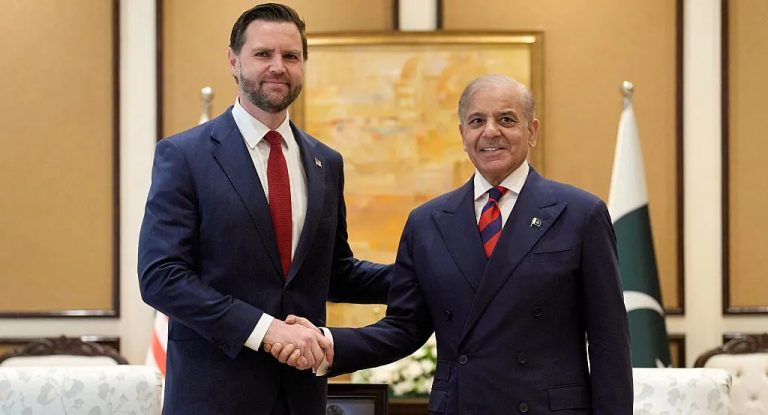
A fragile ceasefire, brokered in Islamabad after weeks of brutal fighting, may have done more than pause a war. On April 8, 2026, the United States and Iran agreed to a two-week halt in the Iran conflict, mediated by Pakistan — marking the highest-level diplomatic engagement between Washington and Tehran since the 1979 Islamic Revolution. The breakthrough placed a new cast of players at the center of global affairs: not Western capitals, but an emerging bloc of Muslim-majority nations whose collective weight is reshaping what regional security looks like.
That bloc — informally dubbed STEP, for Saudi Arabia, Turkey, Egypt, and Pakistan — is no accident of circumstance. The meeting established the quartet as the primary negotiating channel between Tehran and Washington, and may signal the beginning of a new regional order designed to curb Israeli and Iranian dominance after the war. Each country brings something distinct to the table. Pakistan possesses nuclear weapons, Saudi Arabia holds the world’s second-largest oil reserves, Egypt controls access to the vital Suez Canal, and Turkey is a NATO member. Together, they have fairly advanced defense industries and a combined population of 500 million people, representing the most politically and militarily influential Muslim-majority countries in the world.
Four Countries, One Shared Calculation
The diplomatic surge didn’t emerge from altruism. Each country had hard strategic and economic reasons to push for de-escalation. Israel and the United States launched airstrikes on Iran on February 28, 2026, killing its Supreme Leader and destroying military and government targets. Iran responded with missile and drone strikes against Israel, US bases, and allied countries across the region, and closed the Strait of Hormuz, disrupting global trade. That closure hit every STEP member where it hurt most.
During the fragile two-week ceasefire, the US military mounted a naval blockade of Iran’s ports and coastal areas in response to Iran’s throttling of the Strait of Hormuz, which caused global oil prices to skyrocket. For Egypt, those energy shocks piled onto an already strained economy, compounded by disruptions to Suez Canal shipping. Pakistan’s situation was equally precarious — the country had barely emerged from one of its worst economic crises before the war began. And with the world’s second-largest Shia population, Pakistan also faced acute domestic pressure after Iran’s Supreme Leader was killed in a US-Israeli airstrike, with at least 26 protesters dying in clashes with police.
Turkey’s calculations were similarly urgent. Sharing a 534-kilometer border with Iran, Ankara has real concerns that instability — or outright state collapse in Tehran — could empower Kurdish militant groups and export violence across its eastern frontier. The entire quartet, in short, was driven to the table by shared vulnerability, not shared ideology.
A Security Architecture Without Washington
The STEP quartet’s diplomatic role didn’t materialize overnight. It built on a structural shift months in the making. The Strategic Mutual Defence Agreement between Pakistan and Saudi Arabia commits both countries to treating any act of aggression against one as an act against both — language that deliberately echoes NATO’s Article 5. The treaty was signed on September 17, 2025, in Riyadh by Crown Prince Mohammed bin Salman and Prime Minister Shehbaz Sharif, against the backdrop of Israel’s strike on Qatar.
The pact formalised a long-standing security partnership and signalled a shift in Gulf states’ security away from exclusive reliance on the United States. According to RAND analysts, Saudi Arabia, shaken by Israel’s strike on Qatar, now appears more willing to treat Pakistan as a partner rather than a dependent. That’s a notable reversal — and one with consequences that extend well beyond the bilateral relationship.
The quartet’s cohesion was also built through sustained diplomatic effort. Pakistan’s foreign minister travelled to Beijing after the Islamabad talks, where he met Chinese Foreign Minister Wang Yi; the two sides outlined a five-point initiative calling for a ceasefire, civilian protection, restoration of shipping through the Strait of Hormuz, and a larger UN role. China’s involvement at a critical juncture added weight to what might otherwise have looked like a regional sideshow.
Europe Watches From the Sidelines
While STEP was building a mediation track, Europe was conspicuously absent. The EU, consumed by its support for Ukraine and its own internal fractures, offered nothing substantive. When UK Prime Minister Keir Starmer travelled to the Gulf to voice support for the ceasefire, the gesture was widely ridiculed as a symbol of British irrelevance rather than influence. European Commission President Ursula von der Leyen’s congratulatory statement on Pakistani mediation was similarly received — a bystander applauding from the cheap seats.
Turkey, meanwhile, has been deliberate in framing its growing role as a principled stance. Speaking before departing for Islamabad, Turkish Foreign Minister Hakan Fidan argued that the region must break its dependence on outside powers: expanding the SMDA beyond Pakistan and Saudi Arabia into a NATO-style arrangement with Arab states would face significant political obstacles, experts caution. But the direction of travel is clear, and Ankara’s concept of regional ownership — that states directly affected by regional crises bear the primary responsibility for resolving them — is gaining traction across the bloc.
Independent Broker or American Messenger?
Not everyone is convinced Pakistan was acting on its own initiative. The Financial Times reported that the US pushed Pakistan to broker a temporary ceasefire in early April. Questions sharpened when Prime Minister Sharif posted the ceasefire announcement on social media with a draft subject line still visible, suggesting the statement may have been composed elsewhere. Some critics described Pakistan’s role as that of a messenger, but professor Ishtiaq Ahmad of Quaid-i-Azam University rejected that notion, arguing that “a messenger transmits, but Pakistan shaped the sequencing, timing, and framing of proposals.”
The two adversaries — with the assistance of Pakistani, Egyptian, and Turkish mediators — have been trying to bridge remaining gaps and reach a deal before the ceasefire expires on April 21. Whether a durable agreement follows, or the ceasefire collapses under the weight of unresolved demands, the broader structural shift is already underway. A region that spent decades outsourcing its security to Washington is quietly building the institutions, pacts, and political habits of self-reliance. That process will not reverse easily — whatever happens next in Islamabad.
Original analysis inspired by Lily Lynch from UnHerd. Additional research and verification conducted through multiple sources.
By ThinkTanksMonitor