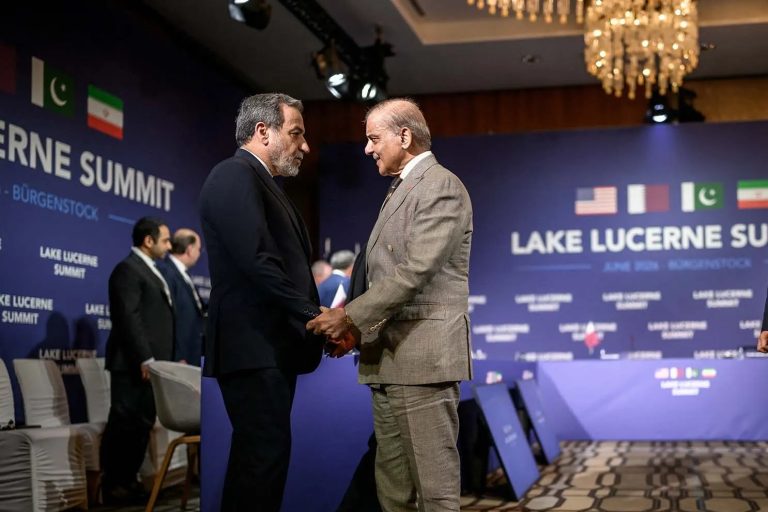
When the United States and Iran signed their memorandum of understanding in June 2026, Israel was not in the room. It was not consulted during the final negotiating rounds in Switzerland. It learned about the deconfliction mechanism — a new diplomatic channel involving the US, Iran, Pakistan, and Qatar — the way everyone else did. The MOU’s opening paragraph mentions Lebanon three times and declares the “immediate and permanent termination of military operations on all fronts, including in Lebanon,” without a single reference to Israel, the country that has been fighting Iran’s principal Lebanese proxy for months. Whether that exclusion was tactically defensible is one question. Whether Washington has handled it responsibly is a different one, and the answer to the second is clearly no.
The Israeli reaction has been sharp and unusually unified. A recent poll found that 92.1 percent of Israelis — including both Jewish and Arab citizens — believe Iran gained the most from the MOU, and 86 percent view the agreement negatively. For an electorate as divided as Israel’s, that level of consensus is striking. It reflects specific grievances rather than reflexive opposition: the absence of any mention of Iran’s missile program or its support for Hezbollah; the lifting of US sanctions without visible Iranian concessions on proxy activity; the relegation of the nuclear file to future negotiations; and the structural exclusion from a deconfliction mechanism that will directly govern Lebanon’s future.
From “Steadfast Partner” to “Wake Up and Smell Reality”
The rhetorical whiplash from Washington has not helped. In early March, Defense Secretary Pete Hegseth was describing Israel as a “steadfast partner” whose “extraordinary cooperation” was “amazing and necessary.” By June, Vice President JD Vance was telling Israeli critics of the MOU to “wake up and smell the reality of the situation that country is in.” That shift — from celebrating an ally to publicly browbeating it — covers roughly the distance between wartime solidarity and postwar divergence, compressed into a few weeks. It closely mirrors the dynamic that divided Washington and London as World War II neared its end, when allies who had fought together found their postwar interests pulling in different directions. The United States and Israel agreed on how to fight the war. They do not agree on how to end it.
The parallel has real limits. Unlike the postwar US-UK divergence, which played out between two powers with roughly comparable global stakes, the current gap involves an asymmetry that makes Israel’s position considerably more exposed. The United States negotiated the MOU from a position of relative geographic safety. Israel shares a border with Lebanon and lives under the direct operational reach of Hezbollah, which the MOU implicitly treats as part of the regional equation. When Vance was in Switzerland discussing Lebanon’s future with Iranian and Qatari officials, Israeli and Lebanese diplomats were simultaneously meeting in Washington under US auspices in a separate bilateral track. How these two processes relate to each other, whether they are coordinated or contradictory, Israel’s own ambassador in Washington said he needed “clarity” to understand. That is a remarkable admission from the envoy of a country that was a co-belligerent in the war that produced the agreement.
The Strategic Logic Behind Exclusion
There is a defensible case for keeping Israel out of the negotiations — but it has not been made. The United States gains tactical flexibility by dealing with Iran directly, without having to manage Israeli red lines in real time. Every Israeli demand incorporated into a US negotiating position narrows the room for compromise and gives Tehran an easy target to reject. The same logic applied to Saudi Arabia and the UAE, which were also excluded despite having direct stakes in the outcome. Distance creates freedom of action — including Israel’s freedom to continue operations in Lebanon without being formally bound by an agreement it did not sign.
The “ask forgiveness, not permission” approach is not inherently unreasonable in alliance management. What makes it unreasonable is the absence of the private consultation and careful public language that such an approach requires as its counterpart. If Washington is deliberately trading Israeli involvement for operational flexibility, then Israel needs a full private explanation of the logic, assurance that its core interests have been factored into the positions Washington took, and public language that signals respect rather than impatience. None of those conditions appear to have been met.
The new deconfliction mechanism is the sharpest example of the problem. The channel includes Pakistan — which played a central role in brokering the ceasefire — Qatar, and Iran, alongside the United States. Pakistan and Qatar have both been vocal critics of Israel’s conduct in Gaza and Lebanon. Their inclusion in a forum designed to govern Lebanon’s security trajectory, from which Israel is excluded, sends a signal that goes well beyond the immediate diplomatic arrangement. It tells Israel’s government, its public, and its adversaries that Washington has reconstituted its regional diplomatic architecture around partners who are openly hostile to Israel’s position on its most pressing security challenges.
What Both Sides Actually Want
The underlying strategic alignment between the United States and Israel remains real. Both oppose Iran’s nuclear program and will act to stop it. Both want a sovereign Lebanon free from Hezbollah’s military dominance. Both want to prevent Hamas from reconsolidating control of Gaza. These shared objectives did not disappear with the signing of the MOU — they were deferred into subsequent negotiations that have yet to begin in earnest. The 60-day window for a comprehensive nuclear agreement will require the IAEA, Israel, Gulf states, and European powers to engage with a framework whose terms were set without their input.
That sequencing creates a structural problem. Allies who are presented with a fait accompli after a ceasefire — rather than consulted during the negotiation — tend to become spoilers rather than supporters during the implementation phase. Israel’s incoming election, likely in September or October, adds pressure to that dynamic. Netanyahu has been careful in his public statements. His far-right coalition partners, Finance Minister Bezalel Smotrich and National Security Minister Itamar Ben Gvir, have not. Military strikes that continued in Lebanon even after the ceasefire announcement — attributed to Israeli operations — have already strained the MOU’s durability. Washington cannot simultaneously exclude Israel from the architecture of the peace and then express surprise when Israeli actions disrupt it.
Managing a critical alliance through public condescension rather than private coordination is not a sustainable approach. The United States has accumulated a credibility deficit with its closest Middle Eastern partner at exactly the moment when the hard work of translating a ceasefire into a durable order is about to begin. That deficit will cost more to repair later than it would have cost to prevent.
Original analysis inspired by Elliott Abrams from the Council on Foreign Relations. Additional research and verification conducted through multiple sources.