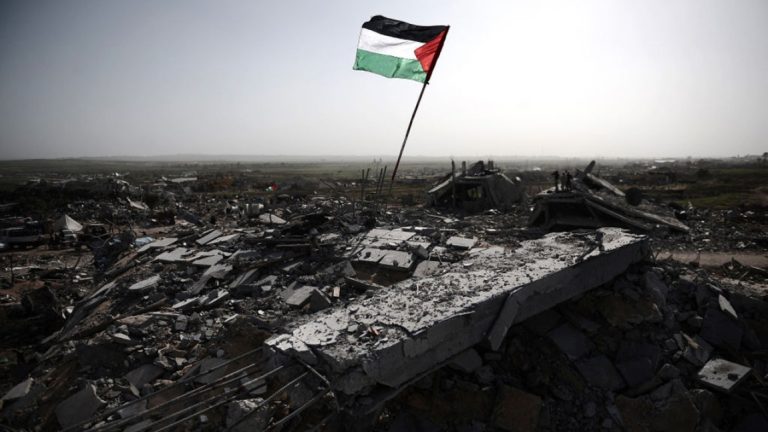
Three years after the Hamas-led assault on southern Israel, the ensuing war has produced levels of destruction in Gaza that have shifted how much of the world views the longstanding conflict. What began as a response to attacks that killed hundreds of civilians and took hostages has evolved into a sustained campaign that human rights organizations document as involving systematic harm to Palestinian civilians. The scale of casualties, displacement, and infrastructure collapse has made continued support for unrestricted Israeli military action increasingly difficult to justify in public debate.
Legal processes reflect this change. The International Court of Justice continues to examine South Africa’s case alleging violations of the Genocide Convention, with new deadlines set for further written submissions into 2027 and beyond. The court previously ordered provisional measures requiring Israel to facilitate humanitarian aid and prevent acts that could constitute genocide. Separately, the International Criminal Court has issued arrest warrants for senior Israeli officials and Hamas leaders related to alleged war crimes and crimes against humanity. These steps, while slow, signal that decades of relative exemption from international scrutiny no longer hold as firmly.
Public opinion has moved faster than official policy in many countries. Live coverage of the fighting and its aftermath has prompted candidates and parties in Western democracies to distance themselves from unconditional backing. In the United States, for instance, figures once careful not to criticize Israeli governments now face electoral incentives to question aid and arms transfers. Similar dynamics appear in parts of Europe, where recognition of Palestinian statehood has gained ground even as governments maintain security ties. The shift does not erase condemnation of the October 7 attacks, which Human Rights Watch and others assess as including deliberate killings of civilians and hostage-taking. It does, however, reject the premise that those crimes authorize unlimited subsequent harm.
Palestinian politics remains fragmented at a moment when external pressure for accountability is rising. The Palestinian Authority under Mahmoud Abbas continues to struggle with low public support and internal Fatah divisions, while Hamas has seen its governing structures in Gaza severely degraded. Polls indicate widespread dissatisfaction with existing leadership, and efforts to form transitional bodies for Gaza have stalled amid disagreements over reform and external oversight. Without a more coherent national strategy that can mobilize both local constituencies and international sympathy, the political gains from shifting global sentiment risk remaining limited.
Regional dynamics add further complexity. Israel’s military operations have extended beyond Gaza at times, contributing to broader instability involving Iran and its partners, while also exposing constraints on American influence. For many observers outside the traditional Western alliance, the conflict has become a measure of whether governments apply consistent standards on civilian protection and occupation. Supporting basic Palestinian rights, including an end to the conditions that produced the current catastrophe, now functions as a practical test of political credibility on related questions of international law and human security.
The coming period will test whether accumulated public and legal pressure produces concrete policy adjustments, or whether established patterns of support persist despite the human cost. Credible Palestinian leadership capable of articulating a clear political path would strengthen the case for change. In its absence, the disparity between global opinion and governmental action is likely to widen further.
Original analysis inspired by Mouin Rabbani from The New Arab. Additional research and verification conducted through multiple sources.