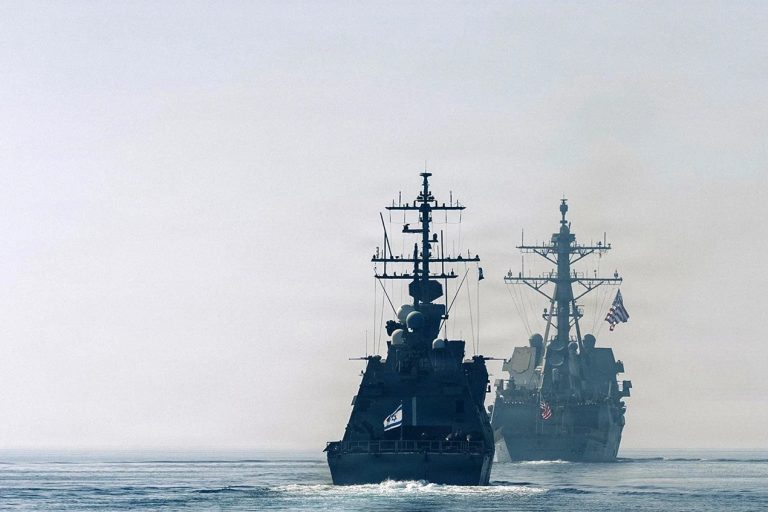
The Red Sea remains one of the world’s busiest shipping corridors, yet Houthi forces have intensified efforts to restrict traffic through its southern entrance at Bab el Mandeb. After declaring a naval blockade on Saudi Arabia, the group seized the port city of Mokha and nearby islands, tightening its hold on Yemen’s coastline. Saudi-backed Yemeni forces have since launched a counteroffensive to reclaim ground around the strait. These moves unfold while the Strait of Hormuz faces ongoing pressure from the broader Iran conflict, raising the prospect of simultaneous disruptions to two major energy routes.
Roughly 12 to 15 percent of global seaborne trade, valued at more than one trillion dollars, normally transits the Red Sea each year. Container traffic accounts for an even larger share, carrying grains, metals, electronics, and refined products between Asia, Europe, and the Middle East. Oil volumes through the waterway have already fluctuated sharply. Earlier Houthi attacks beginning in late 2023 caused crude and product flows via Bab el Mandeb to drop by more than half in 2024 compared with the prior year, according to tracking data. Many operators chose longer voyages around the Cape of Good Hope rather than risk the strait.
Saudi Arabia has leaned more heavily on its Red Sea outlets since eastern export routes became constrained. Its East-West pipeline moves crude from inland fields to the port of Yanbu, allowing loadings that avoid Hormuz. Recent figures indicate the line has returned to high throughput after temporary interruptions. Even so, tankers leaving Yanbu for Asian buyers still need to pass south through Bab el Mandeb. Any extended closure would force those cargoes to travel north through the Suez Canal and then around Africa, adding weeks and substantial fuel costs. Asian refiners, who purchase the bulk of Saudi crude, would face the longest delays.
The Houthis, long supported by Iranian weapons, training, and advice, treat the Red Sea as an extension of their regional posture. Their campaign has tested the new Mecca Joint Defense Agreement linking Saudi Arabia, Pakistan, and Turkey. That pact, modeled on collective defense language, was invoked for the first time after attacks on Saudi infrastructure. The agreement commits members to treat an assault on one as an assault on all, yet practical responses remain under discussion. Meanwhile, the United States and its partners have previously run naval missions to escort shipping and strike Houthi sites, though temporary understandings with the group have limited direct targeting of American vessels.
Undersea cables that carry the majority of Europe-Asia data traffic also run through the Red Sea, making the waterway a digital as well as commercial chokepoint. Past damage has already interrupted connectivity in parts of Africa and the Middle East. On the African side, competition among Gulf and Turkish actors over ports, security, and influence in Sudan, Somalia, and the Horn of Africa could intensify if Red Sea instability grows. Longer shipping routes around southern Africa further strain ports that lack the capacity to accommodate sudden increases in volume.
Alternatives exist but remain imperfect. Vessels can exit the Red Sea northward through Suez rather than southward, yet dual pressure on both Bab el Mandeb and Hormuz would still leave limited options for Middle Eastern oil and gas. Overland corridors between Gulf states offer partial relief at high cost. Markets have shown resilience during earlier Red Sea disruptions, yet prolonged pressure on both chokepoints would likely lift freight rates, tighten crude availability, and add inflationary pressure on consumers far from the region. How long Saudi and Yemeni forces can restore reliable passage will shape whether the Red Sea becomes a secondary front or a manageable risk.
Original analysis inspired by Diana Roy from Council on Foreign Relations. Additional research and verification conducted through multiple sources.