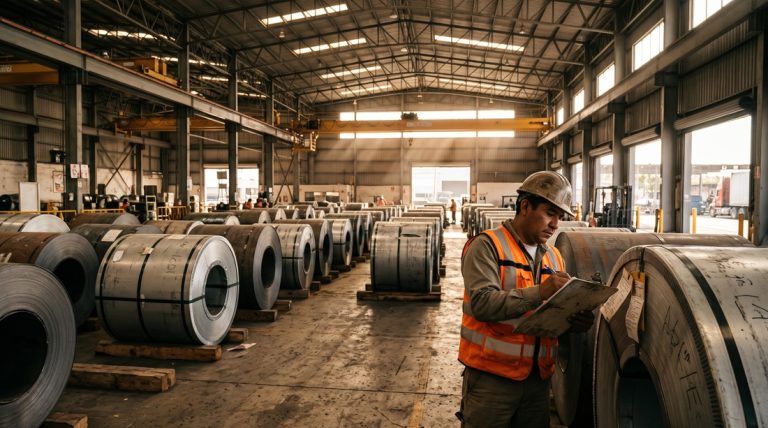
Mexico is tightening checks on imported steel while seeking relief from American tariffs. The bargain looks straightforward: demonstrate that foreign producers cannot misuse Mexican trade preferences, then persuade Washington to ease restrictions. Yet customs cooperation offers no guarantee of commercial stability. The deeper problem is how to protect access to Mexico’s largest market without allowing that dependence to dictate its entire industrial strategy.
Deputy Economy Minister Luis Rosendo Gutierrez said on November 11 that officials had strengthened traceability and removed around 1,100 steel mills from an approved registry after determining they did not exist. He reported reductions in metal imports from several Asian suppliers and expressed hope for progress in tariff negotiations. Those are official claims about enforcement results, rather than proof that every affected shipment involved evasion.
There is a legitimate distinction between verifying origin and excluding suppliers for geopolitical reasons. American customs authorities introduced additional requirements in July 2024 linking certain Mexican steel imports to where the metal was melted and poured. That historical measure shows that traceability disputes predate the latest negotiations. Better documentation can protect legitimate manufacturers, but broader sourcing restrictions can also reduce their options and increase costs.
The economic imbalance helps explain Mexico’s willingness to cooperate. The OECD identified the United States as the destination for more than 80 percent of Mexican exports in its 2026 survey. It also found that fragmented origin certification creates particular difficulties for smaller businesses. Improving those systems would strengthen Mexican firms regardless of Washington’s immediate demands, whereas repeatedly changing access conditions makes investment planning harder.
Strong export totals should not obscure the pressure on individual industries. Federal Reserve researchers found that Mexico’s recent export growth depended heavily on machinery, particularly computers and servers, while sectors facing greater tariff exposure performed more weakly. Their analysis associated the machinery surge with American investment in AI data centers and noted the importance of imported Asian components. That production model complicates any attempt to treat commercial links with Asia as inherently incompatible with North American manufacturing.
The uncertainty extends beyond steel. Treasury Secretary Scott Bessent expressed optimism about trade deals on November 13, following Donald Trump’s threat to double tariffs on Mexico over migration. This illustrates how a dispute outside industrial policy can unsettle commercial negotiations. Mexican concessions on customs enforcement may therefore leave firms exposed to demands arising elsewhere.
Mexico’s strongest position would combine credible origin checks with predictable rules and diversified commercial relationships. Enforcement should target documented abuse, while negotiated concessions should produce identifiable benefits for manufacturers. Otherwise, each new demand risks becoming another condition for preserving access that businesses once assumed was secure.
Original analysis inspired by Global Times from Global Times. Additional research and verification conducted through multiple sources.