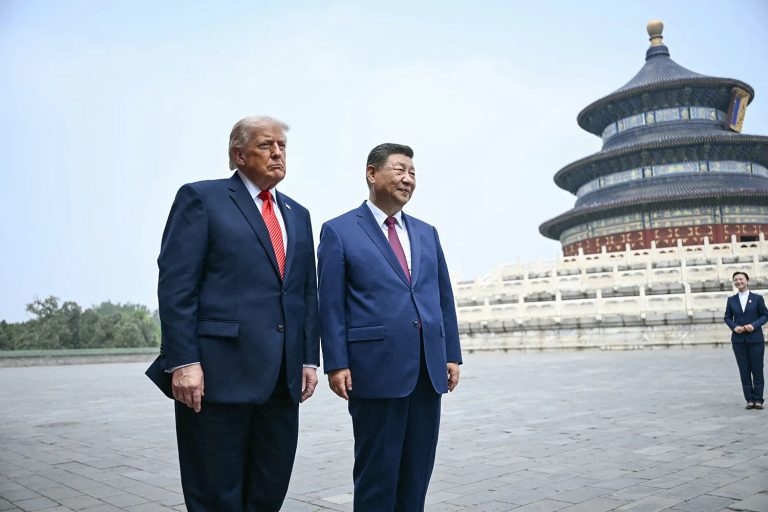
Donald Trump went to Beijing looking for visible gains before a difficult political season at home. Xi Jinping gave him ceremony, access, and enough trade language to keep markets interested, but little sign that China was ready to soften its position on core disputes. The visit produced commercial headlines, especially on Boeing aircraft, agriculture, and investment channels. Yet the deeper message was political: Beijing wanted engagement with Washington, but on terms that treated China as an equal power, not a supplicant.
The White House presented the summit as a breakthrough, saying the two sides agreed to create new trade boards and expand Chinese purchases of U.S. goods. China’s official language was cooler. Its readout emphasized “strategic stability,” mutual respect, and limits on confrontation, while placing Taiwan at the center of the relationship. That contrast matters because it shows how both governments are selling the same meeting to different audiences.
Trump’s personal diplomacy has always leaned on warmth, flattery, and dealmaking theater. In Beijing, that style gave Xi an opening to appear steady and restrained. The optics helped China project confidence: Trump arrived with business leaders and the need for trade wins, while Xi framed the relationship through sovereignty, equality, and long-term power balance. For Beijing, the summit was less about one set of deals than about shaping the rules of engagement.
Trade Gains, Strategic Limits
The economic package was real, but not transformative. The White House said China would buy at least $17 billion annually in U.S. agricultural products and approve an initial order of 200 Boeing planes. It also cited renewed access for U.S. beef and poultry and discussions over rare earths. These are useful outcomes for American exporters, but they do not settle the larger dispute over tariffs, technology controls, supply chains, and industrial competition.
That gap explains why the absence of a joint statement mattered. A summit of this scale usually tries to turn broad political intent into shared language. Here, the two sides issued separate accounts because the most difficult issues remained unresolved. Taiwan, Iran, the South China Sea, sanctions, and export controls all sit outside the comfort zone of a trade-centered narrative.
Independent analysts at CSIS made a similar point, noting that Washington emphasized economics while Beijing treated Taiwan as the central political test. Xi warned that mishandling Taiwan could produce confrontation, while Trump later said he did not want a war “9,500 miles away.” That comment may reassure U.S. voters tired of foreign conflict, but it also gives Beijing reason to test how far Washington’s caution extends.
Iran added another layer of complexity. The White House said both leaders opposed a nuclear-armed Iran and supported reopening the Strait of Hormuz. China, however, framed the Middle East crisis more broadly, calling for dialogue and rejecting military escalation. As a major buyer of Gulf energy, Beijing wants stability in Hormuz, but it has little interest in endorsing Washington’s pressure campaign.
The summit therefore revealed a relationship that is neither collapsing nor recovering. It is being managed. Trump can claim commercial progress, Xi can claim recognition of China’s status, and both can postpone a sharper confrontation. But postponement is not settlement.
The next phase will test whether the new channels become tools for crisis management or simply diplomatic packaging. If trade boards cannot handle strategic distrust, and if Taiwan remains the main pressure point, the apparent calm may not last. Beijing left the summit looking patient and disciplined. Washington left with deals to advertise. The harder question is whether either side gained a more stable relationship—or only a temporary pause before the next test.
Original analysis inspired by Kanwal Sibal from RT. Additional research and verification conducted through multiple sources.