Category: USA

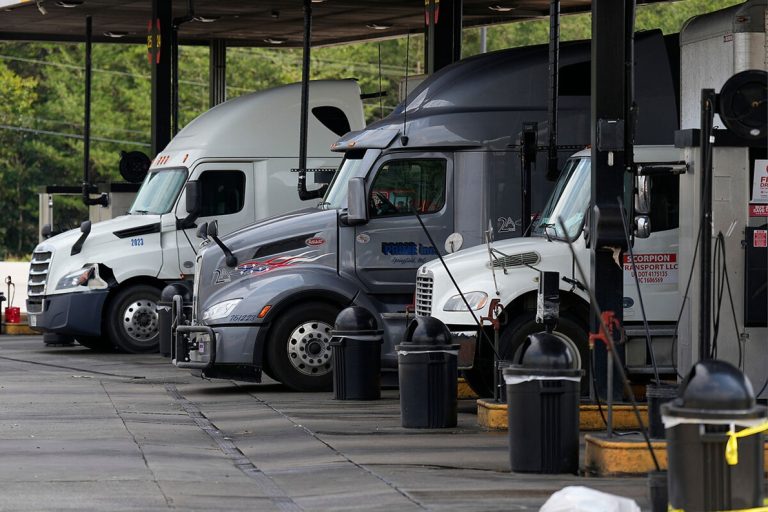
Close-up of several blue and white gas station fuel pumps.

US Economy Faces Stagflation Threat From Iran Oil Shock

A historic energy supply shock triggered by conflict in the Persian Gulf is threatening the U.S. economy with stagflation. As the Strait of Hormuz closure sends global oil and fertilizer prices soaring, Washington faces rising inflation and consumer anxiety, complicating Federal Reserve policy and shaping the domestic political landscape.

Read More »
The Big Ben clock tower in London with a blurred Union Jack flag in the foreground.

Mistrust Deepens in UK-US ‘Special Relationship’

King Charles III’s state visit to the U.S. comes amid deepening mistrust in the transatlantic alliance. Tensions have escalated over the Pentagon’s reported use of the Falkland Islands sovereignty as diplomatic leverage, highlighting a strategic divergence as London navigates economic constraints and a more transactional Washington.

Read More »
Indian Prime Minister Narendra Modi and President Donald Trump shaking hands while seated in the Oval Office, with aides and a fireplace in the background.

Trump’s Transactional Shift in US-India Relations

The US-India partnership is entering a pragmatic new phase characterized by a focus on tangible outcomes in trade, technology, and defense. While shared concerns regarding China’s influence sustain the alliance, the relationship now navigates a transactional landscape where immediate mutual benefits and market access take center stage.

Read More »
A military operator in camouflage uniform standing in a field, controlling a large grey quadcopter drone that is hovering in the air near a tactical mobile command vehicle.

US Lags in Era of Mass Drone Warfare

As cheap, mass-produced drones redefine modern attrition warfare, the United States faces a strategic mismatch. While adversaries exploit low-cost systems to overwhelm defenses, Washington is pivoting toward initiatives like “Replicator” to scale production, seeking to balance its technological edge with the sheer volume required for future conflicts.

Read More »
Secret Service agents and tactical law enforcement officers securing a stage during an emergency incident at a political rally, with an officer in tactical gear holding a rifle in the foreground.

US Sees Uptick in Left-Wing Political Violence

Recent high-profile attacks indicate a troubling uptick in left-wing political violence across the United States. Driven by deep societal polarization and digital radicalization, these incidents reflect a shifting extremist landscape where personal grievances blend with political rage, posing a significant challenge to democratic stability and public safety.

Read More »
A conceptual digital illustration of planet Earth centered within a complex, glowing orange circuit board pattern.

The War of Clocks and Systems: New Rules of Geopolitical Power

In the “Trumpquake” era, the rules of global power have been rewritten. Beyond the fragile US-Iran ceasefire lies a deeper systemic warfare where strategic patience (Tehran’s clock) clashes with political haste (Washington’s clock). This report explores the emergence of a fragmented order—from Hezbollah’s financial revival to the EU’s electrification mandate—where pragmatic alliances and the weaponization of maritime arteries have replaced traditional diplomacy.

Read More »
A U.S. military official speaking at a Pentagon press briefing with a screen showing a large container ship emitting smoke at sea.

Extended Iran Ceasefire Leaves US Facing Tough Choices

President Trump’s indefinite extension of the Iran ceasefire marks a strategic pause in the 2026 war, yet the path to peace remains blocked by a “triumvirate” of IRGC hardliners in Tehran and a rigid U.S. naval blockade. With oil prices surging to $107 and direct talks in Islamabad stalled, the administration faces a critical choice: can diplomacy survive a “military council” that has effectively sidelined Iran’s civilian government?

Read More »
A silhouette of a US Navy aircraft carrier at sea during sunset with a fighter jet taking off.

US Iran Blockade Highlights Timing Challenges

The U.S. naval blockade of Iran, while intended to force concessions, has become a strategic bottleneck. Implemented after open hostilities had already commenced, the measure has inadvertently narrowed the space for diplomacy, prompting Iran to decentralize its operations and use the Strait of Hormuz as a counter-lever. This report examines the high cost of delayed coercive sequencing in a rapidly escalating regional conflict.

Read More »
A portrait of Donald Trump looking directly at the camera with a serious expression, wearing a blue suit and purple tie.

US-Backed Figures Risk Familiar Fate in Iran Crisis

A recurring pattern in American foreign policy—the cultivation of local proxies for regime change—is once again playing out in the Iran conflict. From exiled figures to ambitious local politicians, those seeking power through external sponsorship often ignore the cautionary tales of the past. History suggests that such collaborations are inherently fragile, frequently ending in isolation or abandonment once Washington’s strategic priorities shift.

Read More »
Two chess kings, one silver and one black, standing on a chessboard with the blurred flags of the United States and Iran in the background.

Iran War Erodes US Appetite for Middle East Role

As the conflict enters its third month, domestic opposition to U.S. military engagement in the Middle East has reached a critical tipping point. Driven by rising energy costs and economic anxiety, a majority of Americans now disapprove of the ongoing campaign. With the 60-day War Powers Resolution deadline approaching, the administration faces a defiant Congress and a public increasingly weary of open-ended regional commitments.

Read More »
A classic oil painting illustration of Uncle Sam looking stressed while leaning over a world map with European politicians around him.

Europe Tests Limits of US Influence

The transatlantic relationship is entering a new, more transactional era as European leaders increasingly prioritize domestic stability over unconditional alignment with U.S. foreign policy. Prime Minister Keir Starmer’s decision to opt out of the naval blockade against Iran highlights a growing strategic divergence, where European capitals are no longer willing to bear the economic costs of American-led confrontations.

Read More »
A street scene in Tehran featuring a large political billboard showing a hand controlling the Strait of Hormuz.

US Leverage in Hormuz Weakens Iran’s Position Long-Term

The strategic landscape of the Gulf is undergoing a permanent shift as the U.S. asserts maritime control over the Strait of Hormuz. With Saudi Arabia restoring its East-West pipeline to full capacity and regional powers investing in bypass routes, Iran’s traditional geographic leverage is weakening against a backdrop of massive domestic infrastructure damage.

Read More »