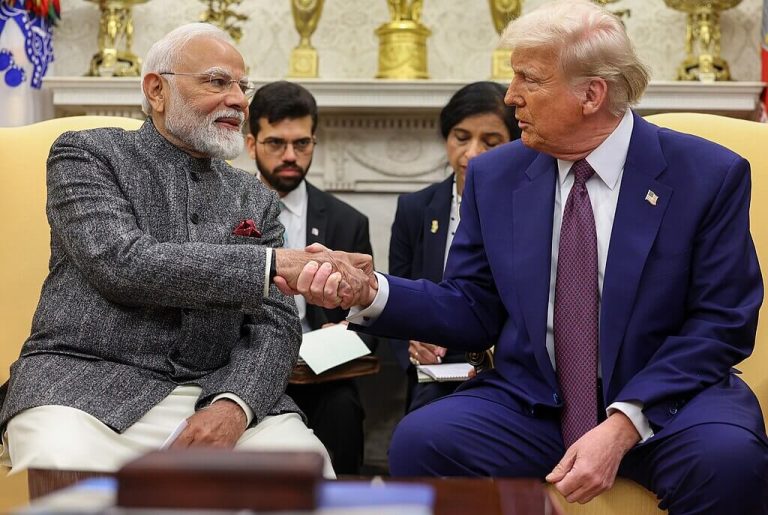
The US-India partnership has entered a more pragmatic phase under President Donald Trump, moving away from the values-driven emphasis of previous administrations toward clear mutual benefits. While shared concerns about China’s growing influence in the Indo-Pacific remain central, the current White House focuses heavily on tangible outcomes in trade, defense, and technology. This approach reflects Trump’s broader foreign policy style, where alliances are judged by immediate returns rather than long-term ideological alignment.
Recent developments show both progress and friction. High-level visits have increased since early 2026, with US officials traveling to New Delhi to advance cooperation on critical minerals and artificial intelligence. Indian military leaders have also visited Washington, signaling continued defense ties. Yet trade tensions linger, with the United States pushing for greater market access for American companies while India protects sensitive sectors like agriculture and dairy.
Defense and Security Cooperation Advances
Bilateral defense relations have shown strong continuity despite political shifts. The renewal of the foundational defense agreement for another decade provides a stable framework for joint exercises and technology sharing. India recently approved the purchase of additional P-8I maritime patrol aircraft from the United States, enhancing its anti-submarine capabilities in the Indian Ocean. These steps align with both countries’ interest in countering Chinese naval expansion, though implementation often faces delays due to bureaucratic hurdles in New Delhi.
The Quad grouping with Australia and Japan continues to serve as a platform for regional coordination. While leader-level summits have been limited, upcoming foreign ministers’ meetings offer opportunities to deepen practical collaboration on maritime security and supply chain resilience. Working-level engagement remains robust, with regular exchanges on emerging technologies and intelligence sharing helping to sustain momentum even when top-level diplomacy slows.
Trade remains the most challenging area. The United States has sought to address what it sees as high Indian tariffs and non-tariff barriers that limit American exports. Recent negotiations have produced a framework for an interim bilateral trade agreement, though full resolution depends on resolving differences over market access. India’s announcement of plans to purchase $500 billion in US goods over five years, including energy and aircraft, represents a significant gesture, but implementation will require sustained effort from both sides.
Balancing Interests Amid Global Pressures
The relationship also faces complications from regional dynamics. Trump’s claim to have mediated a ceasefire between India and Pakistan in 2025 strained trust temporarily, particularly as US-Pakistan ties have warmed through Pakistan’s role in Iran-related diplomacy. Immigration policy changes affecting H-1B visas, which many Indian professionals rely on, have added another layer of sensitivity to people-to-people ties.
Despite these hurdles, the partnership shows resilience at the operational level. Cooperation on space, energy, and critical minerals has expanded, with new initiatives in civil nuclear technology following India’s recent regulatory reforms. Both sides recognize the strategic value of the relationship in a multipolar Asia, where India’s growing economy and military capabilities make it an increasingly important partner for the United States.
Looking ahead, success will depend on translating working-level progress into visible deliverables. A potential Trump visit to India later this year could provide the high-level impetus needed to overcome remaining obstacles. For now, the relationship balances transactional deal-making with longer-term strategic alignment, reflecting the complex realities of US engagement in Asia.
The coming months will test whether this pragmatic approach can deliver concrete gains while maintaining stability amid competing global priorities. As both countries navigate economic uncertainties and security challenges, their ability to manage differences will determine the partnership’s trajectory in an increasingly competitive region.
Original analysis inspired by Viraj Solanki from International Institute for Strategic Studies. Additional research and verification conducted through multiple sources.