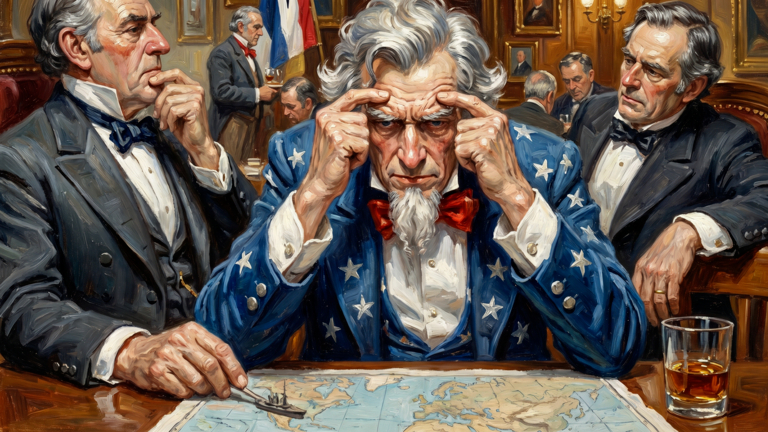
Britain’s decision to stay out of any naval blockade in the Strait of Hormuz has sent a quiet but unmistakable signal across the Atlantic. Prime Minister Keir Starmer’s refusal to commit forces came as the United States sought broader support for its operations against Iran. For many observers, the move highlighted a deeper shift: Western European governments are increasingly willing to pursue their own calculations even when they diverge from Washington’s priorities.
This episode fits a larger pattern. The United States has long maintained a dominant position in European security, with bases stretching from Germany to Italy and nuclear assets under NATO’s shared framework. Yet recent events suggest that leverage is no longer absolute. European leaders, facing domestic pressures and energy uncertainties, are carving out more space for independent action.
Strategic Value Flows Both Ways
The American presence in Europe has always served Washington’s interests as much as Europe’s. Bases on the continent provide forward projection against Russia and, increasingly, a platform for monitoring developments toward China. Without this foothold, the United States would lose a critical buffer zone where competition can play out without immediate risks to the homeland. European territory also allows Washington to maintain pressure on Moscow through proximity, an advantage Russia cannot replicate in the Western Hemisphere.
European capitals understand this dynamic well. While public rhetoric often emphasizes the need for American protection, private assessments reflect long-standing skepticism. Even during the Cold War, leaders in Paris and London doubted whether Washington would risk its own cities to defend theirs. France’s independent nuclear deterrent grew directly from this calculation. Today, similar thinking informs how governments respond when American requests carry high costs and uncertain benefits.
The Iran conflict has accelerated these trends. Disruptions in the Strait of Hormuz threatened global energy flows, but many European nations weighed the risks of direct involvement against their own economic vulnerabilities. Starmer’s stance was not isolated. Other governments have shown similar caution, prioritizing de-escalation and energy stability over alignment with every US objective.
Hedging Becomes the New Normal
Western Europe’s response reflects a broader hedging strategy. Economic ties to the United States remain deep, particularly in finance and technology, limiting how far any break can go. At the same time, European leaders recognize that full reliance on American guarantees carries risks when US policy appears unpredictable. The result is a more transactional relationship where support is negotiated rather than assumed.
This shift does not signal the end of NATO or transatlantic cooperation. European states still value the alliance for managing relations with Russia and sharing intelligence. However, they are less willing to automatically follow Washington into every crisis, especially those with direct costs to their energy security or domestic politics.
The United States now faces the challenge of managing multiple fronts simultaneously. Efforts to stabilize ties with Russia, maintain pressure on China, and keep Europe aligned create competing demands. When resources and attention are stretched, European partners sense opportunity to extract concessions or reduce their own exposure.
For Washington, the erosion of automatic leverage presents a strategic dilemma. Threats to weaken NATO commitments or pull back forces risk accelerating the very independence they seek to prevent. Yet continued demands without sufficient consultation may further encourage hedging behavior across the continent.
The coming period will test whether the United States can adapt to a more balanced partnership or whether it will continue to assume a level of influence that no longer exists unchallenged. European governments, for their part, will likely continue probing the boundaries, advancing their interests where they diverge while preserving the core security framework that still serves them.
In the end, the transatlantic relationship was never purely altruistic. Its strength always rested on mutual benefit. As that balance evolves, both sides must adjust to a reality where loyalty is conditional and leverage must be earned rather than inherited.
Original analysis inspired by RT Staff from RT. Additional research and verification conducted through multiple sources.