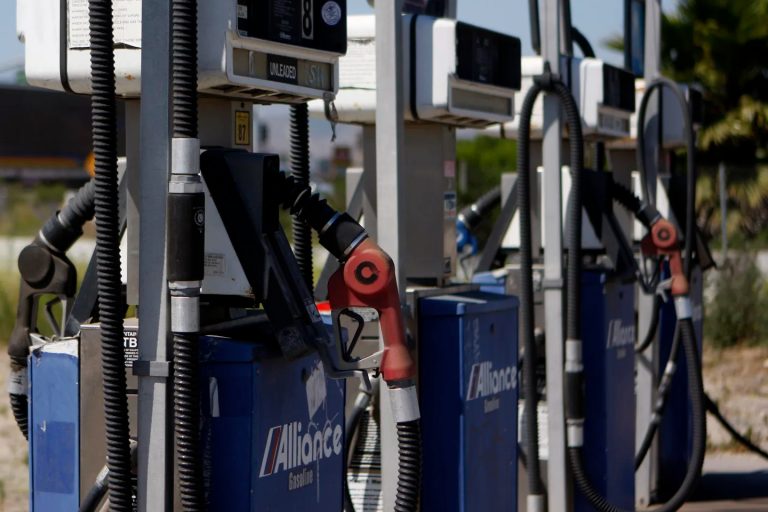
The closure of a vital shipping route in the Persian Gulf has thrust global energy markets into turmoil, exposing and intensifying vulnerabilities in the American economy that were already evident after last year’s solid growth. Despite the United States remaining the world’s top oil producer and a net exporter, the disruption has sent pump prices climbing more than a dollar in many places, with averages now exceeding four dollars a gallon. As families grapple with higher costs for fuel, food, and transport ahead of November’s midterm elections, what began as a regional conflict now carries significant domestic political weight.
The Strait of Hormuz normally handles roughly one-fifth of global oil shipments, plus important volumes of liquefied natural gas, fertilizers, and helium used in high-tech manufacturing. Its near-shutdown after February’s military strikes has produced what energy monitors describe as the largest supply shock on record, outpacing the market chaos that followed Russia’s 2022 invasion of Ukraine. Asian economies, which receive the majority of those flows, have responded with factory closures in Bangladesh, shortened school weeks in Pakistan, and conservation drives in places like South Korea and Australia. Those adjustments create feedback loops that raise costs for American consumers through pricier imports and softer demand abroad.
Farmers who had not yet secured fertilizer supplies face sharply higher input expenses that will push food prices upward later this year. Similar pressures affect plastics, airline tickets, and components for semiconductors, where helium shortages pose particular risks. Even a full reopening of the waterway would not erase the damage quickly. Infrastructure repairs in the Gulf could take years in some cases, and mid-season fertilizer shortfalls cannot be fixed overnight, pointing to prolonged effects on both growth and prices.
Inflationary Pressures and Labor Market Uncertainty
Inflation has already reacted. Figures for March showed a rise from 2.4 percent to 3.3 percent year-over-year, driven largely by energy costs, with core measures also remaining above the Federal Reserve’s target. Analysts expect further increases in coming readings as the shock works through supply chains, and some forecasts suggest 2026 could see levels approaching 4 percent or higher if disruptions persist. This comes after years when price pressures had already shaped voter priorities around affordability.
The labor market tells a complicated story. March added more jobs than expected and unemployment held steady near 4.3 percent, yet large-scale layoffs at major technology companies have raised fears about AI-driven displacement. Recent graduates in particular report slim prospects for entry-level roles, while anecdotal evidence of an accelerating shift toward automation adds to uncertainty. Against this backdrop, consumer sentiment has dropped to record lows, reflecting widespread anxiety even as some business surveys taken before the escalation painted a more optimistic picture.
Policy Choices Grow Complicated
These conditions place the Federal Reserve in a difficult spot. After cutting rates late last year, officials have held the benchmark steady in recent meetings, and further easing looks unlikely while inflation risks remain elevated. The central bank must monitor whether slowing demand begins to weigh on employment, potentially pulling its dual mandate in opposing directions. A nominee to lead the institution may face pressure to deliver lower borrowing costs, yet current data could require a different approach.
Businesses meanwhile navigate fresh doubts over long-term trade policy after court rulings limited certain tariff authorities. This uncertainty complicates decisions on supply chains and manufacturing locations. Some observers also point to rapid growth in private credit as a potential vulnerability, though most argue current structures differ in important ways from the risks that fueled the 2008 crisis.
The housing sector, which had shown tentative improvement with mortgage rates briefly falling below 6 percent, now contends with rates climbing again and fading hopes for additional rate cuts. A acknowledged shortage of millions of homes keeps affordability under strain despite bipartisan legislative efforts to expand supply and restrict certain investor activity.
A Precarious Outlook
Officials have released oil from the Strategic Petroleum Reserve and considered temporary measures such as a federal gas tax reduction to provide near-term relief. These actions may cushion some immediate blows, yet they cannot repair damaged facilities overseas, replenish global commodity stocks, or quickly restore confidence. The International Monetary Fund has warned of heightened global recession risks if the situation drags on, underscoring the stakes.
Longer term, the episode may hasten moves toward greater energy diversification and more resilient supply networks. For the moment, it highlights how external shocks can interact with domestic fragilities to threaten a return to the stagflationary conditions of past decades. How Washington balances relief, reform, and diplomacy in the months ahead will help determine whether this becomes a temporary disruption or a more enduring setback for both the economy and the political landscape.
Original analysis inspired by Roger W. Ferguson Jr. and Maximilian Hippold from Council on Foreign Relations. Additional research and verification conducted through multiple sources.