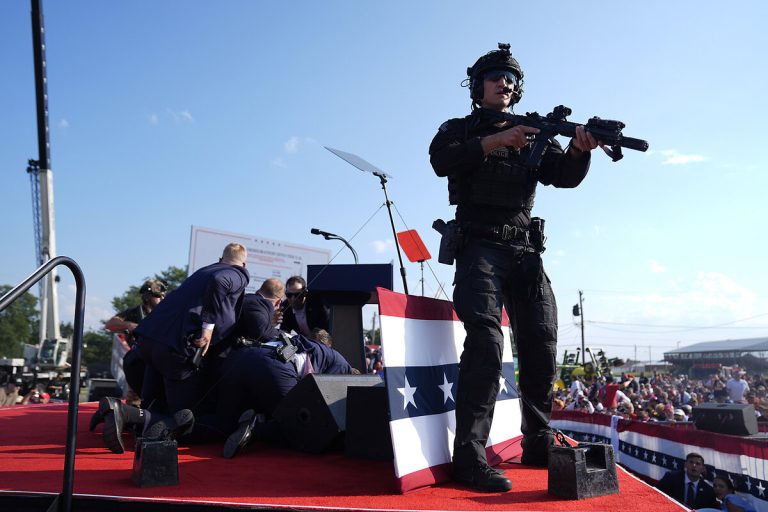
A California man faces federal charges after allegedly attempting to assassinate President Donald Trump at the White House Correspondents’ dinner on Saturday night. Cole Tomas Allen is accused of planning the attack with a manifesto that mixed personal grievances and political rage. The incident marks at least the third known attempt on Trump’s life since 2024, adding to a troubling pattern of violence aimed at prominent figures on the political right.
Recent years have seen a noticeable shift in the landscape of domestic extremism. While far-right attacks dominated for over a decade, left-wing incidents have risen sharply. The December 2024 killing of UnitedHealthcare CEO Brian Thompson and the September 2025 assassination of conservative commentator Charlie Kirk on a Utah campus are cited by analysts as part of this escalation. These acts, though often rooted in personal crises, increasingly draw on political symbolism and online narratives to justify violence.
Polarization Fuels Broader Risks
Public concern about political violence is widespread, yet perceptions remain deeply partisan. A 2025 AP-NORC poll found that six in ten Americans on both sides worry about attacks targeting their own political camp, while far fewer express equal concern for their opponents. Younger adults aged 18 to 29 show higher tolerance for violence in polls, especially among heavy social media users. This generational dynamic, combined with deepening societal divides, creates fertile ground for extremism.
Experts caution against oversimplifying motives. Many perpetrators blend personal despair with political ideology, often influenced by internet memes and conspiracy thinking. Rachel Kleinfeld of the Carnegie Endowment describes would-be attackers as individuals seeking to make their lives feel significant through connection to larger events. The FBI has introduced “nihilistic extremism” as a category to capture acts driven more by rage against the system than a coherent, traditional ideology.
[Image representing the rise of domestic extremism and digital radicalization]
The Trump administration has linked the recent surge to inflammatory rhetoric from political opponents. White House Press Secretary Karoline Leavitt described a “cult of hatred” that she says normalizes violence against the president. Democratic leaders have condemned the attacks but counter that the president’s own heated language contributes to the toxic atmosphere. Both sides accuse the other of creating “permission structures” for extremists.
Broader Implications for Democracy
This uptick in left-wing extremism follows a period where right-wing threats posed the greater danger, according to data from the Center for Strategic and International Studies (CSIS). Some analysts suggest that perceived policy wins under the current administration may have temporarily dampened right-wing violence by addressing specific grievances. Yet the overall trend points to rising frustration across the entire political spectrum.
As polarization intensifies, the risk of more incidents grows. Public trust in institutions continues to erode, and social media amplifies fringe voices. Addressing this challenge requires more than partisan finger-pointing. Experts call for:
- Enhanced mental health support for individuals in crisis.
- More responsible social media platform moderation.
- Concerted efforts to rebuild shared civic norms.
The recent attempt on Trump underscores how political violence transcends simple left-right divides. It reflects deeper societal fractures that threaten democratic stability. Without action to reduce polarization and support those in crisis, the cycle of targeted attacks may continue, further undermining faith in the American political process.
Original analysis inspired by Simon Montlake, Sophie Hills, Patrik Jonsson, and Cameron Pugh from The Christian Science Monitor. Additional research and verification conducted through multiple sources.