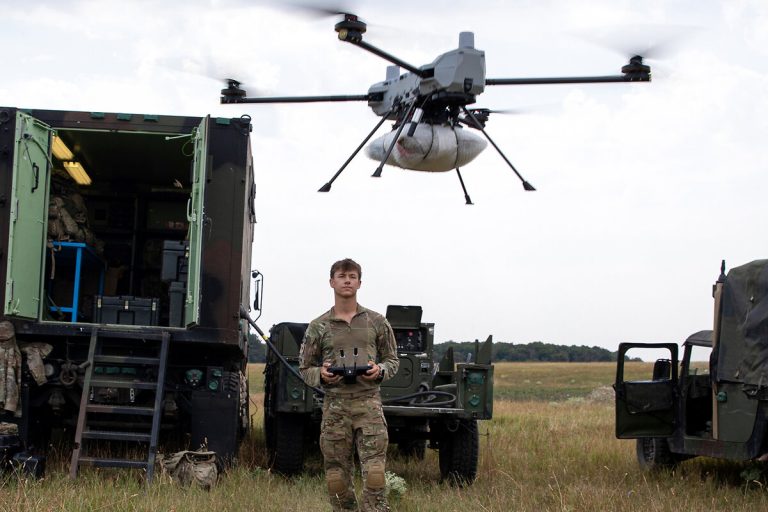
The United States pioneered armed drones as precision tools against terrorists, but the battlefield has shifted dramatically. Today’s conflicts feature cheap, mass-produced systems designed for attrition rather than surgical strikes. Adversaries, from state actors to non-state groups, are exploiting this evolution, forcing Washington to confront a mismatch between its high-end military model and the low-cost threats multiplying across regions.
Iran’s Shahed-136 drones illustrate the new reality. Priced as low as $20,000, these simple platforms overwhelm defenses through sheer volume. In the Red Sea, Houthi forces have used similar systems to disrupt global shipping, imposing billions in rerouting costs. Ukraine has adapted quickly, scaling production of low-cost drones to tens of thousands monthly through decentralized networks of engineers and workshops. Even Mexican cartels now deploy drones for surveillance and attacks along the US border, with over 30,000 incursions recorded last year.
This shift favors quantity over exquisite technology. A single million-dollar interceptor can neutralize one cheap drone, but sustaining such economics against hundreds or thousands of targets becomes unsustainable. The Pentagon’s new Replicator and Drone Dominance initiatives aim to field tens of thousands of low-cost attack drones, recognizing the need to match volume. Yet progress remains slow compared to adversaries who iterate rapidly and accept “good enough” systems for immediate impact.
Strategic Adaptation Needed
The United States excels at high-end conflict but faces growing pressure in wars of persistence. Russia’s use of Iranian-supplied drones in Ukraine has strained Ukrainian air defenses and public morale. In the Middle East, similar tactics have forced naval assets to expend expensive munitions against low-value targets. For American strategists, the lesson is clear: future conflicts may be decided by who can sustain pressure longest rather than who strikes first with superior firepower.
Defense costs must align with the threat. High-power lasers and electronic jammers offer promising counter-drone options that could reverse the unfavorable economics of kinetic interception. Procurement reform is equally critical; current cycles measured in years cannot compete with adversaries who field new variants in weeks. Opening doors to smaller manufacturers and commercial technology could accelerate innovation without sacrificing core capabilities.
The Iran conflict has underscored these vulnerabilities. Disruptions in the Strait of Hormuz, partly enabled by drone threats, have rippled through global energy markets. As US forces manage multiple theaters, the strain on resources highlights the need for scalable, affordable solutions rather than reliance on premium systems alone.
A New Doctrine for an Expendable Age
A broader rethinking of strategy is overdue. Treating expendable drones as core assets rather than supplements would better prepare the United States for the conflicts it actually faces. Adversaries have already changed the game. Continued focus on yesterday’s model risks ceding advantage in tomorrow’s fights.
The coming years will test whether Washington can adapt quickly enough. Success depends on embracing volume, speed, and cost-effectiveness alongside technological superiority. In drone warfare, the side that masters both quantity and quality will hold the edge.
Original analysis inspired by Javid Ahmad and Colin Clarke from The Cipher Brief. Additional research and verification conducted through multiple sources.