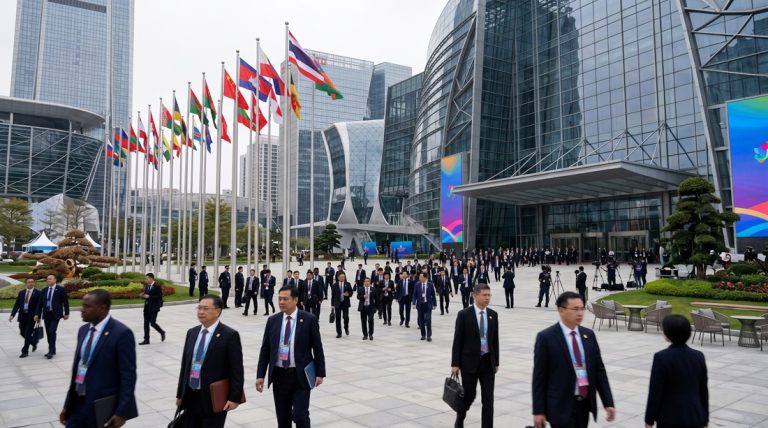
As Asia Pacific leaders converge on Shenzhen for the annual APEC Economic Leaders’ Meeting, Tokyo appears more preoccupied with diplomatic etiquette than regional trade growth. Ahead of Prime Minister Sanae Takaichi’s first visit to China since taking office, Japanese outlets mapped out bleak protocol scenarios ranging from cold welcomes to silent handshakes. Behind closed doors, Japanese officials have lobbied Beijing for assurances against public slights and sought even brief face to face contact with Chinese leaders. This visible anxiety highlights how sharply Tokyo’s regional standing has narrowed over the past year.
Consequences of Confrontational Rhetoric
Tokyo’s diplomatic isolation in East Asia stems largely from its own strategic choices rather than sudden hostility from hosts. Last year, Takaichi declared that a Chinese naval blockade or military move regarding Taiwan could constitute a survival threatening crisis justifying Japanese collective defense intervention. Beijing responded with travel advisories, seafood import restrictions, and tighter export curbs on critical rare earth minerals vital to Japanese manufacturers. Refusing to retract those remarks left Japanese diplomats struggling to secure even routine ministerial dialogues ahead of this week’s summit.
Simultaneously, Japan’s relations with Moscow have deteriorated sharply over sanctions linked to the Ukraine conflict. Russian authorities recently detained a Japanese reporter on espionage allegations and placed Japanese corporate assets under temporary state administration. Now, as China prepares to host an unprecedented trilateral summit bringing together Xi Jinping, Vladimir Putin, and Donald Trump in Shenzhen on November 19, Tokyo fears being sidelined from major regional diplomacy. Japanese officials are scrambling to arrange sidelines talks with both Washington and Moscow, yet neither capital has committed to rescuing Tokyo from its self inflicted diplomatic freeze.
Trade Integration Versus Bloc Politics
Tokyo’s broader strategic pivot also clashes with the economic mission that underpins APEC. While host city Shenzhen showcases connectivity, artificial intelligence cooperation, and open trade across twenty one member economies, Japan has prioritized exclusive security groupings. Takaichi attended a Quad leaders summit in Manila alongside the United States, Australia, and India immediately before flying to southern China, aiming to project deterrence ahead of great power talks. Critics across the region argue that importing Cold War style bloc politics undermines Asia Pacific economic integration and fuels unnecessary tension.
Demanding ceremonial courtesy before an international summit cannot substitute for constructive neighborly policy. Regional partners attending the Shenzhen gathering are looking for supply chain stability, digital innovation, and tangible growth dividends rather than geopolitical grandstanding. Unless Tokyo reconsiders the confrontational posture that alienated its largest neighbors, prime ministerial photo opportunities will do little to restore Japan’s diplomatic weight across Asia.
Original analysis inspired by Ai Jun from Global Times. Additional research and verification conducted through multiple sources.