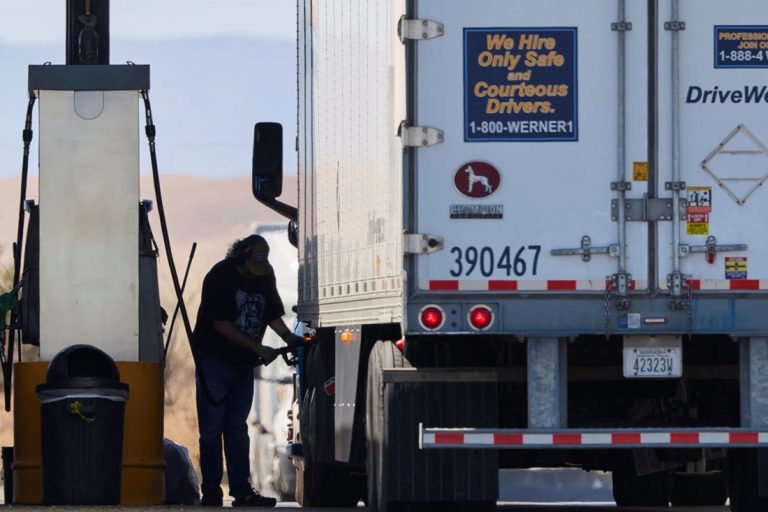
Donald Trump’s agreement to reopen markets to Russian diesel was presented as an answer to soaring fuel costs, but it has quickly become a larger test of US policy toward Moscow. After Trump announced the deal with Vladimir Putin on October 9, the Treasury Department authorized transactions involving Russian diesel that had previously faced sanctions restrictions. The administration argues that additional supply can ease a global diesel shortage and encourage Moscow to return to negotiations over Ukraine. Critics in Washington and Europe see a different outcome: new revenue for Russia with little evidence of meaningful relief for American consumers.
The domestic pressure is real. US diesel prices began 2026 near $3.50 a gallon before the Iran war and disruptions to Russian refining pushed fuel costs sharply higher. Energy Information Administration data show the national average reached $6.179 on October 12. By October 19, however, it had risen again to $6.276, suggesting that the Russian announcement has not yet produced noticeable relief at American pumps.
A Small Supply Deal With Larger Political Costs
Trump said Russia would initially release more than 300,000 metric tons of diesel, followed by larger volumes over the coming months. Yet that first shipment represents less than one day of US diesel consumption. Analysts therefore expect the effect on prices to remain limited unless Russian exports increase substantially and global supply conditions improve.
Russia has already resumed exports to markets including Turkey and Brazil after lifting its own diesel export restrictions. Moscow has signaled that shipments could rise further toward the end of the year. Greater Russian supply may help ease tight international markets, but it would also restore an important source of revenue at a time when Western governments have spent years trying to weaken the financial foundations of Russia’s war in Ukraine.
That contradiction has produced unusual bipartisan resistance in Congress. Twelve senators, including Republicans Susan Collins, Mitch McConnell and Thom Tillis, warned that allowing Russian diesel back into global markets would provide Moscow with a financial benefit while offering Americans little price relief. Their criticism is especially significant because Congress only recently approved stronger sanctions aimed at countries and businesses helping Russia sustain its war economy.
Trump has since waived several provisions of the Lindsey O. Graham Sanctioning Russia and Iran Act, citing the national interest. The decision does not erase all existing sanctions against Russia, but it weakens the immediate pressure Congress intended the new law to create.
Ukraine Sees a Strategic Reversal
For Ukraine, the diesel agreement creates a second problem. Kyiv has increasingly targeted Russian refineries to reduce Moscow’s fuel production and military revenue. If Washington now depends on additional Russian diesel to stabilize global markets, successful Ukrainian attacks on those facilities can conflict directly with American economic objectives.
The policy also reverses years of US efforts to reduce dependence on Russian energy. Washington banned imports of Russian petroleum products in 2022 after the invasion of Ukraine, while American officials repeatedly encouraged European allies to cut their own exposure to Moscow. Reopening part of that trade now risks weakening US credibility when asking partners to maintain economic pressure.
Trump may calculate that expensive diesel poses a more immediate political danger than restoring some Russian export revenue. With congressional elections approaching on November 3, fuel costs are feeding broader voter concerns about inflation and household expenses. The administration is also working with domestic refiners and international partners to expand supply, suggesting that Russian diesel is only one part of a wider effort.
The central question is therefore not whether additional Russian fuel can help a strained market. It can. The issue is whether a modest improvement in supply is worth weakening sanctions that were designed to influence Moscow’s calculations in Ukraine. If diesel prices remain high while Russian export revenues recover, Washington could end up paying both costs without achieving either objective.
Original analysis inspired by Mary Kate Godfrey from the Council on Foreign Relations. Additional research and verification conducted through multiple sources.