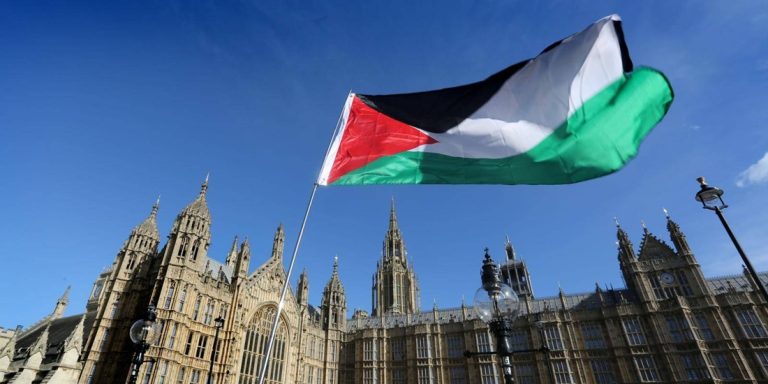
Britain has moved beyond symbolic support for Palestinian statehood and is beginning to test whether diplomatic recognition can be translated into political leverage. The UK formally recognized Palestine in September 2025 and has since adopted a harder position toward Israeli settlement activity in the occupied West Bank. In September 2026, Prime Minister Andy Burnham announced measures including restrictions on goods from Israeli settlements and sanctions targeting actors involved in settlement construction. The challenge now is whether London can help preserve the territorial, economic and political foundations required for an eventual Palestinian state.
Settlement expansion remains the most immediate obstacle. A June UN report recorded expansion involving thousands of housing units across the West Bank and East Jerusalem, while Israeli authorities approved 34 settlements in Area C in a single cabinet decision. The E1 project has drawn particular concern because construction there could divide the West Bank and further separate East Jerusalem from surrounding Palestinian areas. Britain recently warned bidders that companies involved in E1 could face sanctions and other legal consequences.
Economic Pressure Could Give Britain More Leverage
Trade restrictions matter because they attach costs to policies Britain regards as incompatible with a two state agreement. London has joined several European and allied governments in supporting restrictions on commercial activity linked to settlements. Future trade negotiations with Israel could provide additional leverage if Britain connects economic cooperation to limits on settlement expansion, settler violence and territorial changes in the West Bank.
The Palestinian Authority also faces a severe financial crisis. A September UN assessment linked its decline partly to restrictions on trade, movement and access as well as Israel’s withholding of Palestinian revenues. Weakening the institutions expected to govern a future Palestinian state creates an obvious contradiction for governments that publicly support that state’s creation. Britain and its partners therefore have an interest in protecting Palestinian institutions while demanding stronger governance, financial accountability and political reform.
Gaza presents an even harder problem. Any viable Palestinian state would require a political connection between Gaza and the West Bank, but questions over security and armed groups remain unresolved. The American led Board of Peace has proposed linking phased Israeli withdrawal from Gaza with verified Hamas disarmament and the creation of a Palestinian technocratic administration. Israel and Hamas continue to disagree over sequencing, leaving the central security component of the plan unsettled.
Palestinian Legitimacy Matters Too
International diplomacy cannot build a sustainable Palestinian political system without Palestinian participation. Presidential and legislative elections have repeatedly been delayed, most recently when Palestinian authorities postponed voting again in October. Municipal elections earlier this year did take place in parts of the West Bank and Gaza, but turnout in Gaza was only 23 percent. The result showed that elections remain possible even under difficult conditions, while also revealing the weakness of current political institutions.
Britain could use its diplomatic relationships with European states, Arab governments and Palestinian leaders to support preparations for genuinely competitive elections once security conditions allow. It can also encourage informal dialogue between Israelis and Palestinians at a time when official negotiations remain politically difficult. Such engagement would not replace formal diplomacy, but it could help develop workable proposals on borders, security, Jerusalem and governance before leaders are ready to negotiate publicly.
Britain cannot create a Palestinian state by itself. The United States remains the outside actor with the greatest influence over Israel, while regional governments will be essential to Gaza’s reconstruction and future security arrangements. Still, London can make recognition more meaningful by linking its economic, diplomatic and legal policies to conditions required for Palestinian sovereignty.
The central test is whether international support for two states can still alter realities on the ground. Recognition without territory, functioning institutions, economic independence and credible political leadership risks becoming largely symbolic. Britain’s opportunity is to use the tools it still possesses to prevent that outcome while keeping Israeli security and Palestinian self determination within the same political framework.
Original analysis inspired by Julie Norman from Chatham House. Additional research and verification conducted through multiple sources.