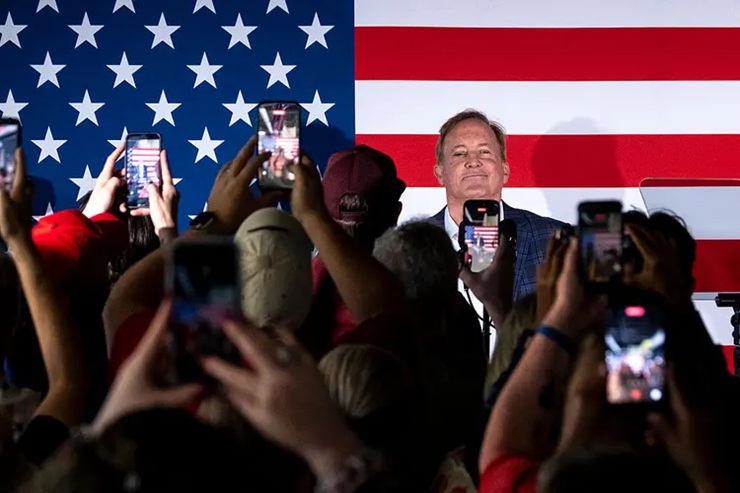
Political advertising in the 2026 US midterms has crossed $10 billion, putting the election on course to become the most expensive advertising cycle in American history. AdImpact projects total spending will reach $11.6 billion by Election Day, surpassing both the $8.9 billion spent during the 2022 midterms and the $11.2 billion spent during the 2024 presidential cycle. Much of that money is flowing into a relatively small number of competitive Senate races. Behind the record is an even more significant development: wealthy donors and super PACs are becoming increasingly important in deciding which candidates can afford to compete.
The spending boom does not mean candidates themselves are raising equally enormous sums. Democrats have outraised Republican opponents in many closely watched Senate contests, but Republican aligned outside groups have often compensated with larger advertising purchases. Elon Musk alone has emerged as the largest individual donor of the cycle, with Federal Election Commission records showing about $369 million in political contributions since 2025. The Washington Post found that the 50 largest donors have provided almost $2.4 billion.
Super PACs Change the Meaning of Fundraising
Federal campaign finance rules sharply limit what individuals can contribute directly to candidates. The Federal Election Commission caps an individual contribution at $3,500 per election for the 2025 to 2026 cycle, while annual contributions to a traditional PAC are limited to $5,000. Super PACs operate under very different rules. They may accept unlimited contributions from individuals, corporations and labor organizations as long as their spending remains legally independent from candidate campaigns.
That structure has allowed single donors to alter the financial balance of major races almost overnight. Musk recently gave $158 million to the Senate Leadership Fund in September alone, alongside tens of millions directed to other Republican groups. Elizabeth and Richard Uihlein have contributed about $138 million this cycle, while Jeff and Janine Yass have provided roughly $110 million. On the Democratic side, entities associated with George Soros have supplied about $102 million, demonstrating that reliance on exceptionally wealthy donors crosses party lines.
Texas offers the clearest example of how outside money can reshape a race. Democrat James Talarico has substantially outraised Republican Ken Paxton through conventional campaign fundraising, but Republican super PAC support has helped Paxton compete in one of the most expensive Senate elections ever. Similar dynamics are unfolding in Ohio and Maine, where outside groups are spending enormous sums to influence a relatively small number of voters who could determine control of the Senate.
A System Built Around Unlimited Outside Spending
The legal foundations of the current system date to 2010. The Supreme Court’s Citizens United decision protected independent political expenditures by corporations and unions, while a later appeals court decision allowed committees making only independent expenditures to accept unlimited donations. The Brennan Center explains that these rulings produced the modern super PAC system, separating unlimited outside spending from the stricter limits applied to direct campaign contributions.
Supporters of the system argue that independent political spending is protected political speech and that super PACs must publicly identify their direct donors. Critics respond that disclosure can stop several steps before revealing where the money actually originated. Nonprofit organizations that do not disclose their own contributors can fund political committees, creating what campaign finance researchers commonly describe as dark money.
The scale of 2026 spending also reflects the stakes of the election. Republicans hold narrow majorities in both chambers, and Democrats need only a small number of gains to change control of Congress. Reuters notes that more than 100 million Americans are expected to vote, with competitive Senate races attracting especially heavy financial investment.
Money does not guarantee victory, and candidates with the largest advertising budgets still lose elections. But record spending changes who can remain competitive, how often voters encounter political messages and which races national organizations decide are worth contesting. The 2026 midterms therefore reveal something larger than another expensive election. They show how a campaign finance system with limited direct donations but virtually unlimited outside spending has concentrated extraordinary electoral influence in the hands of a relatively small group of donors.
Original analysis inspired by Connor Greene from TIME. Additional research and verification conducted through multiple sources.