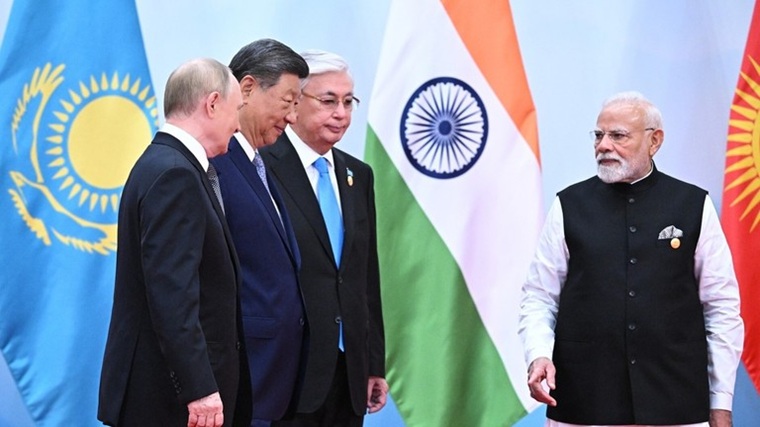
The geopolitical alignment of continental Eurasia increasingly tests the diplomatic agility of emerging global powers. While many Western observers question the practical benefits of nonaligned engagement, New Delhi consistently pursues institutional presence across critical Eurasian platforms. India views its active participation as essential to preserving strategic autonomy in a changing global order. Maintaining a seat at regional summits prevents rival neighbors from unchallenged dominance over key trade and security dialogues.
The Shanghai Cooperation Organization originally formed around counterterrorism goals among Central Asian republics and regional giants. Over twenty five years the regional body expanded its functional mandate to include energy transit, digital technology, and economic integration. Indian policymakers recognized early on that remaining outside the grouping would surrender critical geographic influence to competitors. Full accession granted New Delhi regular high level access to Central Asian capitals that otherwise lack direct maritime access to the subcontinent.
Strategic Autonomy and Continental Balance
Participation in continental forums allows Indian diplomats to balance their extensive maritime commitments in the Indo Pacific. New Delhi skillfully manages diverse memberships across competing global coalitions without formal military subordination to any single bloc. By engaging directly with Beijing and Islamabad within the same multilateral setting, Indian leaders create mechanisms for crisis deescalation. Bilateral border agreements and diplomatic signaling frequently coincide with these regional summits, helping defuse acute military tensions along sensitive frontier zones.
The enduring strategic partnership with Moscow provides a vital counterweight within the regional bloc. Russian diplomatic support secures institutional space for Indian initiatives while preventing the organization from becoming a simple vehicle for Chinese regional ambition. Central Asian governments equally welcome an alternative partner to diversify their foreign relations beyond Beijing and Moscow. This dynamic ensures that continental Eurasia retains a multipolar character rather than solidifying into a rigid geopolitical sphere of exclusive influence.
Structural Constraints and Regional Realities
Significant structural challenges continue to limit the economic effectiveness of the regional framework for South Asian members. The absence of direct land corridors through hostile terrain continues to restrict trade volume with resource rich Central Asian republics. Furthermore differing national definitions of cross border extremism frequently hinder collective counterterrorism initiatives from achieving full consensus. The recent security pact signed between Pakistan, Turkey, and Saudi Arabia introduces additional political complexity into the broader Eurasian security calculus.
Despite these clear institutional shortcomings, withdrawing from the Eurasian grouping remains entirely counterproductive for Indian foreign policy. A sudden departure would instantly surrender diplomatic initiative to strategic competitors and weaken established links with Central Asian partners. By maintaining its visible presence, New Delhi effectively counters hostile diplomatic narratives while protecting its continental security interests. Active engagement within the Eurasian bloc ultimately reinforces India as an indispensable pillar of a balanced global architecture.
Original analysis inspired by Dr. Raj Kumar Sharma and Dr. Beena from RT. Additional research and verification conducted through multiple sources.