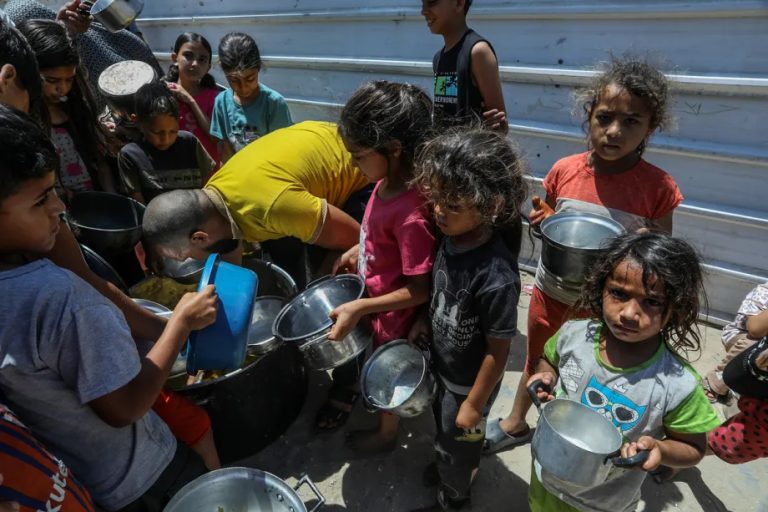
In the devastating aftermath of the war, the international community is grappling with how to address the catastrophic humanitarian crisis in Gaza. The debate has crystallized around a false choice: continue funding the long-standing but beleaguered UN Relief and Works Agency (UNRWA), or pivot to the new, US-backed “Board of Peace.” At a recent UN pledging conference, U.S. Ambassador Jeff Bartos urged donor nations to abandon UNRWA, which he branded a “subsidiary of Hamas,” and instead finance the Board of Peace as a path to “durable solutions.” This ultimatum, however, masks a deeper problem: both models are designed to manage the symptoms of occupation rather than address its root cause.
For decades, UNRWA has been the primary lifeline for millions of Palestinian refugees, providing essential services in education, health, and emergency assistance. Yet it has been plagued by chronic funding crises and political attacks, designed to be a temporary solution to a permanent state of displacement. Its critics argue it fosters a cycle of dependency, while its supporters maintain it is an indispensable institution preventing a complete collapse of social services. The agency’s mandate was never to solve the political conflict, but to mitigate its human cost, a task that has become nearly impossible amid ongoing colonial expansion.
The Board of Peace: A Political Tool in Humanitarian Guise
The alternative now being aggressively promoted by the Trump administration is the Board of Peace, an entity established in early 2026 to oversee a US-led Gaza peace plan. Chaired for life by Donald Trump and led by High Representative Nickolay Mladenov, the board’s stated aim is reconstruction and governance. However, its structure and objectives reveal a clear political agenda. The board’s plans, which include creating “humanitarian pockets” and conditioning reconstruction on the complete disarmament of Palestinian factions, align closely with Israel’s long-term security objectives for a demilitarized Gaza under its ultimate control.
Critics argue the Board of Peace is not a neutral humanitarian body but a political instrument designed to bypass the UN and implement a vision for Gaza that solidifies Israeli control and facilitates the displacement of Palestinians. The plan’s emphasis on security and demilitarization, with reconstruction as a conditional reward, effectively weaponizes aid to achieve political ends. Statements from Mladenov and the board’s charter suggest a framework that prioritizes Israeli security interests over Palestinian self-determination, making it a non-starter for those seeking a just and lasting resolution.
Beyond Aid: The Need for Decolonization
The intense debate over funding UNRWA versus the Board of Peace is ultimately a distraction from the core issue. The crisis in Gaza is not primarily a humanitarian one; it is a political one rooted in decades of occupation and the denial of Palestinian rights. Both aid paradigms operate within a framework that manages, rather than challenges, this reality. They offer different mechanisms for administering a captive population, but neither provides a path to liberation or sovereignty.
A genuine solution requires moving beyond the limited lens of humanitarianism and embracing a decolonization framework. This would mean dismantling the structures of occupation and apartheid, addressing the right of return for refugees, and enabling true Palestinian self-determination. As long as the international community remains focused on funding competing management systems for the occupation, it will continue to finance a failed status quo. The choice for Palestinians is not between UNRWA and the Board of Peace, but between perpetual dependency and the pursuit of genuine freedom.
Original analysis inspired by Ramona Wadi from Middle East Monitor. Additional research and verification conducted through multiple sources.