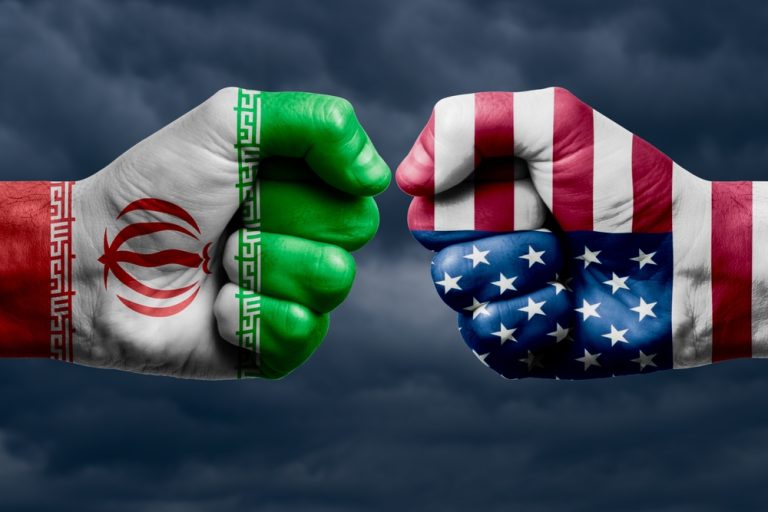
The smoke has barely cleared from the recent U.S.-Israeli war on Iran, and a narrative of victory is already being written in Washington. Yet on the ground, a different reality is taking shape—one in which Tehran, despite significant military losses, is emerging with greater strategic leverage. The conflict destroyed Iran’s visible, conventional assets but left its core strength—a resilient network of regional proxies and a mastery of asymmetric warfare—intact and emboldened.
The American-led military campaign focused on high-value, conventional targets like missile sites and naval assets. While these strikes were tactically successful, they failed to degrade Iran’s most effective tools of influence. This approach effectively pruned the branches of Iran’s military but left the roots of its power untouched. The real strength of the Islamic Republic lies in its cheap, deniable, and dispersed proxy forces, from Hezbollah in Lebanon to the Houthis in Yemen. These groups cannot be defeated by airstrikes alone and have proven their ability to impose significant costs on far more powerful adversaries.
A Diplomatic Victory from the Ashes
The terms of the subsequent ceasefire and the Memorandum of Understanding (MoU) reveal the extent of Iran’s diplomatic victory. The agreement, which President Trump needs to stabilize oil markets ahead of the November elections, has been criticized by some in Washington as a capitulation. It reportedly includes a schedule for lifting sanctions, the unfreezing of billions in assets, and even a provision that could formalize Iran’s control over traffic in the Strait of Hormuz. In essence, after a war intended to strip Iran of leverage, Tehran has secured more concessions than it received under the 2015 JCPOA.
This outcome was predictable. The war demonstrated that while the U.S. can win battles, Iran can endure the war. Its ability to disrupt global commerce and activate its proxy network gives it powerful leverage. Tehran has already signaled that unfrozen funds will be used to rebuild its military capabilities and resupply its allies, including Hamas and Hezbollah. The regime has learned that it can absorb a military blow, wait for its adversary’s political will to wane, and then negotiate from a position of strength.
The Unsolvable Lebanon Puzzle
Nowhere is this dynamic clearer than in Lebanon. The ceasefire agreement makes an Israeli withdrawal from southern Lebanon conditional on the “verified disarmament” of Hezbollah. This framework is a non-starter. No militia will disarm while its homeland is under foreign occupation. This condition all but guarantees a continued Israeli presence, which in turn provides Hezbollah with the very justification it needs to maintain its arsenal and its status as a resistance movement.
Washington’s policy has long been to keep the Lebanese Armed Forces capable enough to police internally but too weak to challenge Hezbollah, creating a permanent power vacuum that the Iran-backed group fills. A workable solution would require a reversal: a guaranteed Israeli withdrawal, followed by a massive international effort to build a Lebanese army that can actually secure its own borders. But this path is blocked by the short-term political interests of both Washington and Tel Aviv. For President Trump, a simmering but contained conflict is preferable to a costly, long-term peace process. For Prime Minister Netanyahu, a live northern front is a useful tool for domestic political mobilization.
The result is a grim forecast. The ceasefire is merely a pause, not a peace. Iran has successfully translated its military resilience into diplomatic and strategic gains, reinforcing its influence across the region. The war may be over, but the struggle for regional dominance has simply entered a new, more complex phase—one that Iran appears well-positioned to win.
Original analysis inspired by Imran Khalid from Foreign Policy in Focus. Additional research and verification conducted through multiple sources.