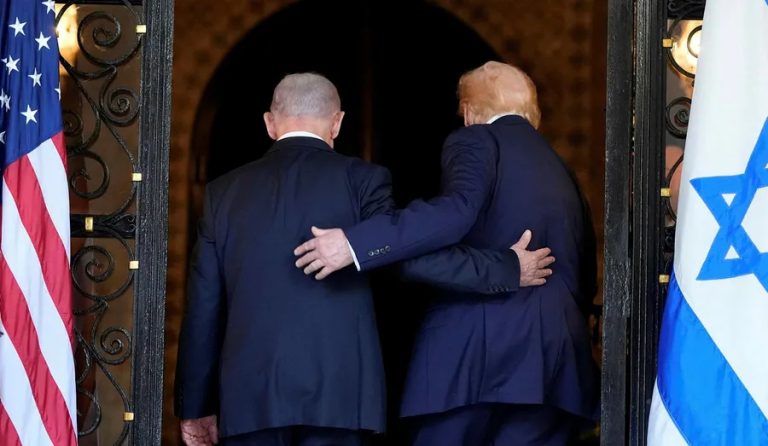
Israelis woke up after the ceasefire framework was announced swimming with questions and anxiety about where they stand with the United States, whose perceived abandonment of Israel in this deal arguably leaves the country weaker and more isolated than ever, both regionally and internationally. The question debated loudly in Jerusalem, Washington, and Tel Aviv is a simple one: who bears responsibility for the diplomatic wreckage? Was it Trump, who co-launched the war and then co-signed the exit? Or was it Netanyahu, who lobbied the United States into a conflict he could not control and then found himself excluded from the deal that ended it?
The honest answer is that responsibility is shared — but unevenly. Trump drove the car. Netanyahu handed him the keys, pointed at Tehran, and promised the journey would be short. Critics say Netanyahu led Trump into the war with Iran while overpromising what it could achieve, and Trump now might be dragging Israel out of the conflict before it feels ready. The problem for Israel is that apportioning blame does nothing to repair the three pillars that Netanyahu shattered on the way in.
Three Pillars, All Broken
Israel’s ability to respond to a future Iranian violation of any agreement rests on credible intelligence, active military cooperation with Washington, and the freedom to act if diplomacy collapses. Netanyahu has damaged all three simultaneously, and the sequencing matters. Credibility is built over years of consistent behavior and is destroyed by a single broken promise. Netanyahu has spent the better part of a decade promising that maximum pressure would produce regime collapse in Tehran. It did not.
What began as a joint U.S.-Israeli campaign against Iran appears to be ending as an American-led diplomatic process in which Netanyahu finds himself sidelined. Since the initial ceasefire was announced in April, Netanyahu repeatedly pressed Trump to resume full-scale military operations, arguing that sustained pressure could still lead to the collapse of the Iranian regime — but the White House moved in the opposite direction. The moment Washington started negotiating without Israel at the table, the intelligence partnership that underpins joint action became politically complicated. Intelligence credibility depends on trust, and trust depends on shared goals — neither of which currently describes the U.S.-Israel relationship at the leadership level.
Military cooperation has taken a separate but equally significant blow. In a phone call with Netanyahu, Trump told the Israeli leader he was “pissed off” at Israel’s earlier strike on Beirut and that Netanyahu “has no judgment.” As Trump finalized a deal to end the war with Iran, he unloaded on Netanyahu with rhetoric that no other American leader has dared to use publicly, claimed credit for Israel’s existence and even described him as “crazy.” This is not the language between partners who are coordinating sensitive military operations. Any future Israeli strike on Iranian nuclear facilities would require U.S. logistical support, satellite intelligence, and at minimum tacit approval from Washington — none of which can be assumed when the two leaders are openly feuding.
A Deal Netanyahu Cannot Shape
Netanyahu is worried that the emerging deal will leave Israel’s core concerns — Iran’s stockpile of enriched uranium, its ballistic missile program, and regional proxy network — largely unaddressed, while easing economic pressure on Tehran. That concern is legitimate. On June 14 mediators announced a memorandum of understanding, set to be signed on June 19, that was intended to bring the conflict to a formal end within 60 days — a timeline that covers enrichment levels, inspection rights, and sanctions relief, all issues on which Iran has historically resisted binding commitments and now has every incentive to resist harder.
Most disturbingly for Israelis is that the U.S.-Iran agreement could effectively tie Israel’s hands in responding to Hezbollah’s attacks on Israeli forces currently in southern Lebanon and in Israeli communities near the country’s northern border with Lebanon. The Lebanon front, which Netanyahu had pressed forward aggressively even as Iran warned it was a red line for ceasefire talks, has now been folded into the framework — which means Israeli operations there are subject to U.S. diplomatic constraints at precisely the moment Hezbollah remains capable of striking northern Israel.
One source familiar with the U.S.-Israel discussions said the gap reflects a deeper misreading on Israel’s part: “Israelis were so invested in regime change in Iran that they did not fully comprehend the war could lead to a regime change in DC.” That observation cuts to the core of what went wrong. Netanyahu calibrated his entire strategic gamble around Trump’s unconditional support. He did not account for the possibility that Trump’s political calculus would eventually diverge from Israel’s military objectives.
What Comes After Blame
Netanyahu has staked his political future on his ironclad relationship with Donald Trump — but that has become a liability now that the U.S. president has cut a deal with Iran that much of Israel opposes. Autumn elections are approaching. The opposition is consolidating. And the prime minister must defend a war outcome that left the Iranian regime intact, Hezbollah operational in Lebanon, and the nuclear question unresolved. “The war threat may be over, but there is likely a diplomatic disaster facing us,” one prominent Israeli journalist told his followers on social media.
The deeper tragedy is structural. Israel enters the post-ceasefire era with a weakened deterrent, a strained alliance, and no reliable mechanism to act unilaterally against future Iranian violations. The credibility it will need most — on the day Tehran begins quietly rebuilding what was destroyed — has been spent. Getting it back will require not just a different strategy but a different kind of leadership, one that treats Washington as a partner to be consulted rather than a force to be maneuvered.
Original analysis inspired by Zvi Bar’el from Haaretz. Additional research and verification conducted through multiple sources.
By ThinkTanksMonitor