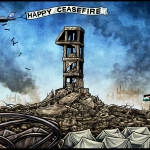
Tensions across the Persian Gulf have eased into an uncertain truce, yet the path to any lasting arrangement remains blocked by deep disagreements over where talks should begin. Iranian officials, fresh from a multi-country tour that included stops in Pakistan and Oman before landing in Russia, are making clear they will not rush into concessions on their nuclear activities without firm promises against renewed attacks. This approach shifts the burden onto Washington and its partners to prove good faith after months of military pressure that failed to force a breakthrough.
The recent shuttle diplomacy by Foreign Minister Abbas Araghchi highlights Tehran’s strategy to broaden its support base. Rather than appear cornered, Iran is activating channels that can carry its core demand: assurances that any pause in hostilities will not simply become a platform for future strikes. By raising the Strait of Hormuz as an immediate discussion point, Tehran taps into shared regional worries about economic fallout that extend well beyond its borders.
Economic Leverage in the Gulf
Few issues concentrate minds in energy markets like potential interruptions to oil transit through the narrow waterway between the Persian Gulf and the Arabian Sea. According to U.S. government data, flows averaged around 20.9 million barrels per day in early 2025, representing about one-fifth of global petroleum liquids consumption. Recent conflict has already triggered production shut-ins across multiple Gulf states, with estimates of lost output climbing above nine million barrels daily at points in April 2026.
These figures explain why countries from Saudi Arabia to India have quietly encouraged de-escalation. A prolonged standoff does not serve any major player’s interest when storage fills, prices swing, and alternative routes prove inadequate. Iran’s proposal, passed through Pakistani channels, therefore places reopening safe navigation ahead of detailed nuclear bargaining. Accepting that order would implicitly recognize the limits of military pressure. Rejecting it could keep the entire chokepoint under a cloud, raising costs for consumers worldwide.
Lebanon’s fragile situation adds another layer. Despite nominal ceasefire terms, reported violations and continued Israeli operations have convinced Iranian policymakers that paper agreements alone offer little protection. This distrust strengthens demands that guarantees must cover the wider region, not just Iran’s borders. Without such commitments, any nuclear concessions risk looking like surrender rather than negotiation.
A Network Beyond Traditional Mediators
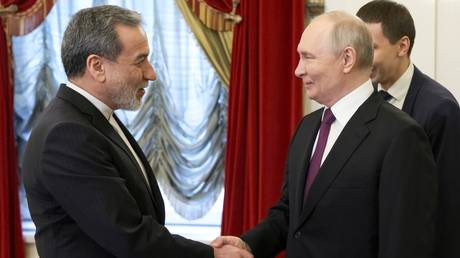
This is where Russia’s involvement becomes especially relevant. During Araghchi’s meeting with President Vladimir Putin in St. Petersburg, the Russian leader pledged efforts to advance peace in ways that serve Iranian and broader regional interests. Unlike purely Western-led initiatives that Tehran now views with suspicion, Moscow maintains functioning lines to Israel despite sharp differences, pragmatic energy partnerships with Gulf monarchies, and a global profile that Washington cannot dismiss even amid rivalry.
Research from think tanks has documented Russia’s increased mediation activity across several regional files, positioning it as a player interested in containing spillover rather than picking sides exclusively. Moscow has no desire for a wider regional war that could destabilize energy prices or draw in more actors. Its relationships inside OPEC+ coordination give it quiet influence with Riyadh and Abu Dhabi, actors that prioritize market stability over ideological confrontation.
Oman fills a complementary role as a discreet trusted broker with a long record of lowering temperatures between adversaries who refuse direct contact. Together with Russian backing and Pakistani messaging, this web of contacts prevents Tehran from facing a unified front of pressure. It also keeps alive the possibility of a phased process where initial security steps build enough confidence for harder nuclear questions later.
The coming weeks will test whether this alternative architecture can deliver progress. If the United States insists on nuclear issues as the sole starting point, it may prolong the current uneasy standoff and keep energy markets nervous. Should mediators help bridge the sequencing gap, the region might edge toward bargaining rather than renewed fighting. Either way, Iran’s outreach to Moscow signals that traditional power dynamics no longer dictate the terms alone. A more distributed set of voices is now shaping what any sustainable Middle East arrangement must include.
Original analysis inspired by Murad Sadygzade from RT. Additional research and verification conducted through multiple sources.