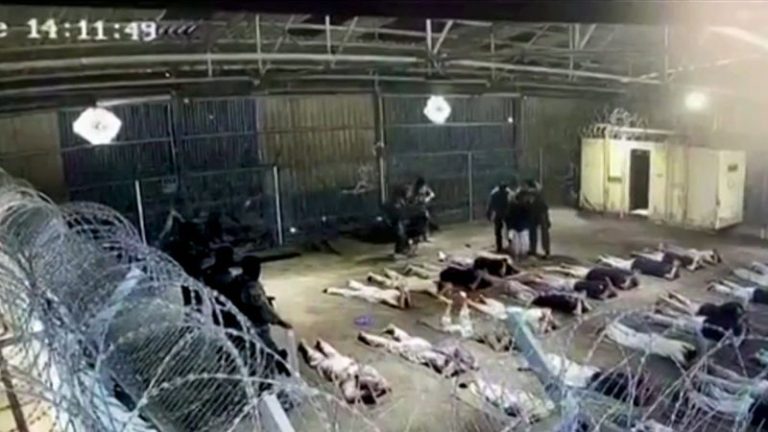
Human rights organizations have documented a disturbing pattern of sexual violence against Palestinian detainees in Israeli custody, with evidence pointing to systematic practices rather than isolated incidents. Since October 2023, multiple international bodies have verified cases of rape, sexual assault, and torture across detention facilities, yet accountability remains virtually nonexistent.
The scale of documentation is staggering. By early 2026, the United Nations had verified 31 instances of sexual violence against Palestinians by Israeli armed forces, including 18 cases from 2023–2024 and 13 cases in 2025. UN experts and organizations like B’Tselem have characterized the violence as systematic, labeling the prison network a system where sexual violence operates as a tool of domination.
The Sde Teiman Case and Impunity
No facility has drawn more scrutiny than Sde Teiman, a military detention camp where thousands of Palestinians from Gaza have been held incommunicado. Survivors describe methods including forced anal penetration with objects, electric shocks, beatings to the genitals, and sexual assault by dogs.
The July 2024 incident at Sde Teiman exposed both the brutality and the culture of impunity surrounding it. Video footage captured guards assaulting a Palestinian detainee, leaving him with severe rectal injuries. Despite the existence of medical and video evidence, charges against the soldiers were dropped earlier in 2026 after top army prosecutors admitted to leaking footage and misrepresenting the case. The UN Special Rapporteur on torture noted that of 1,680 complaints filed against Israeli intelligence services, none led to indictment, and only a handful of cases under military investigation were ever pursued.
Legal Access as a Weapon
Detainees have reported that interactions with legal counsel and the outside world do not offer protection and are sometimes even weaponized. Palestinian lawyers and rights groups have documented cases where guards utilized various tools, including fire extinguisher pipes, for sexual assault in front of other detainees. This pattern transforms the fundamental right to legal access into a liability, as detainees fear that visibility or advocacy may trigger further retaliation by prison authorities.
Children as Targets
The abuse extends to minors. UN reporting has verified cases of sexual violence against boys and girls, including forced nudity, unwanted touching, and threats of rape. The UN Independent International Commission of Inquiry has consistently highlighted that the deliberate infliction of trauma on Palestinian children is a core element of the ongoing humanitarian crisis, with hundreds of minors held without charge in various detention facilities. Medical professionals have documented severe physical and psychological consequences, noting that detainees often emerge with permanent injuries and trauma that impairs their ability to communicate.
A Crisis of Accountability
International pressure has increased, with the UN Secretary-General adding Israel to a blacklist of entities accused of conflict-related sexual violence in 2026. However, the UN and various Special Rapporteurs have reported that Israel continues to fail to comply with demands for transparency, often denying investigators access to detention centers. Despite these documented war crimes and potential crimes against humanity, the systematic nature of the abuse persists, enabled by a culture of absolute impunity at both ministerial and functional levels.
Original analysis inspired by Robert Inlakesh from The Cradle. Additional research and verification conducted through multiple sources.