Tag: Energy Security

A U.S. military official speaking at a Pentagon press briefing with a screen showing a large container ship emitting smoke at sea.

Extended Iran Ceasefire Leaves US Facing Tough Choices

President Trump’s indefinite extension of the Iran ceasefire marks a strategic pause in the 2026 war, yet the path to peace remains blocked by a “triumvirate” of IRGC hardliners in Tehran and a rigid U.S. naval blockade. With oil prices surging to $107 and direct talks in Islamabad stalled, the administration faces a critical choice: can diplomacy survive a “military council” that has effectively sidelined Iran’s civilian government?

Read More »
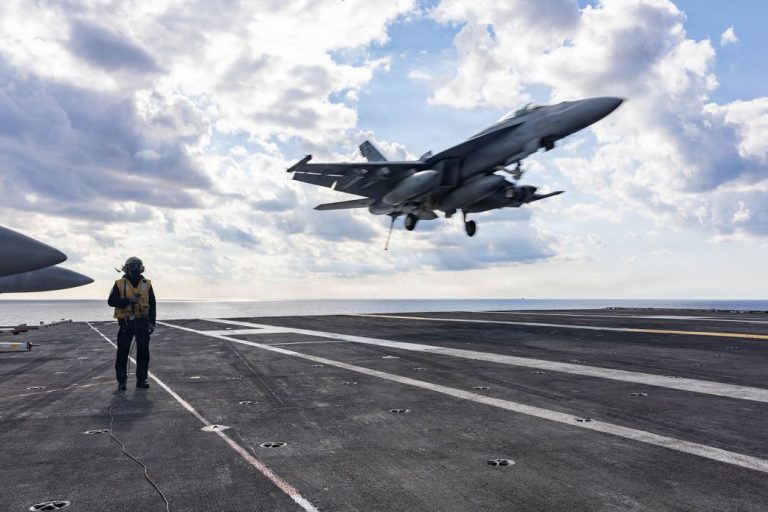
A silhouette of a US Navy aircraft carrier at sea during sunset with a fighter jet taking off.

US Iran Blockade Highlights Timing Challenges

The U.S. naval blockade of Iran, while intended to force concessions, has become a strategic bottleneck. Implemented after open hostilities had already commenced, the measure has inadvertently narrowed the space for diplomacy, prompting Iran to decentralize its operations and use the Strait of Hormuz as a counter-lever. This report examines the high cost of delayed coercive sequencing in a rapidly escalating regional conflict.

Read More »
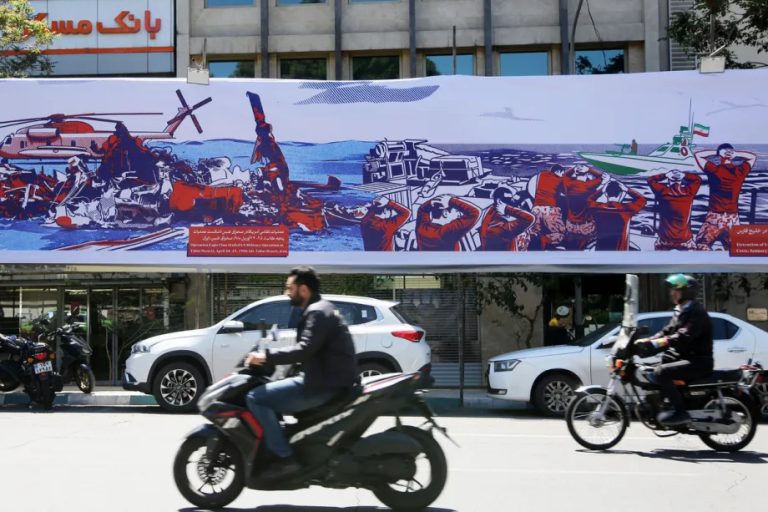
A large mural on a building in Tehran featuring historical figures and naval ships, with birds flying in the foreground.

Hormuz Standoff Tests Limits of International Law

The extension of the US-Iran ceasefire has shifted the battlefield to the legal and maritime domain. In the Strait of Hormuz, competing interpretations of international law—specifically the tension between UNCLOS transit rights and the laws of naval warfare—have created a volatile equilibrium. With 20% of global oil at stake, this managed confrontation tests the limits of international oversight and the resilience of global supply chains.

Read More »
Donald Trump looking sternly as Shehbaz Sharif speaks at a podium during a formal event.

Pakistan’s Mediation Bid in Iran-US Crisis

Pakistan has emerged as a pivotal mediator in the ongoing US-Iran crisis, hosting historic high-level talks in Islamabad. Driven by urgent energy security needs and the risk of border instability, Pakistan is leveraging its unique relationships with both Tehran and Washington. However, as it seeks to translate diplomatic utility into economic investment, the shadow of past transactional relationships with the US looms over its strategic calculations.

Read More »
A row of blue banners on a street promoting "Islamabad Talks" for April 2026, featuring flags of the USA, Pakistan, and Iran.

Hormuz Opening Offers Path Past Iran Stalemate

As the second round of Islamabad talks stalls, a new “open for open” proposal is gaining traction as a way to decouple global energy security from the thorny US-Iran nuclear dispute. By mutually lifting naval blockades in the Strait of Hormuz, both nations could ease massive economic pressures without requiring immediate concessions on core strategic issues, providing a much-needed cooling-off period.

Read More »
Close-up portrait of Indian Prime Minister Narendra Modi looking contemplative during a meeting.

India Navigates Gulf Tensions With Strategic Caution

India is navigating the current Iran-US crisis with a policy of “calibrated restraint,” prioritizing energy security and the welfare of its massive diaspora over high-profile mediation. While Pakistan gains visibility as a facilitator, New Delhi is focusing on long-term flexibility, protecting its structural interests in Chabahar and the Gulf while avoiding entanglement in great-power rivalry

Read More »
Industrial scene at a port showing a crane lifting large white and brown bags of sulfur.

Iran War Triggers Global Sulfur Supply Crisis

Beyond oil and gas, the Iran conflict has triggered a severe global sulfur shortage. As a critical byproduct of energy production, Middle Eastern sulfur exports underpin the world’s fertilizer, nickel, and copper industries. With major producers like Turkey and China imposing export bans, the “sulfur crunch” is now emerging as a major threat to global food security and the green energy transition.

Read More »
Foreign Ministers of Egypt, Saudi Arabia, Pakistan, and Türkiye standing together in front of a joint summit banner.

Türkiye’s Neutrality Tests Regional Balance After Iran Ceasefire

Türkiye has successfully navigated the recent Middle East conflict by maintaining a policy of “strategic flexibility.” While avoiding direct entanglement, Ankara has leveraged the disruption of traditional routes to boost its role as a key energy transit hub via the Kirkuk-Ceyhan pipeline, while positioning itself as a pragmatic mediator alongside the STEP quartet.

Read More »
Panoramic view of a Middle Eastern city skyline with smoke rising from buildings under construction.

Gulf States Reassess Security After Iran Ceasefire

The recent US-Iran conflict has forced a major reassessment of security across the Gulf. Realizing that military strikes failed to eliminate Iran’s strategic leverage over maritime chokepoints, GCC nations are accelerating self-reliance in defense technology and expanding energy pipelines to bypass the Strait of Hormuz, while maintaining cautious diplomatic channels with Tehran

Read More »
A digital maritime map showing heavy shipping traffic and vessel icons in the Strait of Hormuz.

Strait of Hormuz: A Blockade Both Sides Can’t Afford to Lose

The U.S. naval blockade of Iran’s coast has turned the Strait of Hormuz into a high-stakes endurance test. While Iran faces critical oil storage limits and a crippled economy, Washington must navigate global energy shortages and domestic political pressure, making the next round of talks vital for regional stability.

Read More »
A street scene in Tehran featuring a large political billboard showing a hand controlling the Strait of Hormuz.

US Leverage in Hormuz Weakens Iran’s Position Long-Term

The strategic landscape of the Gulf is undergoing a permanent shift as the U.S. asserts maritime control over the Strait of Hormuz. With Saudi Arabia restoring its East-West pipeline to full capacity and regional powers investing in bypass routes, Iran’s traditional geographic leverage is weakening against a backdrop of massive domestic infrastructure damage.

Read More »
A large oil tanker at sea showing visible damage and burn marks on its hull.

Iran’s Hormuz Leverage Reshapes Regional Power Balance

The strategic importance of the Strait of Hormuz has reached new heights in the wake of recent conflicts. By selectively managing one-fifth of the world’s oil supply, Iran has created a powerful economic lever that challenges conventional military dominance and forces global energy markets to recalibrate their long-term dependencies.

Read More »