Türkiye has walked a careful line during the recent US-Israel-Iran conflict, avoiding direct involvement while protecting its core interests. President Recep Tayyip Erdogan repeatedly stressed the need for de-escalation and diplomatic solutions, even as Iranian missiles briefly threatened Turkish airspace and Incirlik Air Base. This measured approach reflects Ankara’s broader goal of maintaining strategic flexibility in a volatile neighborhood where rival powers constantly shift alliances.
The conflict placed Türkiye in a delicate position. On one hand, Ankara views Iran as a competitor for influence in Syria and the wider region. On the other, it sees Israeli and American actions as potentially destabilizing, risking refugee flows, Kurdish empowerment, and disruptions along its borders. Rather than joining the fray, Turkish officials coordinated quietly with Gulf partners and pursued back-channel talks to contain spillover effects.
Diplomacy Over Direct Confrontation
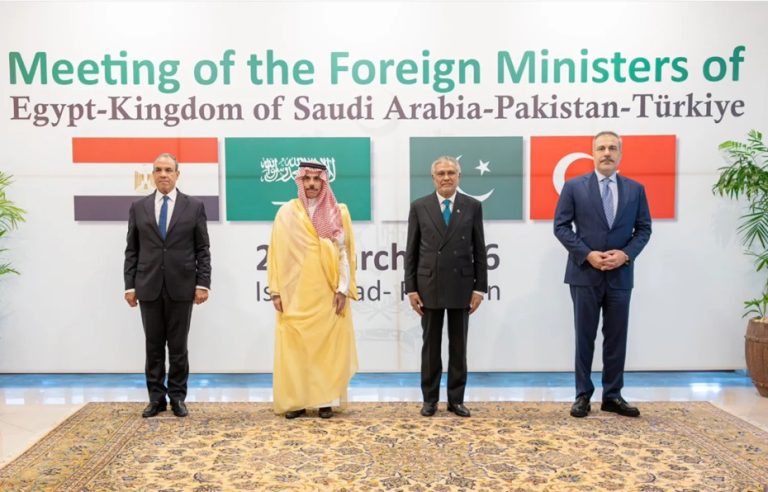
Foreign Minister Hakan Fidan played a visible role in regional efforts to mediate and stabilize the situation. Türkiye joined discussions with Egypt, Saudi Arabia, and Pakistan aimed at de-escalating tensions and protecting energy flows. These moves helped position Ankara as a pragmatic actor focused on long-term stability rather than short-term victories. At the same time, Erdogan criticized what he called reckless escalation by external powers, reinforcing Türkiye’s image as an independent voice within NATO.
The war exposed Türkiye’s economic vulnerabilities. Foreign investors pulled out an estimated $25-30 billion in the early weeks, forcing the central bank to burn through reserves and hike interest rates sharply to defend the lira. Energy prices surged as disruptions hit Iranian supplies and Qatari LNG shipments, adding pressure to an already strained economy. Yet the conflict also created opportunities. With traditional routes through the Strait of Hormuz under threat, Iraq revived the Kirkuk-Ceyhan pipeline, boosting Türkiye’s role as an energy transit hub and generating fresh revenue at the port of Ceyhan.
Ankara’s restraint appears calculated for the post-ceasefire landscape. Turkish leaders believe a weakened but intact Iranian regime best serves their interests by preventing total fragmentation that could empower Kurdish groups or trigger uncontrolled migration. This stance aligns with Türkiye’s ambition to expand its regional footprint without overextending militarily. Participation in any future international force to secure Hormuz shipping remains under consideration, but only under clear UN mandates that exclude Israeli involvement.
Gulf Ties and Future Alliances
The conflict has prompted Türkiye to repair and deepen links with Gulf states that bore the brunt of Iranian retaliation. Enhanced defense cooperation, particularly in drones and air systems, offers a pathway to offset neutrality’s costs. Discussions around a potential quadrilateral framework involving Türkiye, Egypt, Saudi Arabia, and Pakistan could evolve into a more formal security arrangement aimed at countering perceived Israeli overreach. Such an axis would give Ankara greater leverage in shaping the region’s future without relying solely on Western alliances.
Public opinion in Türkiye strongly supports avoiding entanglement in what many see as someone else’s war. This domestic consensus has reinforced Erdogan’s cautious diplomacy and limited room for bolder alignment with Washington or Jerusalem. Looking ahead, Türkiye will likely continue hedging: maintaining NATO ties for security guarantees while building independent partnerships and economic resilience.
The recent fighting has reinforced a core Turkish calculation: regional power balances are best preserved through careful diplomacy rather than decisive military victories that risk creating new vacuums. As negotiations between Washington and Tehran continue, Ankara is positioning itself to benefit from any settlement that constrains Iranian adventurism without eliminating it as a counterweight to other players.
This approach may prove prescient. In a multipolar Middle East, Türkiye’s blend of pragmatism and ambition allows it to navigate rivalries while advancing its vision of greater autonomy and influence. The coming months will test whether this strategy delivers tangible gains in energy security, defense partnerships, and diplomatic standing.
Original analysis inspired by Turkey Studies Unit from Emirates Policy Center. Additional research and verification conducted through multiple sources.