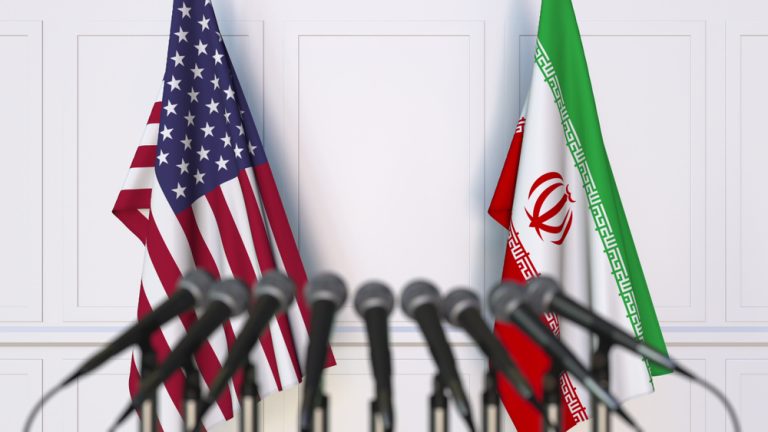
Something significant happened in Islamabad on April 12 — and it wasn’t the failed peace talks. When the United States and Iran sat face-to-face for the first time since 2015, they did so not in Vienna, Geneva, or Washington, but in a South Asian capital that would barely have registered on old-order diplomatic maps. The talks collapsed after 21 hours. But the venue told a story that outlasts the impasse. The geography of global diplomacy is shifting, and the Islamabad talks may be remembered less for what they failed to produce than for where they happened — and who made them possible.
The Islamabad Talks were held on April 11 and 12, 2026, aimed at stabilizing the ceasefire and negotiating a resolution to the Iran war, with Pakistan playing a central role in brokering the ceasefire and facilitating the talks. The choice of venue was not incidental. Pakistan has functional relationships with Iran, the United States, China, Saudi Arabia, and Turkey simultaneously — a diplomatic footprint no European capital can currently match. Iran’s ambassador to Pakistan put it plainly: Tehran would not consider any venue other than Pakistan for talks with Washington. We will do talks in Pakistan and nowhere else, because we trust Pakistan, he said. That statement of trust, directed at Islamabad rather than Brussels or Paris, is itself an indicator of how dramatically the axis of effective diplomacy has rotated.
Why Western Mediation No Longer Works Here
The past decade has seen American-led unipolarity gradually shift into a new international system. This has been accelerated by the United States withdrawing from its traditional leadership role under Trump and the weakening of international norms. The instability of the current global order has allowed several middle powers — among them Turkey and Pakistan — to become more influential than ever, as they take advantage of this instability to further their own interests.
Europe’s absence from the Iran mediation track is not accidental. It is structural. Consumed by the Ukraine war and its own internal fractures, the EU has become a single-issue actor in a multi-issue crisis. While Pakistan’s prime minister and army chief criss-crossed the region to keep dialogue alive — Pakistani civil and military leadership travelling across the region in what observers began calling the Islamabad Process, with Sharif visiting Jeddah, Doha, and Antalya in a four-day regional tour — European capitals were largely absent from the mediation track entirely. Washington’s envoys, meanwhile, arrived in Islamabad carrying a reputation problem. Having bombed Iran twice during the very period they were claiming to negotiate with it, the US came to the table carrying what Iran’s Foreign Minister Abbas Araghchi called maximalism, shifting goalposts, and blockade.
The Architecture of the New Order
What makes the Islamabad moment structurally significant is that it did not emerge in isolation. Nations in the Global South are driving global economic growth and shaping the future by deepening their trade and investment relationships. They are multi-aligned, leaving them free to forge economic and technology partnerships that align with their own strategic priorities — rather than serving as proxies for great power competition. That multi-alignment is precisely what made Pakistan useful as a mediator. It owes no one an unconditional veto over its foreign policy.
The flurry of diplomatic activity reflects a world where developing nations are no longer merely arenas of great power competition but active architects of new alliances and frameworks. Multipolarity is the new normal — no single superpower can unilaterally dictate outcomes; instead, power is increasingly distributed across networks, with the Global South serving as a critical driver. Turkey, Saudi Arabia, Egypt, and Pakistan — the STEP quartet — are not operating as a formal alliance. They are operating as a network of states with converging interests: in regional stability, in energy corridor security, and in reducing their vulnerability to decisions made in Washington or Brussels without their input.
The Blockade Accelerates the Shift
Washington’s response to the failed talks — a naval blockade of Iranian ports announced on April 13 — inadvertently sharpened the very dynamic it was trying to reverse. Trump’s decision to impose a blockade effectively creates a situation of open for all, or open for none in the Gulf. His calculation seems to be that the loss of oil revenue will force Tehran back to the negotiating table. But the economic pain arising from the closure of the Gulf will cut both ways. Countries across Asia and Africa, which depend on Gulf energy routes for essential imports, are watching Washington weaponise a global artery to settle a bilateral dispute. That calculation — coercion over coordination — is precisely the approach that the world’s most profound shift in power since the Cold War is moving away from, as the pillars of the brief unipolar moment erode, giving way to a more fluid and multipolar order shaped increasingly by regional actors.
The blockade also creates a practical problem for Washington’s coalition-building ambitions. An open question is whether either side was interested in reaching an agreement or believed a deal could be struck in less than a day over issues that have divided the two capitals for decades. Vance’s wording after the talks suggests he had gone to Islamabad hoping to accept Iran’s surrender — not to walk back US demands. That posture limits the room for compromise and signals to potential coalition partners that Washington is not actually seeking mediation — it is seeking capitulation.
A Process, Not a Single Meeting
According to a senior Pakistani government official cited by CBS News, Pakistan subsequently intensified diplomatic efforts to bring the United States and Iran back to the table. Pakistani authorities began referring to the negotiations as part of a broader Islamabad Process, framing the engagement as an ongoing diplomatic track rather than a single round of talks.
That framing matters. Calling it a process — rather than a failed conference — signals an intention to persist regardless of any one meeting’s outcome. Analysts noted that both sides had incentives to continue negotiating. The costs of renewed war are high for both, said Sina Toossi of the Center for International Policy. At the same time, political dynamics in Washington and Tehran, and the tendency toward maximalist positioning, could easily pull things back toward confrontation.
The key question for 2026 is not whether the Global South will become more influential — that outcome is already visible. The real challenge lies in building a system that reflects this new distribution of power. The Islamabad talks, impasse and all, have offered one early blueprint for what that system could look like: mediated by countries with skin in the game, grounded in regional ownership, and independent of Western gatekeeping. Whether that blueprint produces a durable peace agreement before the ceasefire expires on April 22 remains to be seen. But the fact that the world’s most consequential diplomatic conversation of 2026 is being shaped in Islamabad — not Geneva, not Paris, not New York — is itself a data point that won’t be easily erased.
Original analysis inspired by Imran Khalid from Foreign Policy in Focus. Additional research and verification conducted through multiple sources.