Twenty-one hours of face-to-face talks. The highest-level engagement between Washington and Tehran since the 1979 Islamic Revolution. And still, no deal. The Islamabad talks concluded on April 12, with US and Iranian delegations leaving Pakistan without reaching an agreement. The ceasefire still holds — for now — but its expiration date is approaching fast, and the gap between the two sides remains as wide as it is dangerous. What went wrong, and is there a credible path forward?
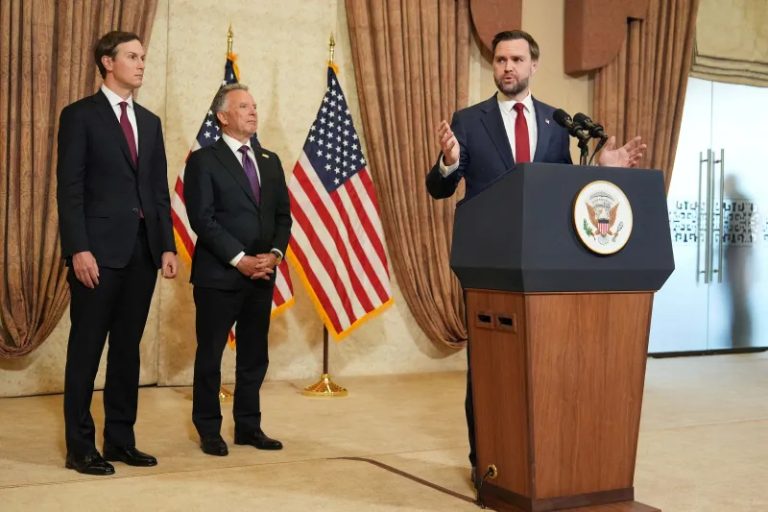
The structural problem is not a lack of willingness to negotiate. Both sides showed up in Islamabad with serious delegations. The US team was led by Vice President JD Vance, alongside special envoys Steve Witkoff and Jared Kushner, while Iran’s 70-member delegation was led by parliamentary speaker Mohammad Bagher Ghalibaf and Foreign Minister Abbas Araghchi. That kind of political firepower signals genuine intent. What the talks exposed, instead, is how deep the mutual distrust runs — and how far apart the two countries remain on the questions that matter most.
The Numbers That Couldn’t Be Bridged
The nuclear question dominated everything. According to US media, the Islamabad talks collapsed without a deal largely due to differences over Iran’s nuclear programme, with Washington pushing for a 20-year enrichment suspension and Tehran proposing five years. That gap — fifteen years — sounds technical. In reality, it reflects entirely different theories of what this deal is actually for. Iran insists its nuclear programme is civilian in nature, and that a five-year suspension would provide enough time to build trust while preserving national interests. Washington views anything shorter than two decades as insufficient. For the US, a longer moratorium was seen as essential to prevent any rapid revival of Iran’s nuclear activities.
Trump himself undercut his own negotiating team after Islamabad. Responding to reports of the 20-year moratorium proposal, Trump told the New York Post: I’ve been saying they can’t have nuclear weapons … so I don’t like the 20 years. That public rebuke — directed at his own vice president — raised immediate questions about whether the US position was coherent at all. Meanwhile, Iran’s Foreign Minister Abbas Araghchi said the two sides were inches away from an agreement when Iran encountered maximalism, shifting goalposts, and blockade from the US.
The Strait of Hormuz created the second major fault line. Tehran views the strait as both a strategic asset and a legitimate bargaining chip. Washington’s position is unambiguous: a fully reopened Strait of Hormuz is a red line for the US, Vance told Fox News. After talks broke down, Trump announced a US naval blockade of Iranian ports from April 13. Iran’s Revolutionary Guards warned that any encroachment of US vessels in the strait would constitute a ceasefire violation — a threat that, if acted upon, could reignite the war within days.
Trust Is the Real Deficit
Beyond specific demands lies a deeper problem: Iran has been bombed twice during the course of negotiations with the United States. Iran’s parliament speaker Ghalibaf said the US ultimately failed to gain the trust of the Iranian delegation. Tehran wanted assurance that the war would really be over this time, and that bombing would not restart once concessions were made. That is not an unreasonable fear. The Arms Control Association noted that the US decision not to engage seriously on the Iranian proposal before February’s strikes raises the question of whether Washington was ever negotiating in good faith.
The JCPOA’s collapse in 2018 haunts every room these diplomats enter. Iran made significant concessions under that deal — agreeing to constrain its nuclear programme by limiting fuel-cycle activities and centrifuge operations — only to watch the Trump administration walk away unilaterally. Asking Tehran to accept new restrictions without ironclad security guarantees, when the US has repeatedly demonstrated it will bypass any agreement when politically convenient, is a demand that would test any negotiating team’s patience.
A Path That Requires Mutual Realism
There is a workable deal available here, but it demands that both sides abandon their current self-assessments. Washington appears convinced it has fatally weakened Iran. Tehran appears equally convinced it has survived enough to negotiate from strength. US officials concluded after Islamabad that Iran had misperceived its negotiating strength — and that the Iranians need to recognize realities on the ground before they’ll be ready to entertain a serious offer. Tehran’s view is almost a mirror image of that.
Neither reading is entirely accurate. A credible path forward would involve a phased approach: confidence-building steps first — humanitarian access, partial sanctions relief, prisoner exchanges — followed by technical nuclear talks anchored by intrusive IAEA monitoring. On enrichment duration, the arithmetic of a compromise is not mysterious: Washington wants 20 years, Tehran has offered five. A ten-year suspension, paired with strict verification and a credible non-aggression framework, might represent ground both sides could accept without losing face.
The truce, which expires on April 22, has created a small window for negotiations to end a war that has killed more than 4,000 people across the Middle East, overwhelmingly in Iran and Lebanon. Reports suggest growing prospects for a second round of talks, and regional officials cited by the AP indicated an in-principle agreement to extend the ceasefire. Whether that window stays open long enough for both sides to step through it remains the central, unresolved question of this conflict.
Original analysis inspired by Seyed Hossein Mousavian from Foreign Affairs. Additional research and verification conducted through multiple sources.