The fragile ceasefire between the United States and Iran has paused direct fighting, yet another contest continues to rage across social media platforms. While Washington mixes military footage with Hollywood clips to project strength, Tehran has deployed sharp, AI-powered satire that resonates far beyond its borders. This digital skirmish highlights how narrative control now shapes public perception in modern conflicts as much as battlefield results.
President Donald Trump’s recent social media activity has drawn sharp backlash even from traditional supporters. Over Easter weekend, he posted an AI-generated image depicting himself in a Jesus-like role healing the sick, prompting accusations of blasphemy from figures like Marjorie Taylor Greene. He also criticized Pope Leo for opposing his policies on immigration and the Iran campaign. Such moves have alienated religious audiences and complicated efforts to maintain domestic backing for the operation.
White House posts celebrating strikes by blending real footage with scenes from films like Top Gun: Maverick have drawn further criticism. Catholic leaders, including cardinals interviewed on 60 Minutes, condemned the approach as disrespectful and disturbing. These messaging choices appear aimed at energizing a core base but risk repelling the broader public already skeptical of the conflict.
Polling shows limited support
Recent surveys indicate the operation enjoys approval from only about a third of Americans, with disapproval hovering near 50 percent or higher in some polls. Retention challenges within the military add to the strain, as some service members opt for early exit rather than risk association with an unpopular engagement. In this climate, heavy-handed propaganda that preaches to a narrowing audience has limited reach.
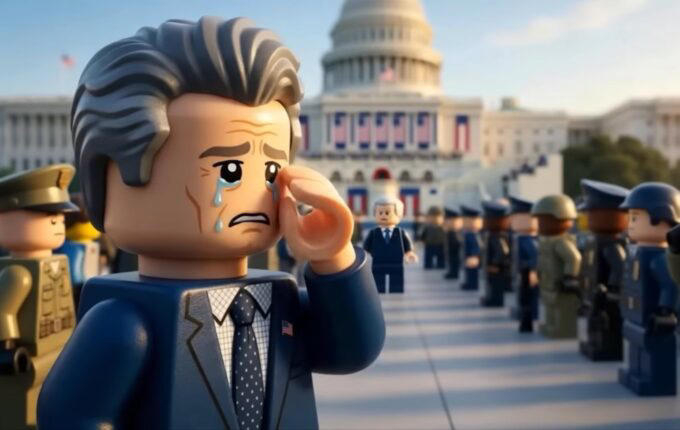
By contrast, Iranian creators have produced content that travels widely. A group known as Explosive Media, loosely tied to pro-regime networks, has released a series of AI-generated animated videos styled like The Lego Movie. These clips use blunt humor and memorable characters to mock Trump, Defense Secretary Pete Hegseth, and Israeli Prime Minister Benjamin Netanyahu. Recurring themes target alleged personal scandals and ties to elite circles, packaged in catchy, vulgar formats that spread quickly across platforms.
The videos have achieved notable virality, reaching audiences unlikely to engage with official Iranian statements. Even conservative commentator Tim Dillon acknowledged the effectiveness, noting that America appears to be losing the “shit talk war” despite inventing the genre. Iranian diplomatic accounts have amplified similar satirical material, including clips responding directly to Trump’s religious imagery.
This asymmetry in digital outreach reflects broader dynamics of the confrontation. The United States possesses overwhelming conventional power, yet struggles to frame the conflict persuasively for global viewers. Iran, operating from a position of relative weakness, has leveraged humor and cultural references to humanize its resistance and highlight perceived American excesses. In an era where social media shapes international opinion, such efforts can erode support for military actions over time.
The online domain now forms a critical theater in asymmetric disputes. Viral content influences everything from domestic political pressure to diplomatic calculations. While tactical military gains matter, the ability to shape stories and emotions online increasingly determines who holds the narrative advantage.
As the ceasefire persists and talks remain stalled, this meme-level contest could influence how both sides approach future negotiations. For Washington, regaining footing in the information space may prove as important as managing events on the ground. Tehran has shown that creativity and cultural agility can amplify influence even against superior firepower.
Original analysis inspired by Jeet Heer from MSN. Additional research and verification conducted through multiple sources.
By ThinkTanksMonitor