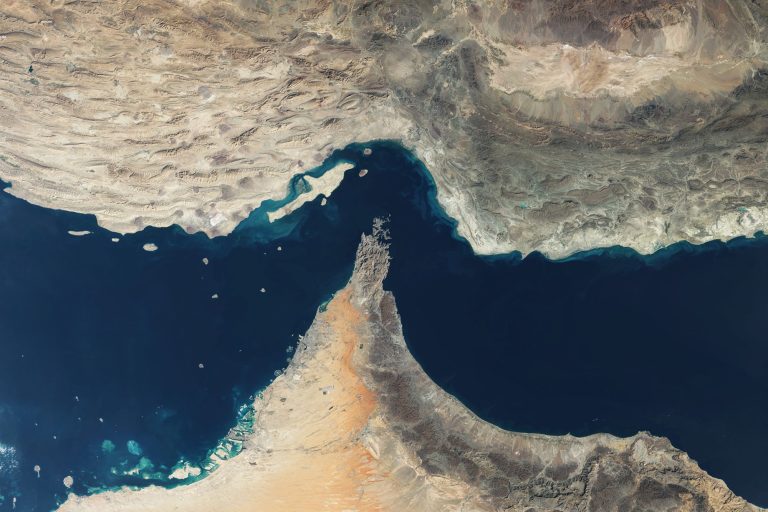
Tehran has elevated its oversight of the Strait of Hormuz to a core element of national strategy, describing the waterway as a deterrent with the impact of an atomic weapon. This stance follows months of direct conflict, targeted strikes that removed senior leaders in late February, and years of economic isolation that eroded trust in diplomatic assurances. What once served as a vital trade route now functions as a powerful bargaining chip, one that Iran shows little willingness to relinquish even as fragile ceasefires hold.
Supreme Leader Ayatollah Mojtaba Khamenei recently framed both nuclear technology and missile systems as national assets that Iran would defend without compromise. His comments, timed with commemorations of Persian Gulf history, rejected any future dominated by outside powers located thousands of kilometers away. Instead, he proposed a shared regional destiny in which local states manage security and economic arrangements, extending an offer of Iranian protection as traditional American guarantees lose credibility.
Such declarations did not emerge in a vacuum. Decades of sanctions, combined with the recent military campaign, convinced Iranian decision-makers that reliance on peaceful nuclear declarations offered insufficient protection. Former diplomats involved in past nuclear talks note that the ability to disrupt maritime traffic has given Tehran new tools to offset conventional military disadvantages. By instituting fresh protocols for vessel movements and restricting Israeli shipping without reparations, Iran has demonstrated it can impose immediate costs on global energy flows.
Roughly one-fifth of the world’s seaborne oil passes through this narrow channel. Any sustained interference quickly translates into higher prices, stranded tankers, and pressure on economies far beyond the region. Iranian military spokesmen have warned that renewed American attacks would place oil and gas infrastructure across the area at risk, amplifying the deterrent effect. This approach allows Tehran to exert influence without necessarily advancing its nuclear program to weaponization, a calculated restraint that complicates outside responses.
Fracturing Gulf Alliances
The ripple effects have already reached OPEC. The UAE’s decision to leave the organization has exposed underlying tensions with Saudi Arabia and raised questions about the cartel’s future cohesion at a time of political uncertainty. Abu Dhabi’s move appears driven by immediate revenue needs and a desire for production flexibility, yet it also signals broader doubts about Washington’s reliability as a security partner after recent events left Gulf states exposed.
Saudi officials have begun voicing similar skepticism in public, suggesting the era of depending on the United States for protection may be ending. Should additional producers follow the UAE’s example, oil markets could face greater volatility, with independent output decisions potentially softening prices over time. Major importers such as India could benefit from cheaper crude for their refining sector, though they continue to watch developments closely given their exposure to any disruption in the Gulf.
Diplomacy in a Fluid Environment
Iranian diplomacy has adapted to this fluid environment. Foreign Minister Abbas Araghchi’s travels have included high-level meetings with Vladimir Putin in Russia and his Chinese counterpart Wang Yi, seeking support for extended calm and a broader de-escalation. Backchannel efforts involving Pakistan and Oman persist, yet core differences remain. Tehran insists on comprehensive guarantees, including sanctions relief, withdrawal of nearby US forces, compensation, and formal acceptance of its revised Hormuz arrangements, alongside an end to hostilities that stretch to Lebanon.
The Trump administration has labeled these positions unacceptable, arguing that Iranian leadership remains divided. This impasse leaves traditional US allies increasingly isolated on the issue and highlights the limits of maximum-pressure tactics that once shaped policy toward Iran. Past experience with the JCPOA showed that verifiable limits on enrichment could produce stability when paired with sanctions relief, yet trust has since collapsed on both sides.
The Future of the Regional Order
The current situation carries risks of renewed escalation alongside opportunities for a different regional order. If Hormuz management evolves into a genuinely collective mechanism involving Gulf neighbors, it could reduce the influence of distant powers and foster arrangements grounded in local realities.
For now, the waterway’s transformation from commercial artery to strategic equalizer continues to reshape calculations in capitals from Washington to Beijing, with global energy security hanging in the balance. Any lasting resolution will require addressing not only nuclear questions but also the deeper grievances that made geography Iran’s most potent card.
Original analysis inspired by Sandhya Jain from RT. Additional research and verification conducted through multiple sources.