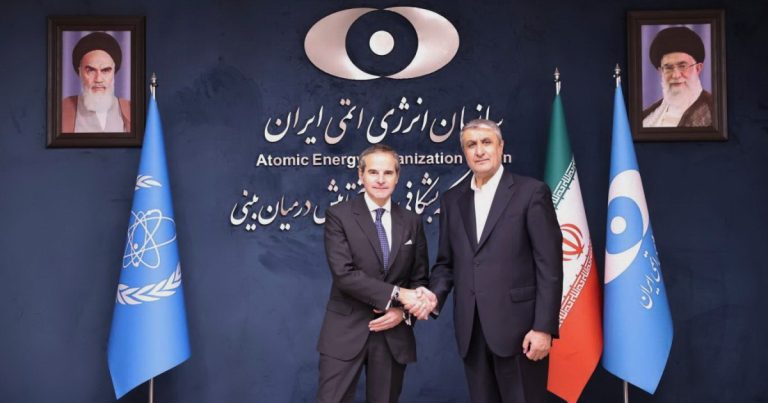
The 2026 NPT Review Conference convened in New York as military action against Iranian nuclear sites remained fresh in everyone’s minds. Iran’s election to one of the vice president positions sparked immediate pushback from the United States, which labeled the move an affront given ongoing disputes over Tehran’s compliance. Yet Tehran’s submitted working papers cut to the heart of longstanding treaty imbalances that extend far beyond any single country. These documents deserve close examination not as one-sided grievances but as warnings about what happens when core provisions lose credibility among non-nuclear states.
Recent strikes on facilities at Natanz, Fordow, and Isfahan targeted locations under active IAEA oversight. These sites formed part of Iran’s declared civilian program, monitored through safeguards agreements dating back to the 1970s. When a non-NPT nuclear state, working alongside an NPT nuclear weapons state, conducts such operations, it sends a devastating message: membership and transparency offer no real protection. The 2010 NPT final document explicitly warned that attacks on peaceful nuclear facilities carry dangerous political, economic, and environmental risks while raising questions about the legitimate use of force. Events in 2025 and early 2026 brought those words into sharp relief.
The Article IV Impasse
Iran has referenced its compliance record in these discussions. It maintained safeguards, voluntarily implemented the Additional Protocol for years, and adhered to the JCPOA well after the 2018 American withdrawal. Its current emphasis on the inalienable right to peaceful nuclear technology under Article IV reflects the treaty’s original bargain. Many non-nuclear weapon states watch closely. When enrichment activities become flashpoints for military action rather than negotiated limits, confidence in equitable access to nuclear energy collapses. Tehran has indicated readiness to discuss specific enrichment levels, yet repeated demands for complete dismantlement only deepen the impasse.
Security Guarantees and Regional Disarmament
Security guarantees and regional disarmament remain central. As a state that has faced explicit nuclear-related threats, Iran joins a broad coalition in calling for legally binding negative security assurances. The Non-Aligned Movement has consistently backed unconditional commitments that nuclear weapon states will neither use nor threaten nuclear arms against compliant non-nuclear parties. Current unilateral declarations from some nuclear powers contain caveats that erode their value, especially as miscalculation risks grow. Strengthening this language could reduce incentives for hedging behavior across regions.
Parallel to these concerns sits the unfinished business of a Middle East zone free of nuclear weapons and other weapons of mass destruction. The 1995 resolution that helped secure indefinite NPT extension called for such a zone, a commitment reaffirmed in 2010. Progress has been glacial, largely because Israel stands outside the treaty. NAM countries have supported dedicated conferences on the topic, yet without concrete steps toward universality, the gap continues to fuel resentment and weaken the review process. Iran is hardly alone in viewing this as a fundamental test of the treaty’s fairness.
Erosion of the Non-Proliferation Regime
These positions form a coherent whole. Attacks on safeguarded installations undermine the verification system that underpins the entire regime. Unresolved security assurances and stalled regional initiatives erode trust. Selective enforcement of Article IV deepens the divide between nuclear haves and have-nots. Many middle powers from the Global South recognize similar patterns in their own strategic calculations. The recent threat of Iranian withdrawal from the treaty, though not yet executed, reflects how quickly frustration can turn into irreversible decisions.
Conference delegates now face a choice. They can treat Iran’s submissions as irritants to be managed or as signals that the NPT’s foundational compromises require renewed attention. Military pressure has not resolved underlying disputes and has instead complicated verification efforts at damaged sites. Genuine diplomatic engagement grounded in the treaty text offers a narrower but more sustainable path. At a moment when nuclear risks are rising from multiple directions, reinforcing the NPT’s relevance to all its members matters more than scoring rhetorical points. The alternative is a slow hollowing out of the regime that no one can afford.
Original analysis inspired by Syed Ali Zia Jaffery from Bulletin of the Atomic Scientists. Additional research and verification conducted through multiple sources.