Recent clashes inside Iran’s political elite have spilled into public view just as indirect talks with the Trump administration hover between fragile ceasefire and potential breakthrough. While Tehran faces crushing economic strain and the new Supreme Leader consolidates power, a vocal minority continues to treat any compromise as ideological treason. This friction reveals less a regime on the brink of collapse than a calculated contest over how far Iran can bend without appearing to break.
The country’s economy has taken severe hits from prolonged sanctions and the aftershocks of recent conflict. Analysts project contraction around 6 percent this year, with food prices surging dramatically and the currency under heavy pressure. Such realities have pushed even longstanding skeptics of engagement to consider limited diplomatic steps that might deliver relief without upending core revolutionary principles. Yet acceptance of this logic is far from universal.
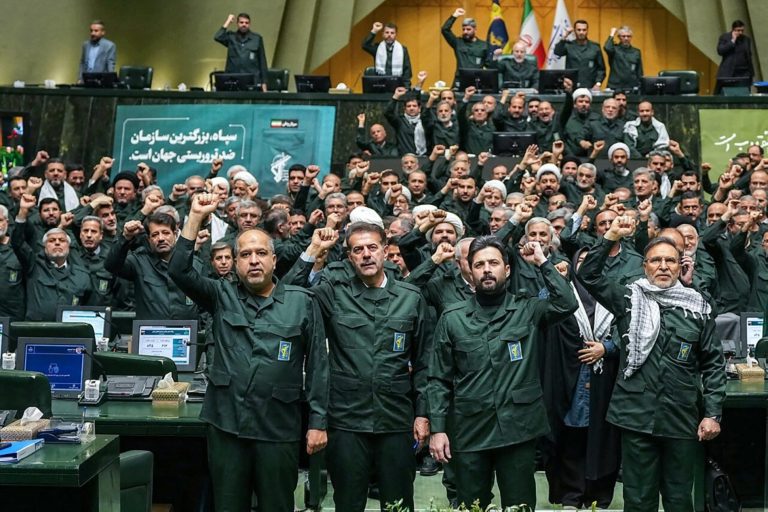
At the heart of resistance sits Saeed Jalili and the network around the Paydari Front. This faction, though limited in popular appeal, maintains outsized influence through ideological media outlets, parliamentary allies, and ties to militant pressure groups. Jalili, a former nuclear negotiator known for maximalist positions, has repeatedly framed talks as dangerous concessions that invite further Western demands. His allies recently withheld support from a parliamentary statement endorsing the negotiating team, a move that highlighted their spoiler role even among fellow conservatives.
Tactics of Disruption
Such maneuvers follow a familiar pattern. During earlier rounds of nuclear bargaining, including the 2015 JCPOA and subsequent revival attempts, similar voices warned that any flexibility equaled surrender. They leveled accusations of weakness against officials who dared sit across from American counterparts. Today those attacks have targeted Mohammad Bagher Ghalibaf, a former Revolutionary Guard commander and current parliament speaker who recently led talks in Islamabad. Far from a reformer, Ghalibaf represents a strain of hardline pragmatism that prioritizes institutional survival over rhetorical purity.
Even elements within the security establishment appear increasingly impatient with this obstruction. State-linked outlets connected to the IRGC have publicly criticized Paydari-aligned voices for sowing division at a time when the system craves cohesion. This internal rebuke carries weight. It suggests that ultra-hardline agitation, once shielded as revolutionary vigilance, is now viewed by some insiders as a threat to regime stability amid external pressure and domestic fatigue.
A New Leadership Context
The new Supreme Leader, Mojtaba Khamenei, has signaled at least tacit acceptance of the current diplomatic track. In a system where top-level approval or even non-objection can prove decisive, this matters. It indicates the core leadership calculates that measured engagement could serve survival better than indefinite isolation, especially given the heavy human and financial costs of recent confrontations.
Still, the ultra-hardliners possess real tools. They shape coverage through sympathetic voices in state broadcasting, mobilize student groups and ideological organizations, and keep alive the narrative that America’s ultimate goal remains regime change. Any agreement will therefore require careful packaging to avoid the appearance of capitulation. Negotiators must balance sanctions relief against limits on enrichment and missile work, all while managing accusations from those whose political identity depends on perpetual confrontation.
Future Outlook
This dynamic is not new, but its visibility has grown. Past experience shows that when the Islamic Republic concludes talks advance its interests, it finds ways to proceed despite internal noise. The current round of nuclear negotiations, coming after direct military exchanges and a precarious ceasefire, will test whether pragmatism can again prevail over ideological rigidity.
Washington would do well to recognize these contours. The loudest objections often come from a minority whose power lies in raising costs rather than offering viable alternatives. Iran’s factions compete fiercely, yet they share a deeper commitment to preserving the system. The real question is not whether talks can happen, but whether any resulting deal can be sold at home without triggering fresh waves of sabotage.
For the region, the stakes extend beyond bilateral relations. Successful de-escalation could ease pressure on oil markets, reduce risks around key shipping lanes, and open space for broader diplomatic realignments. Failure, amplified by internal spoilers, risks renewed cycles of confrontation with consequences that reach far beyond Iran’s borders.
Original analysis inspired by Alex Vatanka from Majalla. Additional research and verification conducted through multiple sources.