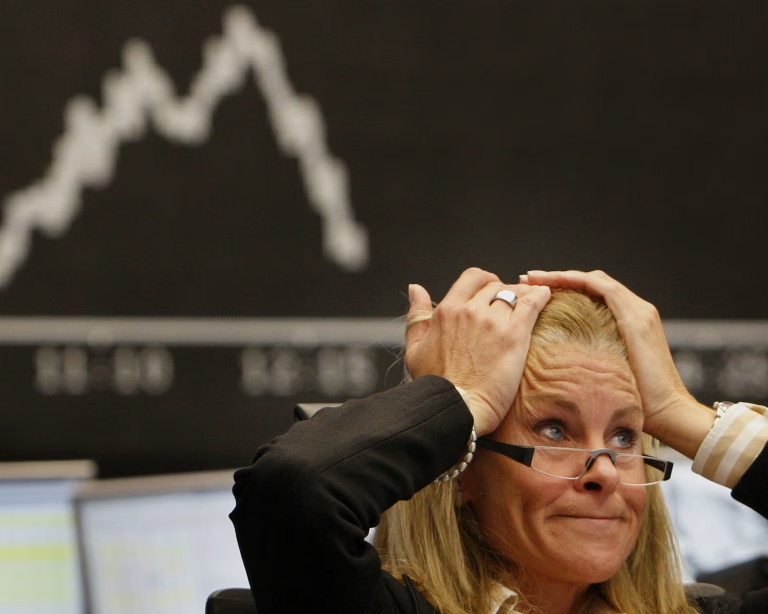
Financial markets currently face a dangerous convergence of geopolitical conflicts and technological overvaluation. As summer ends historically volatile autumn trading patterns emerge across global exchanges. Investors initially dismissed the early warning signs but the combined weight of soaring energy costs and fragile tech stocks now threatens widespread economic stability.
The ongoing conflict involving the United States and Iran fundamentally alters global energy supply chains. When military actions restricted maritime traffic through the Strait of Hormuz earlier this year analysts feared immediate catastrophe. While outright disaster was temporarily avoided crude prices quietly climbed past a hundred dollars per barrel in recent weeks. This steady increase directly limits refining capacity and pushes fuel costs higher for everyday consumers.
Beyond commodity pressures a speculative frenzy surrounding artificial intelligence heavily distorts equity valuations. For months major indices relied almost entirely on a handful of tech giants to sustain their growth. Industry leaders recently warned that development speeds must slow down to prevent systemic risks. If infrastructure costs outpace actual revenue generation this sector risks a massive correction. Leaders in Washington actively resist tighter regulations hoping to protect domestic equity markets ahead of upcoming elections.
Containing The Economic Fallout
Central banks and finance ministries scramble to contain the damage from these dual pressures. The United States Treasury quietly purchases older government bonds to artificially suppress rising consumer interest rates on mortgages and auto loans. Such aggressive interventions reveal deep anxiety regarding the structural integrity of current financial systems. Across the Atlantic the Bank of England recently held borrowing costs steady while explicitly alarming markets about persistent inflation stemming from global energy volatility.
British political leadership faces immense pressure to navigate this precarious environment without stalling economic growth. Prime Minister Andy Burnham and his finance team approach the October budget knowing they must stimulate industrial recovery. Trade unions strongly advocate for aggressive state investment rather than returning to austerity measures. Raising taxes or slashing public spending right now guarantees a deeper recession if global markets finally buckle.
History rarely copies itself perfectly yet the structural vulnerabilities visible today echo previous market failures. Financial institutions might carry less direct real estate risk than they did eighteen years ago but excessive reliance on unchecked tech expansion creates new systemic flaws. Policymakers must proactively prepare comprehensive intervention strategies before a massive market correction forces their hands. Ignoring these intersecting economic threats only ensures a steeper fall when the current system eventually breaks.
Original analysis inspired by Larry Elliott from The Guardian. Additional research and verification conducted through multiple sources.