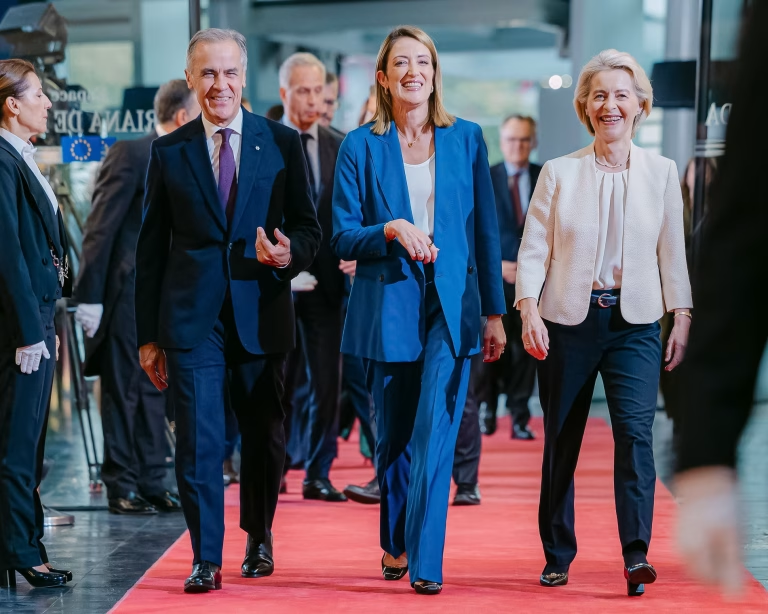
Geopolitical alignments across North America face unprecedented realignments as leaders in Ottawa actively seek alternative international partnerships. Heavy economic reliance on neighboring markets historically dictated Canadian diplomatic strategy for decades. Current leadership now attempts to shield domestic industries from unpredictable policy shifts originating in Washington. This strategic pivot targets deep integration with European markets to ensure long term financial stability.
Expanding Transatlantic Integration
The European Commission formally proposed an unprecedented diplomatic framework that could designate Canada as its first associate member. This initiative intends to align critical supply chains across technology and energy sectors without requiring full geographical accession into the bloc. Canadian representatives increasingly view this enhanced framework as a necessary shield against unilateral economic coercion. Building upon the existing Comprehensive Economic and Trade Agreement both governments want to streamline manufacturing and research capabilities. By opening these channels Ottawa secures preferential access to one of the largest consumer bases globally.
Military cooperation also represents a core component of this emerging transatlantic strategy. Canada recently became the first external nation to participate in a massive European defense procurement initiative. This joint funding mechanism allows Canadian defense contractors to seamlessly collaborate with international counterparts on advanced security projects. Such military alignment signals a clear departure from exclusive reliance on traditional bilateral defense pacts.
Navigating Diplomatic Pushback
Efforts to diversify international alliances rapidly generated friction with American leadership. The White House explicitly warned that closer ties between Ottawa and Brussels could trigger retaliatory tariffs against European exports. American officials interpret this proposed integration as a direct challenge to regional economic dominance. Because Canada currently sends roughly seventy percent of its exports south the threat of severed supply chains carries immense domestic risk.
These shifting relationships highlight a broader transformation within global trade networks. Middle powers increasingly recognize the vulnerability associated with overwhelming dependence on a single superpower. While establishing an entirely new category of European association requires extensive negotiations the political will clearly exists on both sides of the Atlantic. The successful execution of this diplomatic maneuver could easily establish a new template for nations seeking to balance global economic pressures.
Original analysis inspired by David Moscrop from The Guardian. Additional research and verification conducted through multiple sources.