Something has shifted in the grammar of American foreign policy. The strategic language of alliances, interests, and international institutions has been progressively displaced by a different register — warnings of “civilizational erasure” in Europe, invocations of a Judeo-Christian heritage under siege, and explicit threats to destroy Iranian civilization entirely. This is not rhetorical excess at the margins of policy. It is the operational language of a foreign policy doctrine that its architects call civilizationalism — and its consequences are measurable in broken alliances, alienated partners, and a Western bloc that is fracturing not from external pressure but from within.
Trump is not the first contemporary leader to weaponize civilizational identity for political mobilization. Xi Jinping invokes China as the world’s only continuous ancient civilization. Narendra Modi draws on Hindu civilizational revival. Vladimir Putin promotes a distinct Eurasian-Russian identity rooted in Orthodox Christianity. Recep Tayyip Erdogan reaches back to Ottoman and Islamic heritage. Each leader cherry-picks from a historically selective and internally contradictory archive to produce a politically mobilizing myth of continuity. What distinguishes Trump’s version is not its logic — which is structurally identical to the others — but its backing: military dominance, reserve currency status, and technological superiority that no other civilization-state can currently match.
The Roman Parallel
The invocation of Rome is historically instructive rather than merely rhetorical. Rome in its imperial phase understood itself as the carrier of a superior civilization whose expansion required no further justification than its own civilizational mandate. But the loudest assertions of Roman civilizational legitimacy came not during Rome’s confident ascent but during its contested decline — moments when the ruling elite reached for civilizational grandeur precisely because institutional authority was eroding. Emperor Diocletian’s requirement that officials prostrate before him, the elaborate ceremonial apparatus of late imperial Rome — these were not expressions of strength but of anxiety dressed in the costume of permanence.
The deeper analytical point is that all civilization-state claims are myths in the precise scholarly sense: politically constructed, historically selective, and internally contradictory. Chinese civilization absorbed Buddhist, Mongol, and Manchu influences. Indian civilization blended Austroasiatic, Harappan, Persian, and Islamic elements that sit uneasily beneath any unifying Hindu narrative. American civilization has historically been defined by civic rather than ethnic or civilizational foundations, absorbing immigrants more openly than most comparable settler states. Trump’s civilizationalism contradicts the actual content of the tradition it claims to defend. What Xi, Modi, Putin, Erdogan, and Trump share is not civilizational heritage but a common political logic: cultural identity mobilized to consolidate domestic authority and deflect attention from institutional shortcomings.
When Defense Destroys What It Claims to Protect
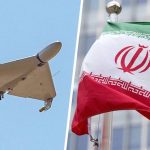
The Iran war made the internal contradiction explicit. Defense Secretary Pete Hegseth framed the operation in explicitly theological terms, invoking a direct line from the Christian gospels to Western civilization. Trump threatened to return Iran to the Stone Ages and destroy its “whole civilization.” Pope Leo stated clearly that the war violated every requirement of the Christian just war doctrine — no imminent threat, no last resort, no proportionality, no legitimate aim consistent with restoring peace. The theological framework invoked to justify the war condemned it by its own standards. Civilizational language served not as a moral framework but as a substitute for one.
The European response registered the fracture precisely. France blocked Israeli aircraft carrying weapons through French airspace. Italy refused landing rights to US bombers at Sigonella. Spain denied access to jointly operated bases and its airspace. Canadian Prime Minister Mark Carney traveled to Beijing in January after years of frozen Sino-Canadian relations, signaling that traditional American allies are recalibrating their strategic dependence. When Vance lectured European leaders at the Munich Security Conference that their greatest threat came from within — from their own cultural permissiveness and humanitarian commitments — he was not negotiating with allies but pronouncing their civilizational deficiency. The West as Trump and Vance deploy it excludes precisely the institutions — NATO’s mutual defense commitments, the EU’s multilateral architecture, universal human rights — that gave the postwar West its operational content.
A World Organizing Around American Absence
The constructive consequence of this fracturing may be the accelerating emergence of what scholars are calling world-minus-one cooperation — consequential multilateral arrangements that proceed without American participation while leaving the door open for future US engagement. The EU-India trade deal, described by European Commission President Ursula von der Leyen as the “mother” of all trade deals, cuts across the West-rest divide without American involvement. The EU-Mercosur agreement created a 700 million-person market outside the American-led framework. The yuan is gaining traction as an energy settlement currency, with Deutsche Bank describing the Iran conflict as a potential catalyst for petrodollar erosion. These formations are not anti-American in intent. They are reflections of a world that has stopped waiting for Washington to decide whether it wants to lead.
Original analysis inspired by Amitav Acharya from Foreign Policy. Additional research and verification conducted through multiple sources.