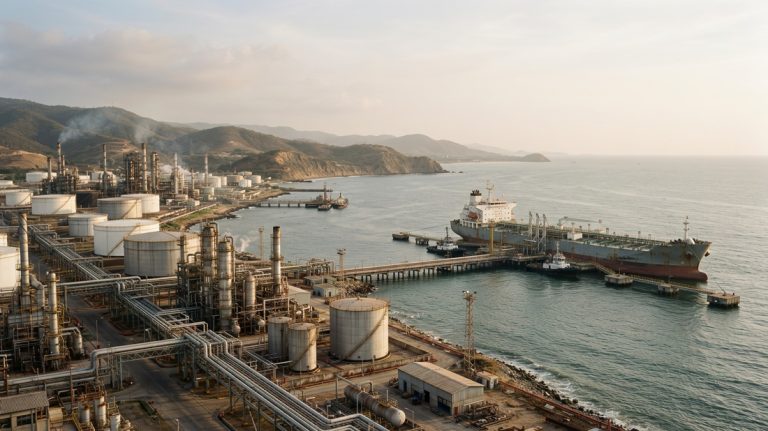
Nearly a year after the United States intervened in Caracas to oust Nicolas Maduro, Washington’s strategy in Venezuela looks far more like transactional resource extraction than democratic state building. Instead of pressing interim authorities for verifiable electoral timelines and institutional reforms, the Trump administration has prioritized sweeping crude supply agreements with Acting President Delcy Rodriguez. That bargain threatens to entrench the very authoritarian structures Washington claimed it wanted to dismantle.
For decades, Venezuela’s political crisis was fueled by unchecked oil rents flowing into patronage networks rather than public accountability. By stepping into the role of senior commercial partner without demanding democratic guardrails, the White House risks repeating the same external patronage model once practiced by Beijing and Moscow, only under American management.
Rentier Deals Without Democratic Reform
Since January 2026, US officials have lifted key oil sanctions, reopened diplomatic missions, and collected billions in proceeds from Venezuelan crude sales while withholding clear oversight mechanisms. In September, the two governments finalized a controversial long term energy framework that drew sharp criticism from energy analysts and Venezuelan civil society alike.
Meanwhile, Venezuela’s political transition remains frozen. Rodriguez’s interim administration has already exceeded the 180 day constitutional limit for a caretaker government without scheduling national elections, overhauling the electoral council, or establishing independent property and contract protections. Critics warn that fresh petrodollars will simply allow ruling party networks to buy off allies and rebuild their political machinery ahead of any future vote.
Machado’s Return Tests US Leverage
Washington’s willingness to sideline Venezuela’s mainstream democratic movement has deepened domestic resentment. Opposition leader Maria Corina Machado, whose coalition backed Edmundo Gonzalez’s landslide claim in the disputed 2024 election, returned to Caracas in October to massive crowds despite US backed talks proceeding without her. Polls consistently show Machado commanding overwhelming public support while Rodriguez remains in single digits.
Machado has publicly voiced concern over opaque energy agreements negotiated over the heads of Venezuelan voters. Should she formally break with the current negotiating track, any settlement between Washington and Caracas will lack domestic legitimacy and collapse under public pressure.
Calling Venezuela a newly secured economic acquisition only fuels nationalist and anti imperialist backlash across the country. Stability in Caracas cannot be purchased through oil contracts signed with an unelected caretaker regime. Unless Washington ties economic relief to free elections and the rule of law, its short term energy deal will produce long term political instability.
Original analysis inspired by Javier Corrales from Foreign Affairs. Additional research and verification conducted through multiple sources.