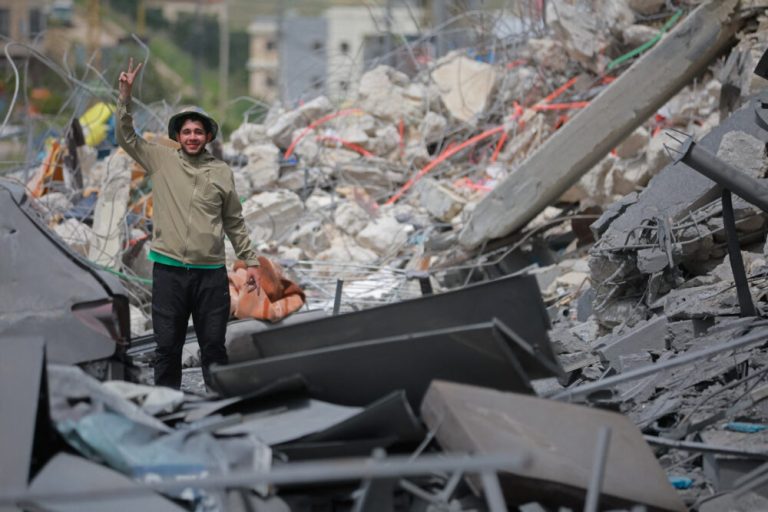
Lebanon once again finds itself at the center of Middle East tensions, where decisions made in Beirut could shape the trajectory of the entire region. As fighting between Israel and Hezbollah intensifies alongside parallel diplomatic efforts between Israel and Lebanon, the country has become a critical test case for whether escalation or negotiation will define the next phase of regional conflict. Experts gathering in Washington this week will examine the delicate balance between continued violence and the possibility of a lasting political settlement.
The stakes could hardly be higher. Lebanon’s fragile state institutions, already strained by economic collapse and the 2020 Beirut port explosion, face new pressures from cross-border exchanges that have displaced communities and strained resources. Any major escalation risks pulling the country deeper into a wider confrontation, while successful diplomacy could open pathways to stability that extend beyond its borders. The outcome in Lebanon may signal whether the region moves toward de-escalation or renewed cycles of conflict.
Panel Brings Key Voices to Washington
The Middle East Institute has convened a timely discussion featuring prominent Lebanese and international figures. Lebanese Member of Parliament Michel Moawad, founder of the Independence Movement, brings direct insight from the country’s political frontlines. A reformist voice who has consistently pushed for sovereignty and accountability, Moawad resigned from parliament in 2020 in protest over the port explosion and was re-elected in 2022. His perspective on Lebanon’s internal challenges will be central to understanding the domestic constraints shaping Beirut’s choices.
Joining him is Ambassador David Hale, a distinguished diplomat with deep experience in the region. As a former US envoy, Hale has navigated complex negotiations involving Lebanon, Syria, and broader Middle East dynamics. His analysis of American policy options and the limits of external mediation will provide crucial context for Washington audiences.
Dr. Saleh El Machnouk, a lecturer in comparative politics at Université Saint-Joseph in Beirut, adds academic rigor to the conversation. His research on power-sharing systems, constitutional design, and third-party interventions in divided societies offers a framework for assessing whether Lebanon’s sectarian political model can withstand current pressures or requires fundamental reform.
Moderating the discussion is Dr. Fadi Nicholas Nassar, Senior Fellow at the Middle East Institute. Having worked on the ground in Lebanon through the financial crisis, the port explosion, and recent Israel-Hezbollah clashes, Nassar brings practical knowledge of how international policies interact with local realities.
Opening remarks will come from Ambassador Stuart E. Jones, President of the Middle East Institute and a veteran diplomat. His leadership in framing the discussion underscores the event’s focus on actionable policy insights rather than abstract theory.
Broader Regional Implications
The panel arrives at a moment when Lebanon’s fate appears closely tied to wider power struggles. Ceasefire efforts between Israel and Hezbollah have shown limited progress, while parallel talks between Israel and Lebanese authorities seek to address border security and disarmament issues. Success in these negotiations could reduce the risk of full-scale war, but failure might encourage further escalation that draws in additional actors.
For the United States, Lebanon represents both a challenge and an opportunity. Washington has sought to support diplomatic tracks while maintaining pressure on armed groups. Yet American influence operates within limits shaped by regional rivalries and Lebanon’s internal divisions. European partners and Gulf states also watch developments closely, recognizing that instability in Beirut can ripple through energy markets and migration flows.
The discussion will likely explore what concrete steps could prevent renewed fighting. These may include stronger international guarantees for border arrangements, economic incentives for reconstruction, and mechanisms to address Hezbollah’s role within Lebanon’s political system. Panelists are also expected to address the humanitarian dimension, as repeated rounds of violence have left communities exhausted and infrastructure damaged.
Testing Ground for Regional Order
Lebanon has long served as a barometer for Middle East dynamics. Its sectarian power-sharing model, designed to manage diversity, has often struggled under external pressures. The current crisis tests whether this system can adapt or whether external mediation must impose new frameworks. The outcome will influence not only Lebanese lives but also the prospects for stability in Syria, the Gulf, and beyond.
As talks continue and military posturing persists, the need for informed policy debate grows more urgent. Events like this panel help translate complex ground realities into recommendations that can shape decisions in Washington and other capitals. With the region poised between renewed confrontation and cautious diplomacy, Lebanon’s path forward carries consequences that extend far beyond its borders.
The coming months will reveal whether diplomacy can gain the upper hand or whether the cycle of violence will continue. For now, focused conversations among experts and policymakers offer the best chance to identify practical steps that could tip the balance toward stability.
Original analysis inspired by Middle East Institute event details. Additional research and verification conducted through multiple sources.