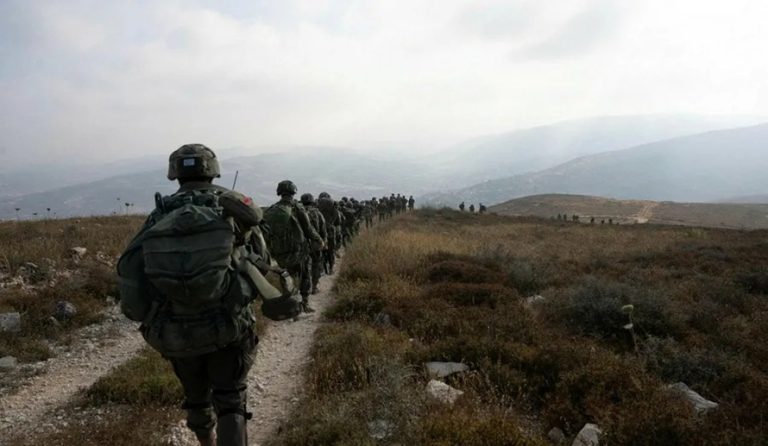
Public criticism of Israeli settler attacks in the West Bank has grown as shootings, assaults, property destruction, and forced displacement receive greater international attention. Yet focusing only on violent individuals can obscure the institutional system that allows settlements to expand. Roads, military deployments, land restrictions, demolition orders, and security zones can reshape Palestinian life long before an armed settler enters a village. The rebuilding of Sa Nur in the northern West Bank provides a clear example of how settlement expansion changes control over land and movement even without direct civilian attacks.
Israel formally evacuated Sa Nur in 2005 as part of the disengagement plan that also removed Israeli settlements from Gaza. The political reversal began years later, and Israeli authorities eventually allowed citizens to return to Sa Nur and several other evacuated West Bank settlements. In April, senior ministers publicly celebrated Sa Nur’s restoration, presenting it as the correction of a historic mistake. Nearby Palestinians instead feared that the settlement would restrict access to agricultural land and accelerate Israeli control across the surrounding area.
Settlement expansion changes the surrounding territory
The impact of a settlement extends beyond the houses inside its official boundaries. Residents require roads, military protection, checkpoints, utility networks, and security infrastructure. In practice, those systems can determine where Palestinians travel, cultivate farmland, build homes, and operate businesses.
This pattern can already be seen around Sa Nur. Reuters reported that Palestinian communities near the settlement feared losing access to land as the project advanced. The Israeli military has said restrictions and demolition measures are based on security or planning regulations rather than an effort to remove Palestinians. Palestinian officials argue that the cumulative effect is territorial fragmentation that makes a viable Palestinian state increasingly difficult to establish.
The wider trend is substantial. United Nations monitors documented more than 1,360 settler related incidents affecting over 250 Palestinian communities during the first seven months of 2026. More than 2,300 Palestinians were displaced during that period because of settler attacks and related restrictions on access. These figures show that violence and territorial control frequently operate together rather than as separate problems.
International law adds another dimension. The International Court of Justice ruled in its 2024 advisory opinion that Israeli settlements in the West Bank and East Jerusalem, together with the regime supporting them, violate international law. The court also linked settler attacks, failures to prevent violence, and wider Israeli policies to a coercive environment affecting Palestinians. Israel rejects the international community’s prevailing legal interpretation and cites historical, religious, and security claims to the territory.
Violence is becoming a diplomatic liability
Direct settler attacks nevertheless remain the most visible part of the crisis. Recent incidents in Qusra drew rare criticism from Washington after settlers surrounded Palestinian homes, disrupted access to water and electricity, and attempted to establish a new presence near residential property. Israeli troops eventually intervened, though their efforts to remove the settlers initially met resistance.
Several Western governments have also moved beyond verbal condemnation. Britain, Canada, France, and Norway imposed coordinated sanctions on individuals and networks accused of enabling violence against Palestinians. European governments have separately debated restricting trade connected to Israeli settlements. These measures reflect growing concern that attacks by individual settlers cannot be separated entirely from the political and economic structures supporting settlement expansion.
Israel’s own institutions have occasionally acted against violent settlers. Prosecutors recently charged a settler over the killing of Palestinian activist Owdeh Hathaleen, a rare prosecution that demonstrated that settler violence can fall under Israeli criminal law. Yet such cases address individual acts rather than the broader political question of settlement growth.
That distinction matters as Israel approaches another election. Condemning an armed settler is politically easier than challenging policies supported across significant parts of Israeli politics. Sa Nur shows why the debate cannot stop with criminal violence. The future of the West Bank is also being shaped through roads, security zones, land access, military protection, and government backed settlement construction. Whether Israelis distinguish those mechanisms from violence may determine how far settlement expansion can continue without a broader domestic political challenge.
Original analysis inspired by Yonatan Kanonich from Haaretz. Additional research and verification conducted through multiple sources.