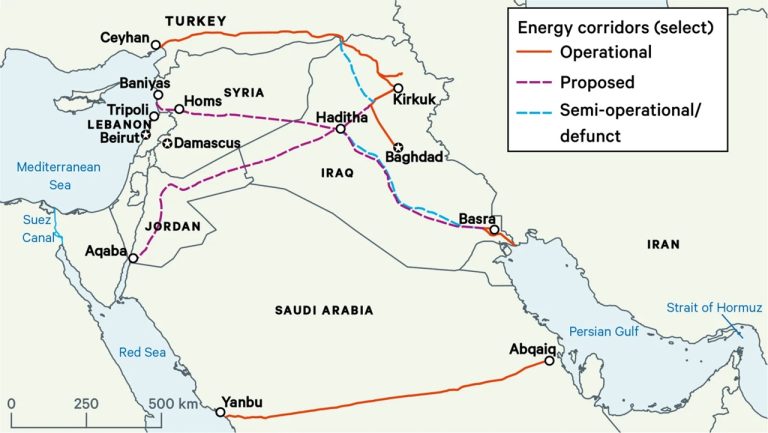
The ongoing conflict in the Middle East and the resulting disruptions to the Strait of Hormuz have exposed the severe vulnerability of traditional energy routes. As a result, Iraq, Syria, and Lebanon are actively exploring new pipelines and transport corridors to connect the Gulf to the Mediterranean. While these initiatives offer a chance to reshape the region’s balance of power, deep-rooted internal conflicts and foreign interference present significant obstacles.
The Search for Alternatives
The effective closure of the Strait of Hormuz has forced regional powers to seek alternative trade arteries. Iraq, which historically relied heavily on southern exports, saw its oil shipments collapse earlier this year before gradually recovering through discounted sales. To reduce its overwhelming dependence on this maritime chokepoint, Baghdad is exploring several infrastructure projects.
One major initiative involves expanding exports through the Kirkuk-Ceyhan Oil Pipeline to Turkey’s Mediterranean port of Ceyhan. Recent operations utilizing tanker trucks to move Basra crude north for export through Turkey highlight Baghdad’s urgency in establishing northern export corridors.
Additionally, Iraq and Syria are planning a massive new pipeline network. This project, often viewed as a revival of the historic Kirkuk-Baniyas pipeline, aims to connect Iraq’s northern and southern oilfields to a hub in western Iraq, before flowing to the Syrian coast. The estimated $15 billion project has reportedly garnered support from the Trump administration as a strategy to diminish Iranian leverage over regional energy supplies.
Transport and Digital Connectivity
Beyond oil, nations are looking to restore physical and digital trade routes. Lebanese and Syrian officials recently inspected potential routes to reconnect the Tripoli railway station in Lebanon to Homs in Syria. This railway connection could eventually link the Lebanese coast to Iraq, Turkey, and the wider Gulf, establishing a vital land bridge for regional trade.
Simultaneously, the pursuit of connectivity extends to the digital realm. New fiber-optic networks across Iraq and Syria aim to provide Gulf states with secure land routes for data transmission, reducing reliance on vulnerable submarine cables.
The Challenge of Fragmentation and Security
Despite these ambitious plans, there remains a massive gap between infrastructural ambition and reality on the ground. The Chatham House Iraq Initiative notes that authority across these nations is heavily fragmented among competing political factions and armed actors.
Energy infrastructure across the region continues to suffer relentless attacks. For example, the Khor Mor gas field in Iraq has faced repeated drone and rocket assaults, while strikes launched from Iraqi territory temporarily shut down Saudi Arabia’s East-West pipeline. Furthermore, Israeli military operations in Syria and Lebanon, alongside the presence of various armed militias, ensure that physical networks remain under constant threat.
Ultimately, building new routes is not enough to guarantee sovereignty. Success requires cohesive state institutions capable of governing, financing, and protecting these massive mega-projects without succumbing to endemic corruption. Until these nations can reform their internal governance, their efforts to reshape the Middle East’s trade architecture will remain severely constrained.
Original analysis inspired by Renad Mansour from Chatham House. Additional research and verification conducted through multiple sources.