The recent military operations against Iranian forces have sparked intense debates about tactical deficiencies across American defense circles. Military analysts frequently point to inadequate munitions reserves and insufficient preparations for sophisticated drone attacks in the region. However, focusing solely on these operational gaps ignores the deeper political miscalculations that truly drove the conflict. Genuine national security requires a realistic alignment between political objectives and military capabilities rather than simply acquiring more advanced weaponry.
The Illusion of Aerial Supremacy
Relying exclusively on air dominance to enforce sudden political transformations has historically proven ineffective. Defense planners have often assumed that overwhelming aerial bombardments can force adversarial regimes to collapse instantly. Yet historical precedents from the Second World War to the Vietnam conflict demonstrate that massive bombing campaigns frequently harden public resolve rather than dismantling state structures. The recent operations in the region reflect this persistent fallacy by assuming that localized air superiority could quickly neutralize entrenched governance systems. True strategic victory demands mechanisms beyond the simple application of airborne firepower.
The Challenge of Mobile Launch Systems
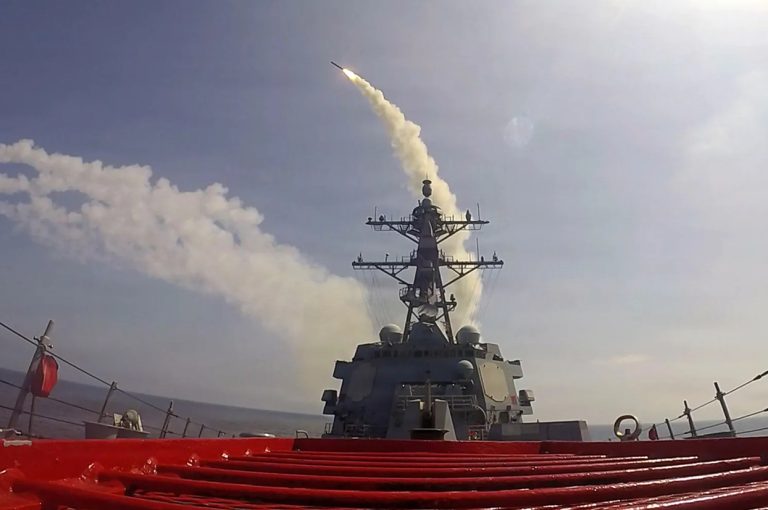
Modern precision munitions face distinct challenges when confronting decentralized and mobile defense architectures. Adversaries have rapidly adapted by dispersing their arsenals and utilizing highly mobile launch platforms that are exceptionally difficult to track from above. Efforts to completely silence these systems using only aerial strikes have repeatedly fallen short across various theaters of conflict. Whether dealing with rocket salvos in the Levant or intercepting advanced drones over the open seas, neutralizing mobile threats almost always requires physical ground operations. The expectation that specialized defense networks alone could shield regional allies from endless barrages was fundamentally flawed from the start.
Political Miscalculations at the Highest Levels
The ultimate responsibility for the current stalemate rests heavily upon the civilian leadership rather than the military apparatus. Demanding the armed forces to execute unattainable objectives without committing ground troops reflects a profound misunderstanding of modern warfare dynamics. The executive branch has intentionally isolated itself from dissenting viewpoints and pragmatic military advice. This dynamic prevents senior officers from communicating harsh operational realities to politicians who refuse to accept fundamental limitations. Such systemic dysfunction ultimately leaves the most capable military forces unable to secure a definitive victory when tasked with impossible geopolitical mandates.
Original analysis inspired by Bret Devereaux from Foreign Policy. Additional research and verification conducted through multiple sources.