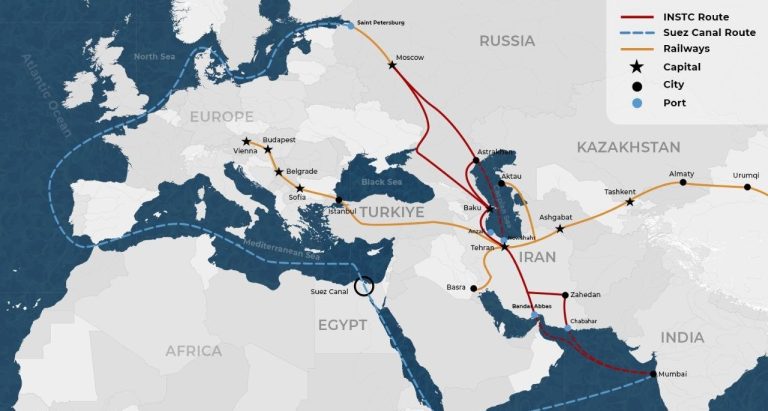
Recent blockades across vital oceanic chokepoints are forcing global supply chains to adapt by moving inland. Western naval pressure has severely disrupted traditional maritime trade routes that connect the Middle East with Asian manufacturing centers. In response to these sweeping oceanic restrictions, regional powers are rapidly shifting their economic logistics toward extensive overland railway systems. This historic transition transforms dry ports and continental rail lines into vital instruments of national sovereignty and economic survival.
The massive rail network stretching from eastern Chinese industrial hubs to the Iranian capital has recently accelerated its operational frequency. What began as a modest logistical route has grown into a crucial economic lifeline that entirely bypasses naval patrols. Freight traffic across this vast expanse now moves with unprecedented urgency as Chinese operators deploy additional rolling stock to meet surging demand. Although continental rail transport remains significantly more expensive than traditional shipping, the strategic necessity of maintaining open trade channels justifies the premium pricing.
The Inland Strategic Shift
This monumental logistics corridor requires close coordination among multiple sovereign nations across Central Asia. Trains carrying essential industrial materials must traverse vast distances through Kazakhstan and Turkmenistan before reaching their final destination. The journey involves complex customs inspections and cargo transfers that test the logistical limits of regional trade agreements. Despite these friction points, the system effectively shields participating nations from external financial and maritime constraints. Beijing has heavily invested in this exact type of infrastructure to ensure continuous access to vital global markets regardless of oceanic conflicts.
Current trade flows along this route remain distinctly unbalanced. Westbound trains carry critical supplies like solar panels, automotive components, and heavy machinery required to sustain domestic manufacturing sectors. Meanwhile, the return journeys eastward frequently operate well below maximum capacity because transporting bulk energy resources via rail lacks economic viability over such extreme distances. Authorities continue exploring opportunities to export valuable mineral resources and advanced petrochemical products to offset these profound logistical imbalances. Solving this directional disparity remains a major priority for transportation planners seeking to optimize the network.
Connecting Continental Trade Corridors
The overland transit revolution extends far beyond a single bilateral partnership. Nations are simultaneously expanding the massive North South Transport Corridor which has established critical pathways linking Russian markets to Indian Ocean ports. Trade volumes along these intersecting routes are rising dramatically as merchants seek reliable alternatives to volatile oceanic shipping lanes. Southern maritime hubs are currently transforming into dual purpose terminals that handle both local naval traffic and immense continental freight loads. Completing missing rail sections will soon finalize this sweeping integration of Eurasian commerce.
Border economies are also experiencing a profound transformation as formal commerce seeks secure inland avenues. Unofficial trade previously dominated frontier regions where local communities relied upon improvised barter systems and unregulated fuel smuggling. Governments are now attempting to formalize these exchanges by opening new official border crossings and extending operating hours for commercial vehicles. Transitioning regional commerce from illicit networks into regulated customs systems requires significant administrative dedication alongside physical infrastructure improvements. Observers have correctly highlighted that steel tracks alone cannot guarantee economic integration without capable financial settlement mechanisms.
Ultimately these sprawling overland corridors offer profound geopolitical leverage for nations facing intense economic isolation. While absolute freight volumes cannot match the massive capacity of giant container vessels, securing reliable access to critical industrial components ensures continued economic functioning. Inland transportation networks represent a strategic insurance policy against naval blockades and foreign financial interventions. If governments successfully modernize these continental connections, they will permanently alter the geographical balance of global trade power. The ability to route essential goods across vast terrestrial borders may soon define the true limits of international economic pressure.
Original analysis inspired by Hussein Askary from The Cradle. Additional research and verification conducted through multiple sources.